


Jane had been bleeding heavily for days before finally seeking help, not from a hospital, but from the man who sold her the pills meant to end her six-week pregnancy.
Abortions are strictly outlawed in the mainly Catholic Philippines, forcing women to turn to a patchwork of providers operating in the online shadows.
While rare in practice, Philippine law allows for prison terms of up to six years for abortion patients and providers, leaving thousands of Filipinas to search for solutions in online forums where unlicensed sellers promote abortifacients.
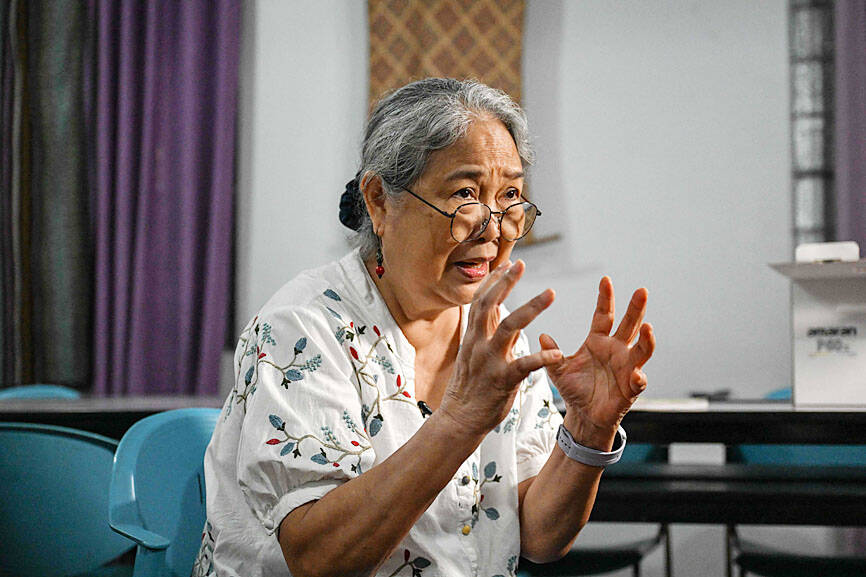
Photo: AFP
“It was very painful, as if my abdomen was being twisted,” said Jane, whose name has been changed to protect her identity, describing the visit where the seller, a purported doctor, inserted a pill into her cervix without anesthesia.
Jane was warned not to disclose the abortion if anything went wrong, she said.
“I heard stories that some women were reported to the police, ignored or left to die when they reached the hospital,” the 31-year-old added.
While post-abortion care has been legal for more than a decade, many healthcare workers remain hesitant to provide it, over fears of being arrested or losing their licenses, said Junice Melgar, whose Likhaan Center for Women’s Health serves Manila’s poorest.
“I believe that a lot of providers ... would like to help. They might find it ethical, but it’s a scary proposition for them,” she said.
As women have flocked to online sources, authorities have taken notice.
A lawmaker in January filed a resolution calling for an investigation into the growing number of Filipinas resorting to social media for help in ending their pregnancies. The Philippine Senate last year also urged the Department of Health and the Food and Drug Administration to crack down on what a top lawmaker called “brazen crimes.”
Jane, while acknowledging the potential safety issues, said she feared targeting online sources would only further limit access to a much-needed medical procedure.
“There might be a chilling effect and we won’t know where else we can get the proper information,” she said.
A reproductive health services law passed in 2012 aimed to normalize comprehensive sex education and free contraceptives across the nation, but the measure faced fierce opposition from the Catholic Church and conservative legislators, who weakened its implementation.
Funding was slashed, healthcare workers were allowed to refuse services and access to emergency contraceptives such as Plan B was heavily restricted.
“The Catholic Church will always oppose abortion and its applications,” priest Dan Cancino of the Catholic Bishops’ Conference of the Philippines said, citing its commitment to the preservation and dignity of human life.
In rare situations, such as ectopic pregnancies that threaten a woman’s life, interventions that might lead to fetal death can be morally permissible, but the church’s position against “intentional abortions” is absolute, he said, even in cases of rape, or on grounds of mental health or financial hardship.
Cancino said the church provides support to mothers and children facing unintended pregnancies, although he admitted those efforts remain “very fragmented.”
Lawyer Clara Padilla of the Philippine Safe Abortion Advocacy Network (PINSAN) said even legal exceptions for rape, incest or health risks would “not be enough,” noting that most abortions were sought by married women with at least three children.
More than 250 women are hospitalized every day due to complications from unsafe abortions, according to a PINSAN study. About three of them die.
Padilla said her group has documented cases of women binding their stomachs, inserting wire hangers into their cervix, or even asking people to kick them in attempts to induce abortion.
“Some people are opposing [abortion] because it’s against their morals,” Padilla said. “We’re just saying that people need this and you shouldn’t be barring them from accessing healthcare that can save their lives.”
Even if contraceptives were easily available, abortion would remain a necessary backstop for women for whom an unplanned pregnancy can mean sliding further into poverty and violence, Melgar said.
“There will be rapes, there will be other circumstances where protection simply does not work,” she said.
Jane, who said she suffered from abdominal pain, weakness and loss of appetite for up to three months after the procedure, said that she would make the same decision if forced to do it again.
“When you talk about abortion in the Philippines, the discussion is reduced to whether it is legal or moral. People forget that abortion is a health issue,” she said. “This is my body, my health, my life, and it’s up to me to decide what happens to it.”
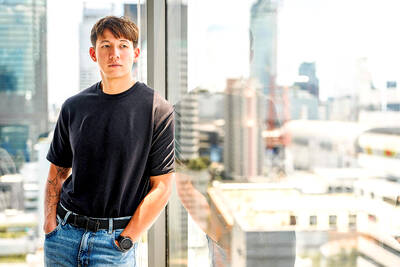
SPEAKING OUT: After Siranudh Scott’s allegations surfaced, celebrities and public figures took to social media to share their own experiences of sexual misconduct and abuse A high-profile alleged sexual abuse case within a wealthy Thai beer brewing family has prompted a wave of painful accounts from survivors of unconnected abuse in the conservative nation. Siranudh Scott, a member of the billionaire Thai family that founded the ubiquitous Singha beer brand, posted an emotional video this month accusing his elder brother Sunit of repeatedly abusing him when he was a teenager. Sunit, who is in his 30s, later denied the allegations in a video posted online, but Singha parent Boonrawd dismissed him from his executive role with the company on Tuesday last week. “I felt I needed to speak

SEEKING ORDER: Rodrigo Paz said that ‘anyone who wants to destroy the nation will have to deal with this president and the full force of the constitution’ Bolivian President Rodrigo Paz on Wednesday said that the nation was at a “breaking point” after nearly a month of protests that have caused shortages of food, fuel and medicine. Paz, who took office six months ago amid the worst economic crisis there in four decades, is battling a groundswell of fury over his policies. The political capital, La Paz, has been besieged by low-income workers and members of the indigenous majority calling for his resignation. “The country needs order and is reaching breaking point,” the 58-year-old said at a public event in La Paz, renewing his appeal for dialogue. On Tuesday, the Bolivian

‘CROSSING THE LINE’: China’s embassy in Seoul criticized US Forces Korea Commander General Xavier Brunson, asking if his ‘hostile’ remarks were authorized by Washington South Korea and the US are in talks over recent public remarks by the commander of US Forces Korea, Seoul’s presidential office said yesterday, after the comments drew sharp criticism from China. In a recent podcast interview, US Forces Korea Commander General Xavier Brunson described South Korea as “the dagger in the heart of Asia” from China’s east coast, prompting the Chinese embassy in Seoul to say that he had “truly crossed the line.” The interview came amid growing speculation that Washington might seek to expand the role of US Forces Korea in countering the growing regional influence of China, a key

Forecasters in Europe yesterday warned of exceptional heat as record temperatures driven by a “heat dome” push temperatures well above seasonal norms across the continent. The surge follows a record-breaking Monday, with France logging its hottest day in the month of May on record, its weather agency said, and the UK also posting unprecedented highs. A so-called “heat dome” of warm air from northern Africa trapped under a high-pressure system over western Europe is behind the high temperatures not usually seen until high summer. Restrictions on outdoor work were imposed in parts of Italy, beaches in southwest France filled earlier than usual and


 RSS
RSS