


A high-profile alleged sexual abuse case within a wealthy Thai beer brewing family has prompted a wave of painful accounts from survivors of unconnected abuse in the conservative nation.
Siranudh Scott, a member of the billionaire Thai family that founded the ubiquitous Singha beer brand, posted an emotional video this month accusing his elder brother Sunit of repeatedly abusing him when he was a teenager.
Sunit, who is in his 30s, later denied the allegations in a video posted online, but Singha parent Boonrawd dismissed him from his executive role with the company on Tuesday last week.
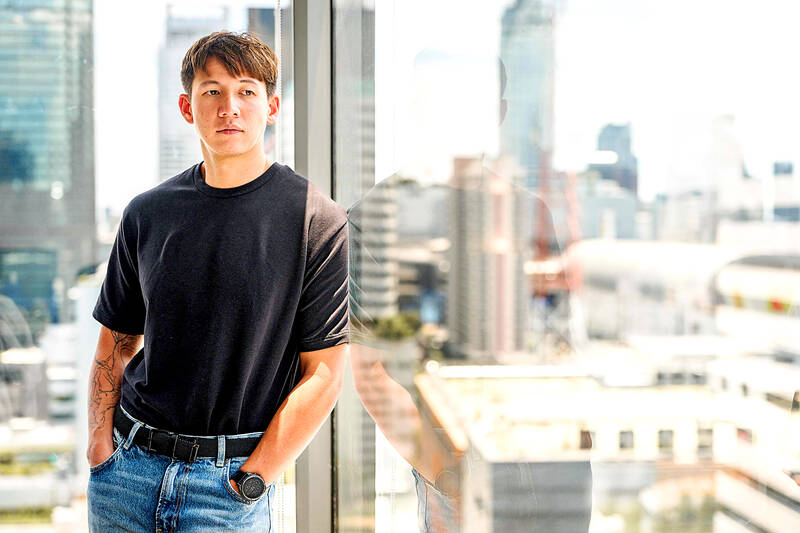
Photo: AFP
“I felt I needed to speak out, otherwise I would have been dead inside,” Siranudh, known locally as Psi, said late last week.
Siranudh in a second interview on Sunday said that the alleged sexual abuse occurred from when he was nine to 13 years old, every time his brother returned home from boarding school for the summer.
Siranudh, 29, said he first told other family members of the alleged abuse about three years ago, but at the time he accepted financial compensation from them to keep quiet.
However, after his mother sued him this year over a property dispute — what he called his “breaking point” — Siranudh decided to speak out and is now planning to pursue legal action.
“I’ve been in a family, in a system, in an institution that’s kept my voice silent,” he said.
One of Thailand’s biggest beer brands, Singha is recognized for its golden lion logo and partnerships with sports giants Chelsea and the Haas Formula One team.
After Siranudh’s allegations surfaced, celebrities and public figures took to social media to share their own experiences of sexual misconduct and abuse — subjects long considered taboo in Thailand.
Patinya Kuantrakul, scion of one of Thailand’s best-known golf courses, said she was raped by her driver at the age of 11, resulting in a pregnancy and an abortion.
Influencer and podcaster Taylor Srirat said he was sexually assaulted by his 50-year-old boss when he was 19.
Some commentators said Siranudh’s testimony had encouraged them to speak publicly for the first time about abuse they had endured, sharing messages of empathy and thanks.
Siranudh said the messages made him “feel so much love and support” from social media users in and outside Thailand.
“I don’t think I’ve ever seen this kind of push for accountability before from a huge conglomerate family,” he said.
Analysts said the public outpouring was unusual in Thailand, where victims often remain silent because of stigma and conservative attitudes toward sexual abuse.
“Thai society places strong emphasis on hierarchy, family reputation, and avoiding public shame or conflict,” said Busayapa Srisompong, a human rights lawyer who founded Shero, an organization offering pro-bono legal aid to sexual violence survivors in Thailand. “This can make disclosure especially difficult when abuse happens within families or involves respected figures.”
The Bhirombhakdi family, to which Siranudh and his brother belong, is listed as Thailand’s 15th richest by Forbes, which estimates their net worth at US$1.75 billion.
Influencer Taylor said many victims in Thailand do not come forward because of a “culture of victim-blaming,” but attitudes are beginning to change, he said, adding that “social media has provided spaces for survivors to feel less alone.”
Thai society has evolved, said social psychology lecturer Apitchaya Chaiwutikornwanich, explaining that young Thais have “learned the concept of human rights and the rights to own one’s body”.
Along with his social status, alleged voice recordings Siranudh posted confronting his brother about the abuse played a major role in making the allegations more widely believed.
Experts said the case marks an unprecedented shift in Thailand, with Thais more openly discussing sexual harassment and abuse.
An environmental activist, Siranudh has publicly distanced himself from his family’s business empire and said that the ocean became his refuge when “no one stood by” him after the alleged assaults.
While many have shown solidarity online, he said Thai laws left him feeling abandoned.
He said his mother sued him this year in a land ownership dispute under Thailand’s “ungrateful child” law, which allows parents to reclaim assets previously given to children deemed unappreciative through their behavior.
The brewery in a statement last week said that elder brother Sunit had been sacked and the firm would cooperate with any investigations by authorities.
Siranudh said speaking out online had helped him “heal faster.”
“I hope this will set a precedent for other people in Thailand to follow suit,” he said.
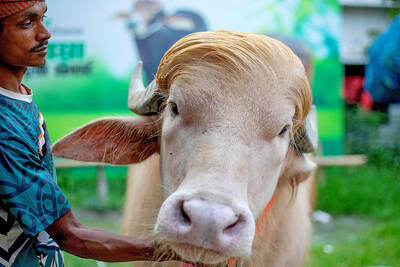
Crowds in Bangladesh are flocking to snap photographs with an unlikely social media star — an albino buffalo with flowing blond hair nicknamed “Donald Trump” that is due to be sacrificed within days. Owner Zia Uddin Mridha, 38, said his brother named the 700kg bull over its flowing helmet of hair resembling the signature look of the US president. “My younger brother picked this name because of the buffalo’s extraordinary hair,” he said at his farm in Narayanganj, just outside the capital, Dhaka. Mridha said that a constant stream of curious visitors — social media fans, onlookers and children — have come throughout

It began as a satirical online project. Now millions of young people in India are flocking to it as an outlet for their frustration. A parody political party called the Cockroach Janta Party, with the insect as its symbol, has exploded across India’s social media by turning absurdist humor into protest. Memes and short videos mocking corruption, joblessness and political dysfunction have flooded social media sites, where millions of users are embracing the cockroach — known for its ability to survive harsh conditions — as a tongue-in-cheek symbol of endurance. The online movement’s rise has been unusually rapid. The Cockroach Janta Party (CJP)

BIGGER ROLE: Beijing has said it maintains an impartial stance on the war in Ukraine, but by training Russian troops, China is far more involved than previously known China’s armed forces secretly trained about 200 Russian military personnel in China late last year, and some have since returned to fight in Ukraine, according to three European intelligence agencies and documents seen by Reuters. While China and Russia have held a number of joint military exercises since Moscow’s full-scale invasion of Ukraine in 2022, Beijing has repeatedly said that it is neutral in the conflict and presents itself as a peace mediator. The covert training sessions, which predominantly focused on the use of drones, were outlined in a dual-language Russian-Chinese agreement signed by senior Russian and Chinese officers in Beijing on
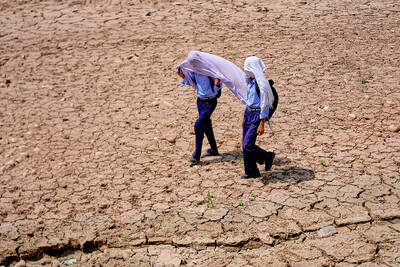
HOTTER: While Indians are accustomed to summer heat, climate change has caused northwestern India to warm faster than other parts of the country, an academic said Roads and markets have emptied during afternoons and some farmers have switched to nighttime work to avoid scorching temperatures as a heat wave grips large parts of India. The India Meteorological Department forecast maximum temperatures for yesterday of about 45°C in the capital, New Delhi, where authorities have opened temporary “cooling zones” to help people cope. The weather department warned that conditions would likely persist across several northern regions in the coming days, with temperatures staying well above seasonal averages. Authorities urged people to stay indoors during the hottest hours and take precautions against heat-related illnesses. India declares a heat wave whenever maximum temperatures


 RSS
RSS