


Supporters seeking the release of imprisoned former Pakistani prime minister Imran Khan yesterday broke through a ring of shipping containers locking down the capital, Islamabad, while at least six people have died in protest-related violence.
Protesters battled security forces and ignored a government threat to respond with gunfire.
The dead included four members of the security services and one civilian who were killed when a vehicle rammed them on a street.
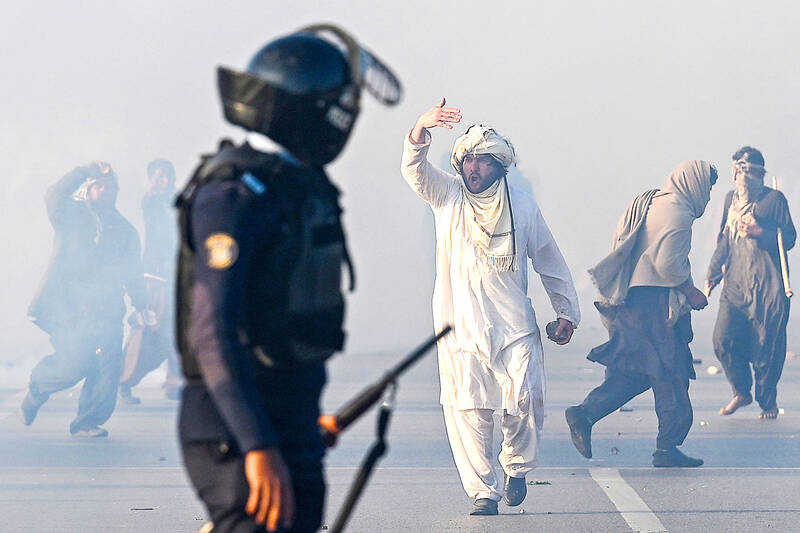
Photo: AFP
Pakistani Prime Minister Shehbaz Sharif denounced the attack, saying an “anarchist group” was deliberately targeting law enforcement personnel. There were no claims of responsibility for the ramming. A police officer died in a separate incident.
Thousands of security forces have poured into central Islamabad. Pakistan’s army took control of D-Chowk, a large square in downtown Islamabad’s Red Zone, which is an area that houses key government buildings and is the final destination for the protesters.
Paramilitary rangers formed the next layer of deterrence at the site and police made up the third. Rangers urged everyone to leave the area, including journalists, and fired warning shots into the air.
“We have now allowed police to take any decision according to the situation,” Pakistani Minister of the Interior Mohsin Naqvi said while visiting the square.
Earlier, Naqvi threatened security forces would respond with live fire if protesters fired weapons at them.
Visiting Belarusian President Alexander Lukashenko was staying in the Red Zone as part of his official trip.
One protester, Shahzor Ali, said people were on the streets because Khan had called for them to be there.
“We will stay here until Khan is among us. He will decide what to do next,” he said.
“If they again fire bullets, the bullet will be responded with the bullet,” he said.
Police are using tear gas to try and disperse the crowds. Scores of people have been injured, including journalists who were attacked by demonstrators. Dozens of Khan supporters beat a videographer covering the protest for The Associated Press and took his camera. He sustained head injuries and was treated in a hospital.
Pakistani media have mostly stopped filming and photographing the rally, instead focusing on the security measures and the city’s deserted streets.
People are closing in on the Red Zone. Naqvi said Khan’s party rejected a government offer to rally on the outskirts of the city. By yesterday afternoon, fresh waves of protesters were making their way unopposed to the rally site. Most had the party flag around their shoulders or wore its tricolor on accessories.
Khan, who has been in jail for more than a year and faces more than 150 criminal cases, remains popular. His party, Pakistan Tehreek-e-Insaf (PTI), says the cases are politically motivated.
Authorities say only courts can order the release of Khan, who was ousted in 2022 through a no-confidence vote in parliament. He has been imprisoned since his first conviction in a graft case, in August last year, and has been sentenced in several other cases.
Khan’s wife Bushra Bibi, who is leading the protest, told people to keep marching toward the Red Zone peacefully. She said another plan of action would be conveyed to protesters if Khan was not released. She also urged the government not to harm the demonstrators.
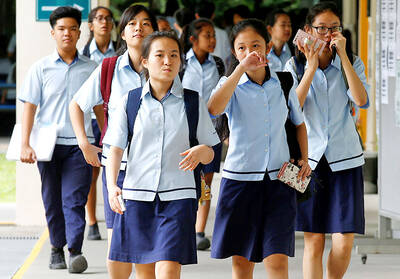
School bullies in Singapore are to face caning under new guidelines, but the education minister on Tuesday said it would be meted out only as a last resort with strict safeguards. Human rights groups regularly criticize Singapore for the use of corporal punishment, which remains part of the school and criminal justice systems, but authorities have defended it as a deterrent to crime and serious misconduct. Caning was discussed in the parliament after legislators asked how it would be used in relation to bullying in schools. The debate followed stricter guidelines on serious student misconduct, including bullying, unveiled by the Singaporean Ministry of
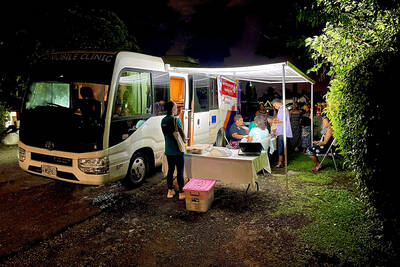
As evening falls in Fiji’s capital, a steady stream of people approaches a makeshift clinic that is a first line of defense against one of the world’s fastest-growing HIV epidemics. In the South Pacific nation — a popular tourist destination of just under a million people — more than 2,000 new HIV cases were recorded last year, a 26 percent increase from 2024. The government has declared an HIV outbreak and described it as a national crisis. “It’s spreading like wildfire,” said Siteri Dinawai, 46, who came to be tested. The Moonlight Clinic, a converted minibus parked in a suburban cul-de-sac in Suva, is
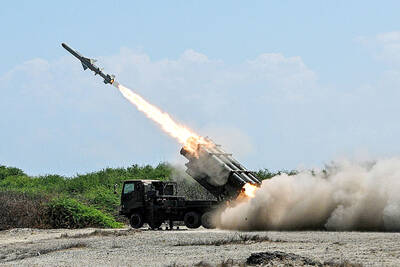
A MESSAGE: Japan’s participation in the Balikatan drills is a clear deterrence signal to China not to attack Taiwan while the US is busy in the Middle East, an analyst said The Japan Self-Defense Forces yesterday fired a Type 88 anti-ship missile during a joint maritime exercise with US, Australian and Philippine forces, hitting a decommissioned Philippine Navy ship in waters facing the disputed South China Sea, in drills that underscore Tokyo’s rising willingness to project military power on China’s doorstep. The drill took place as Manila and Tokyo began talks on a potential defense equipment transfer, made possible by Japan’s decision to scrap restrictions on military exports. The discussions include the possible early transfer of Abukuma-class destroyers and TC-90 aircraft to the Philippines, Japanese Minister of Defense Shinjiro Koizumi said. Philippine Secretary of
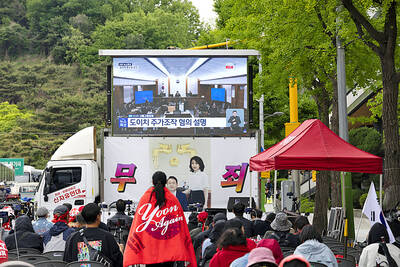
A South Korean judge who last week more than doubled former South Korean first lady Kim Keon-hee’s prison sentence was found dead yesterday, police said. Shin Jong-o was found unconscious at about 1am at the Seoul High Court building, an investigator at the Seocho District Police Station in Seoul said. Shin was taken to a hospital and pronounced dead, he said. “There is no sign of foul play in the death,” the investigator added. Local media reported that Shin had left a suicide note, but the investigator said there was none. On Tuesday last week, Shin presided over 53-year-old Kim’s appeal trial, finding her guilty


 RSS
RSS