


Tributes poured in on Sunday for Edna O’Brien, the radical Irish writer whose groundbreaking first novel The Country Girls was burned and banned in her native country, after her death at 93.
“She died peacefully on Saturday 27 July after a long illness,” said a statement from her publishers Faber Books posted on social media.
Irish Prime Minister Simon Harris said the nation had “lost an icon” and “a brave, gifted, dignified and magnetic person.”
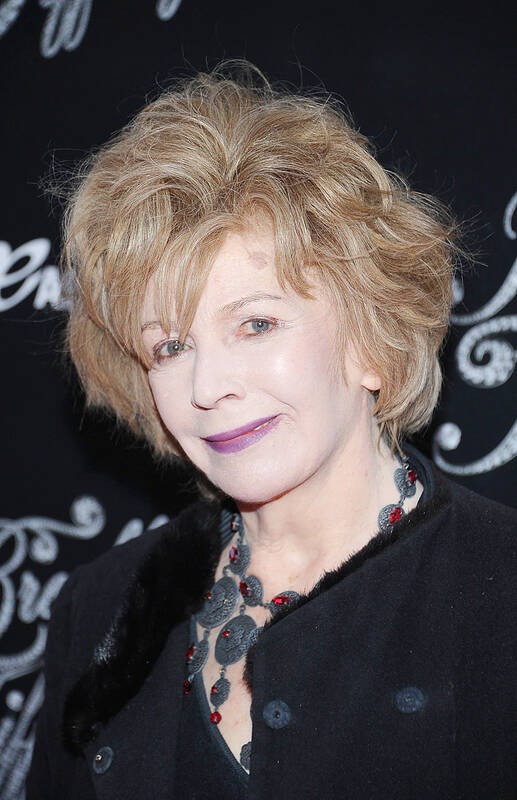
Photo: AFP
“Most people would have stopped and hidden away with the misogyny she faced, but Edna O’Brien kept working on her artistry and became one of modern Ireland’s most celebrated and honoured writers,” he said in a statement on social media. “It is for all of us to reflect upon, and never forget, that to reach her potential Edna would leave Ireland and make London her home.”
Irish President Michael Higgins said he had learned of the death of his “dear friend” O’Brien with “great sorrow.”
She was “one of the outstanding writers of modern times” and “a fearless teller of truths,” he said in a statement. “While the beauty of her work was immediately recognised abroad, it is important to remember the hostile reaction it provoked among those who wished for the lived experience of women to remain far from the world of Irish literature, with her books shamefully banned upon their early publication.”
Irish Minister for Foreign Affairs and Minister for Defense Micheal Martin, a former prime minister, hailed O’Brien as a “pioneer, never afraid to push boundaries through her work” who helped “usher in a new era in literature and in modern Ireland.”
Irish Minister for Tourism, Culture, Arts, Gaeltacht, Sport and Media Catherine Martin described O’Brien as “a modernizing force in Irish society who fearlessly advanced the cause of equality.”
The honors she eventually received from her native Ireland included the Presidential Distinguished Service Award in 2018.
The Country Girls, about the sexual initiation of rebellious Catholic girls, drawn from O’Brien’s childhood experiences, is now a marker in modern Irish literature for its breaking of social and sexual taboos.
“The novel, published in 1960, caused a bit of consternation. People were outraged,” O’Brien told the Guardian in 2008. “The few copies purchased in Limerick were burnt after the rosary, one evening in the parish grounds, at the request of the priest. I received anonymous letters, all malicious. Then it was banned.”
O’Brien was born in 1930 into a strict Catholic farming family in west Ireland’s County Clare.
She was educated at a convent school and then in Dublin, where she graduated with a pharmacist’s license in 1950, at about the time she was discovering a passion for Leo Tolstoy, F. Scott Fitzgerald and T.S. Eliot.
In 2018, she won the prestigious PEN/Nabokov Award for Achievement in International Literature, honored for having broken down “social and sexual barriers for women in Ireland and beyond.”
In 2021, France made her a commander in the Ordre des Arts et des Lettres, the nation’s highest cultural distinction.
She received France’s Prix Femina special prize in 2019, honoring the ensemble of her work.
Recalling the “chauvinist” reactions to her first novel, O’Brien said it was a “foretaste of judgements to come.”
“I had not at that time read Lord Byron’s maxim that a man should calculate on his powers of resistance before entering on a career of writing,” she wrote in the Guardian in 2008. “I have since read it and must add that a woman embarking on a career of writing needs those powers one hundred-fold.”
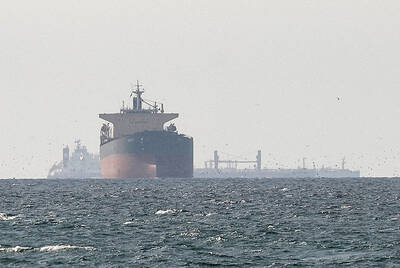
A ship that appears to be taking on the identity of a scrapped gas carrier exited the Strait of Hormuz on Friday, showing how strategies to get through the waterway are evolving as the Middle East war progresses. The vessel identifying as liquefied natural gas (LNG) carrier Jamal left the Strait on Friday morning, ship-tracking data show. However, the same tanker was also recorded as having beached at an Indian demolition yard in October last year, where it is being broken up, according to market participants and port agent’s reports. The ship claiming to be Jamal is likely a zombie vessel that

Cannabis-based medicines have shown little evidence of effectiveness for treating most mental health and substance-use disorders, according to a large review of past studies published in a major medical journal on Monday. Medical use of cannabinoids has been expanding, including in the US, Canada and Australia, where many patients report using cannabis products to manage conditions such as anxiety, post-traumatic stress disorder and sleep problems. Researchers reviewed data from 54 randomized clinical trials conducted between 1980 and May last year involving 2,477 participants for their analysis published in The Lancet. The studies assessed cannabinoids as a primary treatment for mental disorders or substance-use
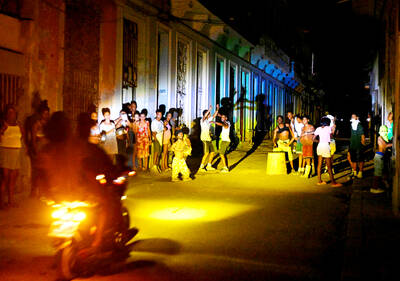
NATIONWIDE BLACKOUT: US President Donald Trump cut off Venezuelan oil shipments to Cuba, strangling the Caribbean island’s already antiquated grid Cuba’s national electric grid collapsed on Monday, the nation’s grid operator said, leaving about 10 million people without power amid a US-imposed oil blockade that has crippled the already obsolete generation system. Grid operator UNE on social media said that it is investigating the causes of the blackout, the latest in a series of widespread outages that last for hours or days and that this weekend sparked a rare violent protest in the communist-run nation. Officials ruled out a major power plant failure, but had still not pinpointed the root cause of the grid collapse, suggesting a problem with transmission. Officials said that
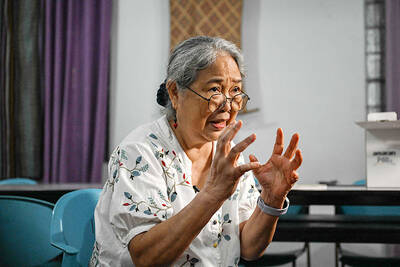
‘HEALTH ISSUE’: More than 250 women are hospitalized every day due to complications from unsafe abortions, and about three die, a study showed Jane had been bleeding heavily for days before finally seeking help, not from a hospital, but from the man who sold her the pills meant to end her six-week pregnancy. Abortions are strictly outlawed in the mainly Catholic Philippines, forcing women to turn to a patchwork of providers operating in the online shadows. While rare in practice, Philippine law allows for prison terms of up to six years for abortion patients and providers, leaving thousands of Filipinas to search for solutions in online forums where unlicensed sellers promote abortifacients. “It was very painful, as if my abdomen was being twisted,” said Jane, whose


 RSS
RSS