


Fabiano Pompei’s family has run a news kiosk close to Rome’s imposing St John Lateran Basilica since 1948. Marco Volpini’s family owned one near the Trevi Fountains for a century.
Both used to be thriving businesses, but a prolonged slump in newspaper sales has forced Pompei and Volpini to pull down their metal shutters for one last time — like thousands of other kiosk owners across Italy.
“You can make sacrifices up to a certain point, but if you’re earning little or even losing money, it is better to close and do something else, even if it hurts inside,” 30-year-old Pompei said.
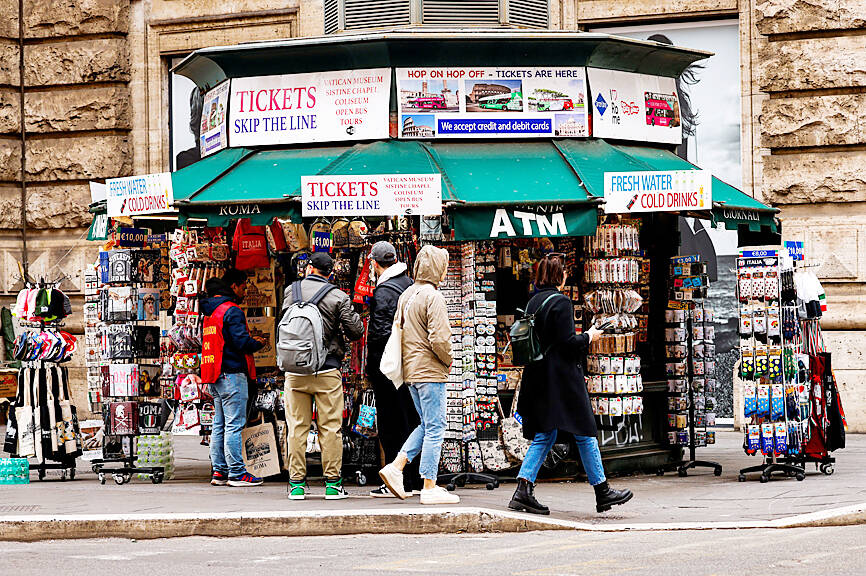
Photo: Reuters
Volpini had only recently taken over his tiny newsstand from his elderly father, but soon realized he could not make ends meet.
“In five years there won’t be any kiosks left. People will get all their information off phones,” he said.
The industry body Snag estimates that two-thirds of Italy’s news kiosks have closed down over the past two decades, leaving only about 12,000 in business.
The Italian Chamber of Commerce said in a report in January that in the past four years alone, 2,700 kiosks had closed, a drop of 16 percent nationwide, with Rome registering a 21 percent fall.
At the heart of the crisis lies the plunge in newspaper sales, which represent the bulk of kiosk revenues.
In 2004, about 9.54 million newspapers were sold each day in kiosks, according to data from ADS, the firm which tracks editorial sales. By 2014, that number had dropped to 2.6 million, falling again to about 950,000 by January this year.
“The decline in newspaper circulation is on a very stable downwards track. It has been going on for decades and there is no sign it will change,” said Alessio Cornia, assistant professor at Dublin City University’s School of Communications.
While editors can hope to prop up their sinking revenues by shifting readers online, the kiosk owners are having a much tougher time reinventing themselves.
Stefano di Persio runs a kiosk in the center of Rome, next to the offices of the city’s largest newspaper, Il Messaggero. He used to sell hundreds of papers each day, now he shifts fewer than 50.
“It is a joke,” he said, without laughing.
His classic, octagonal newsstand is festooned with tourist trinkets, such as fridge magnets, aprons and calendars featuring handsome priests. A handful of newspapers are tucked away for old-time locals not yet pushed out by the invading tourists.
“Most Romans have left this neighborhood and have been replaced by tourists, so we sell souvenirs. If we had to rely on newspaper sales, we would have closed long ago,” he said.
The government is this year offering incentives of up to 2,000 euros (US$2,188) to try to halt the hemorrhage, but kiosk owners said the cash would only provide a short-term balm and do nothing to solve long-term trends.
Looking to cut costs, one of Rome’s most famous newsstands, a stone’s throw from the prime minister’s office, in January turned into an automatic newspaper distribution machine, doing away with the need to pay for someone to hand over copies in person.
Many locals lament the changing times. Kiosks are cement that help hold their communities together, places to gossip about politics, soccer and the weather.
When Pompei briefly opened his kiosk this week to show Reuters the empty shelves, old friends swiftly gathered round hoping he had had a change of heart. They were disappointed.
“This is the second newsstand in the neighborhood to close. It is a tragedy,” said Eufemia Curci, a retired teacher. “It is a great failure of our culture. People don’t read, they just look at their phones. It is sad.”
Pompei had tried to develop his newsstand into a small bookstore, but turnover never took off, and he was still having to get up every morning at 4:30 to take in the morning editions, starting a work day that ran until 8pm.
“Every night I dream about my kiosk because it is in my heart ... but I couldn’t carry on,” he said.

School bullies in Singapore are to face caning under new guidelines, but the education minister on Tuesday said it would be meted out only as a last resort with strict safeguards. Human rights groups regularly criticize Singapore for the use of corporal punishment, which remains part of the school and criminal justice systems, but authorities have defended it as a deterrent to crime and serious misconduct. Caning was discussed in the parliament after legislators asked how it would be used in relation to bullying in schools. The debate followed stricter guidelines on serious student misconduct, including bullying, unveiled by the Singaporean Ministry of
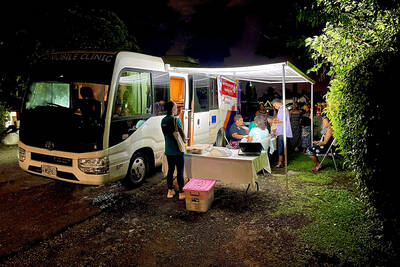
As evening falls in Fiji’s capital, a steady stream of people approaches a makeshift clinic that is a first line of defense against one of the world’s fastest-growing HIV epidemics. In the South Pacific nation — a popular tourist destination of just under a million people — more than 2,000 new HIV cases were recorded last year, a 26 percent increase from 2024. The government has declared an HIV outbreak and described it as a national crisis. “It’s spreading like wildfire,” said Siteri Dinawai, 46, who came to be tested. The Moonlight Clinic, a converted minibus parked in a suburban cul-de-sac in Suva, is
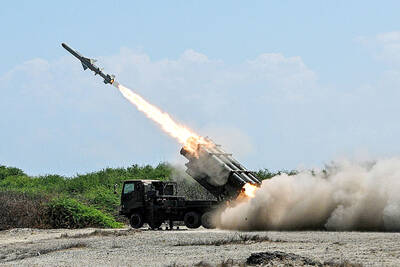
A MESSAGE: Japan’s participation in the Balikatan drills is a clear deterrence signal to China not to attack Taiwan while the US is busy in the Middle East, an analyst said The Japan Self-Defense Forces yesterday fired a Type 88 anti-ship missile during a joint maritime exercise with US, Australian and Philippine forces, hitting a decommissioned Philippine Navy ship in waters facing the disputed South China Sea, in drills that underscore Tokyo’s rising willingness to project military power on China’s doorstep. The drill took place as Manila and Tokyo began talks on a potential defense equipment transfer, made possible by Japan’s decision to scrap restrictions on military exports. The discussions include the possible early transfer of Abukuma-class destroyers and TC-90 aircraft to the Philippines, Japanese Minister of Defense Shinjiro Koizumi said. Philippine Secretary of
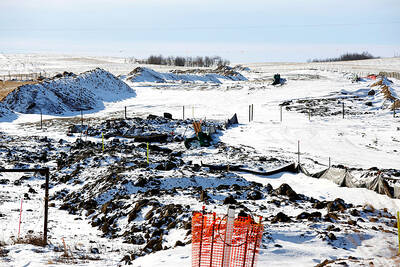
Separatists in Alberta are preparing to submit a petition tomorrow that they said has enough signatures to force a referendum on independence for the oil-rich Canadian province. Polls indicate the pro-independence camp remains a minority among Alberta’s 5 million people, but has hit a historic high of roughly 30 percent. Alberta separatists are also closer than ever to forcing a referendum, riding momentum fueled by intensifying grievances over Ottawa’s control of the provincial oil industry. They have also undeniably gotten a boost from the return to power of US President Donald Trump. After launching a petition in January, Stay Free Alberta, the group


 RSS
RSS