


School bullies in Singapore are to face caning under new guidelines, but the education minister on Tuesday said it would be meted out only as a last resort with strict safeguards.
Human rights groups regularly criticize Singapore for the use of corporal punishment, which remains part of the school and criminal justice systems, but authorities have defended it as a deterrent to crime and serious misconduct.
Caning was discussed in the parliament after legislators asked how it would be used in relation to bullying in schools.
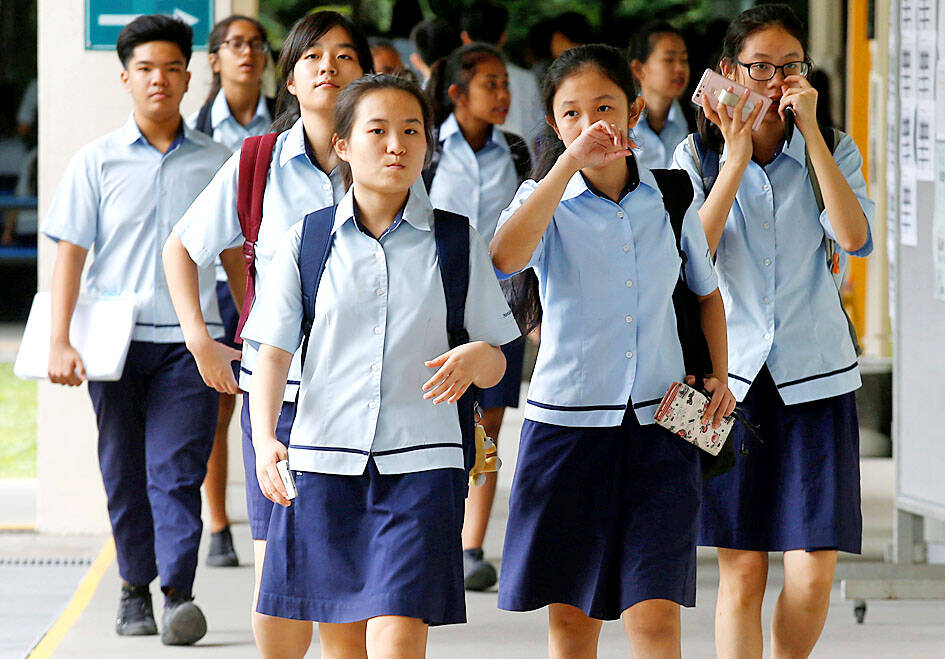
Photo: Reuters
The debate followed stricter guidelines on serious student misconduct, including bullying, unveiled by the Singaporean Ministry of Education last month.
Under the guidelines, offenders could face one to three strokes of the cane.
“Our schools use caning as a disciplinary measure if all the other measures are inadequate, given the gravity of the misconduct,” Singaporean Minister of Education Desmond Lee (李智陞) said.
“They follow strict protocols to ensure safety for the student. For instance, caning must be approved by the principal and administered only by authorized teachers,” he said.
“Schools will consider factors such as the maturity of the student and if caning will help the student learn from his mistake and understand the gravity of what he has done,” he added.
The punishment would be given only to male students in upper primary levels (ages 9 to 12) and above, Lee said, adding that the Criminal Procedure Code prohibits the caning of women.
After the caning is meted out, the school would “monitor the student’s well-being and progress,” including providing counseling, he said.
Female students would receive punishments “such as detention and/or suspension, adjustment of their conduct grade and other school-based consequences,” he said.
Caning in Singapore is a legacy of British colonial rule, but the UK has long abolished corporal punishment.
A WHO report released last year said that corporal punishment remained “alarmingly widespread,” and “overwhelming scientific evidence” showed that it caused significant harm to children’s health and development.
Additional reporting by The Guardian
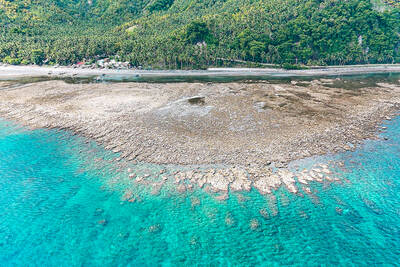
Arsenio Butil Jr fell to his knees and began to pray when last week’s deadly magnitude 7.8 earthquake began shaking his home on the coast of the southern Philippines. When he opened his eyes, he saw a once-familiar shoreline changing in real time, with swathes of previously submerged coral suddenly pushing above the waterline. The June 8 quake, driven by a shifting of the nearby Cotabato Trench, toppled buildings, triggered landslides and killed at least 76 people on the southern island of Mindanao. The tectonic forces at work also thrust chunks of the island’s coastline upward in a phenomenon known as “coastal uplift,”

YUCK OR YUM? While it is difficult to sell second-hand goods that are more than seven years old in Japan, they are still popular in foreign markets, an executive said Under a scorching sun in a Bangkok suburb, a whistle blew, and shouts filled the air as dozens of shoppers rushed into a warehouse bearing the sign “Japanese Second-Hand Store.” From bags and bicycles to surfboards and suitcases, the Japanese second-hand market is booming, with quality-conscious buyers in other Asian countries increasingly tapping into the circular economy trend. “What is considered garbage for them can still be useful in Thailand,” said 36-year-old Lookpoo Sathitpanyapon, who runs an online store selling toy keychains. “That bag, that bag,” one shopper shouted while racing through the warehouse, filled with everything from colorful toys
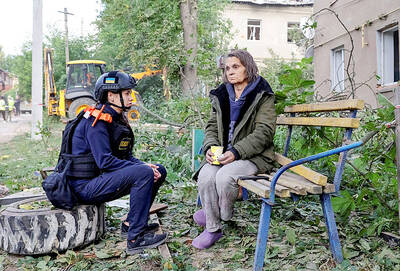
President Volodymyr Zelenskiy on Saturday said that Russian forces were preparing an impending massive attack on Ukraine and warned residents to take special care as Russian strikes in different regions killed at least six people. “Tonight and in the coming hours, it is especially important to pay close attention to air raid warnings,” Zelenskiy said in his nightly video address. “The Russians have prepared for a massive attack. Please take care of yourselves.” Russian forces have staged a series of heavy attacks on Kyiv in the past few weeks and in other major cities. Strikes on Monday last week killed
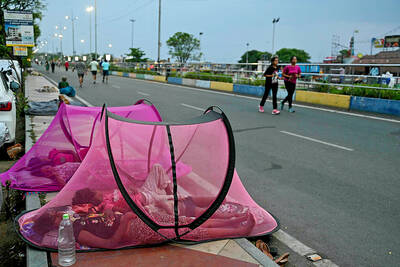
Growing up in Tahiti, Anna-Bella Failloux saw first-hand the threat posed by mosquitoes: Nearly one-third of adults on the picturesque island once had swollen limbs from elephantiasis caused by their bites. She has since dedicated her life to studying mosquitoes and the diseases they transmit — a concern that looms ever larger as climate change expands the area where the insects roam. “You have to accept being bitten by a mosquito from time to time,” the 63-year-old entomologist at France’s Pasteur Institute said. “But we have to avoid too many people getting sick and dying from the infections,” Failloux said, as she observed


 RSS
RSS