


Separatists in Alberta are preparing to submit a petition tomorrow that they said has enough signatures to force a referendum on independence for the oil-rich Canadian province.
Polls indicate the pro-independence camp remains a minority among Alberta’s 5 million people, but has hit a historic high of roughly 30 percent.
Alberta separatists are also closer than ever to forcing a referendum, riding momentum fueled by intensifying grievances over Ottawa’s control of the provincial oil industry. They have also undeniably gotten a boost from the return to power of US President Donald Trump.
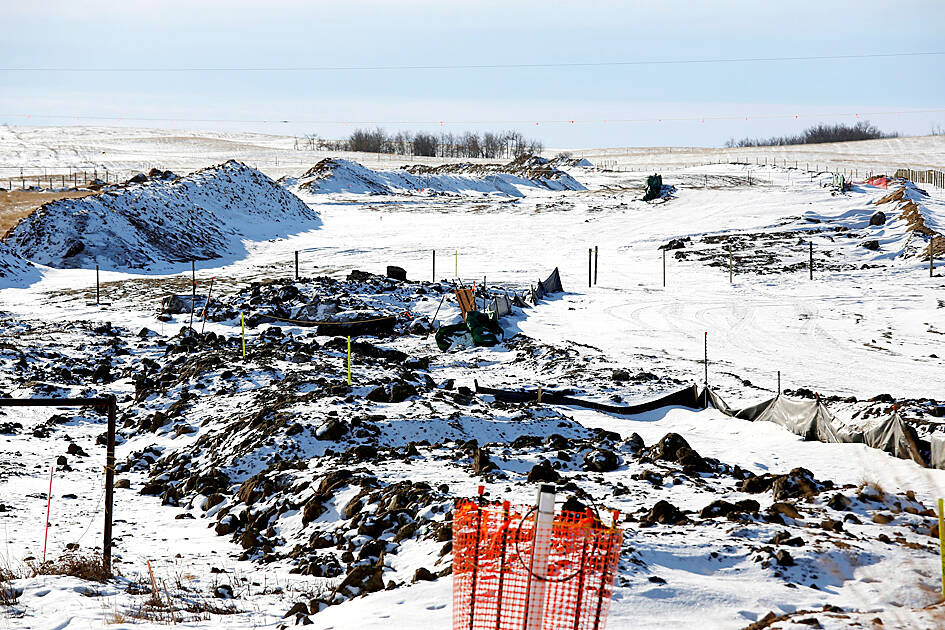
Photo: Reuters
After launching a petition in January, Stay Free Alberta, the group coordinating the independence push, had until the beginning of this month to collect 178,000 signatures to force a referendum.
Group leader Mitch Sylvestre expressed confidence the group would succeed.
“We will have the required signatures to trigger the referendum with a comfortable buffer,” Sylvestre said.
Alberta’s First Nations have filed a court challenge, saying independence would violate their treaty rights, a case that could render a referendum illegal.
However, even if the vote never happens or the separatists ultimately lose, many believe the process has left Canada permanently changed.
“Even if we lose the referendum, [this] is not going to just disappear,” historian and Albertan independence supporter Michael Wagner said. “I think this is going to be a permanent change in our political culture.”
Former Alberta premier Jason Kenney agreed, saying that if the independence camp gets 20 percent to 35 percent support in a referendum, “it will turn the separatist movement from a marginal fringe into a real factor in our politics that will be disruptive for a long time to come.”
Resentments toward eastern political leaders in Ontario and Quebec fueled marginal separatist movements at various points over the past century.
However, separatism gathered real pace in protest against former Canadian prime minister Pierre Trudeau’s 1980 National Energy Program, which broadened Ottawa’s control over the oil industry, Wagner said.
The program included price controls for domestic oil sales and new taxes giving Ottawa more revenue from Alberta’s oil.
Trudeau’s government said the measures protected Canadians following the global oil price shocks of the 1970s.
Wagner said the program was considered an attack in Alberta and called it a “game-changer” which entrenched the idea of independence.
Fast-forward 35 years, Trudeau’s son Justin was elected prime minister with a climate-conscious agenda reviled by many in Alberta. Albertans accused his government of demonizing oil production and stifling investments in the sector, especially for pipeline capacity.
Canadian Prime Minister Mark Carney’s election last year was “a tipping point,” Wagner said.
Conservative leader Pierre Poilievre had a huge polling lead early last year.
“It was fully expected he would be our hero. He would rescue us from the Liberal government. When the polls started turning for Carney, and then Carney actually won, the disappointment here was so dramatic,” Wagner said.
Some secessionists insist Alberta’s future lies in union with Washington, but Sylvestre’s legal adviser Jeffrey Rath said: “The people in our movement are not interested in freeing themselves from the clutches of the federal government... just to put ourselves under yet another government 3,500 miles away.”

An American scientist convicted of lying to US authorities about payments from China while he was at Harvard University has rebuilt his research lab in Shenzhen, China, to pursue technology the Chinese government has identified as a national priority: embedding electronics into the human brain. Charles Lieber, 67, is among the world’s leading researchers in brain-computer interfaces. The technology has shown promise in treating conditions such as amyotrophic lateral sclerosis and restoring movement in paralyzed people. It also has potential military applications: Scientists at the Chinese People’s Liberation Army have investigated brain interfaces as a way to engineer super soldiers by boosting

Indonesian police have arrested 13 people after shocking images of alleged abuse against small children at a daycare center went viral, sparking outrage across the nation, officials said on Monday. Police on Friday last week raided Little Aresha, a daycare center in Yogyakarta on Java island, following a report from a former employee. CCTV footage circulating on social media showed children, most younger than two, lying on the floor wearing only diapers, their hands and feet bound with rags. The police have confirmed that the footage is authentic. Police said they also found 20 children crammed into a room just 3m by 3m. “So
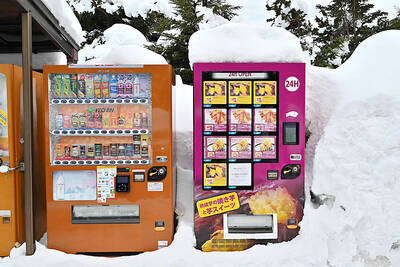
From post offices and parks to stations and even the summit of Mount Fuji, Japan’s vending machines are ubiquitous, but with the rapid pace of inflation cooling demand for their drinks, operators are being forced to rethink the business. Last month beverage giant DyDo Group Holdings announced it would remove about 20,000 vending machines — about 7 percent of their stock nationwide — by January next year, to “reconstruct a profitable network.” Pokka Sapporo Food & Beverage, based in Nagoya, also said last month it would sell its 40,000-machine operation to Osaka-based Lifedrink Co. “The strength of the vending machine

A highway bomb attack in a restive region of southwestern Colombia on Saturday killed 14 people and injured at least 38, the latest spate of violence ahead of next month’s presidential election. Authorities blamed the attack in the Cauca department — a conflict-ridden, coca-growing region — on dissidents of the now-disbanded FARC guerrilla army, who have been sowing violence across the country. “Those who carried out this attack ... are terrorists, fascists and drug traffickers,” Colombian President Gustavo Petro said on social media. “I want our very best soldiers to confront them,” he added. The leftist leader blamed the bombing


 RSS
RSS