


The Right Livelihood Award — known as the “Alternative Nobel” — was yesterday awarded to environmental campaigners from Kenya and Cambodia, a human rights defender from Ghana and a humanitarian group that rescues migrants in the Mediterranean Sea.
This year’s laureates “stand up to save lives, preserve nature and safeguard the dignity and livelihoods of communities around the world,” the award foundation said, adding that they “fight for people’s right to health, safety, a clean environment and democracy.”
This year’s prize went to Phyllis Omido from Kenya, and the groups Mother Nature Cambodia and SOS Mediterranee. They will share a cash prize, but for security reasons its size cannot be disclosed, the foundation said. The honorary award was given to Eunice Brookman-Amissah from Ghana.

Photo: AFP
“They care for their land and each human life connected to it: be it indigenous communities or people risking their lives to get to safety,” Ole von Uexkull, the head of the Stockholm-based Right Livelihood foundation, said in a statement.
The Cambodian advocacy group was cited for its “fearless and engaging activism to preserve Cambodia’s natural environment in the context of a highly restricted democratic space,” while the non-profit charity that operates in international waters north of Libya was credited with carrying out “life-saving humanitarian search and rescue operations in the Mediterranean Sea.”
Kenyan grassroots environmental activist Omido received the award “for her groundbreaking struggle to secure land and environmental rights for local communities while advancing the field of environmental law,” it said.
Brookman-Amissah was honored “for pioneering discussions on women’s reproductive rights in Africa, paving the way for liberalized abortion laws and improved safe abortion access,” it said.
This year, there were 170 nominees from 68 countries, it said. The laureates are to be recognized at an award presentation in Stockholm on Nov. 29. Created in 1980, the annual Right Livelihood Award honors efforts that the prize founder, Swedish-German philanthropist Jakob von Uexkull, felt were being ignored by the Nobel Prizes.
To date, 190 laureates from 74 countries have received the award.
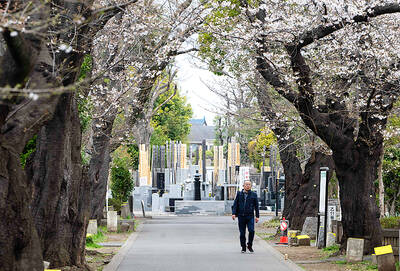
ROCKY RELATIONS: The figures on residents come as Chinese tourist numbers drop following Beijing’s warnings to avoid traveling to Japan The number of Chinese residents in Japan has continued to rise, even as ties between the two countries have become increasingly fractious, data released on Friday showed. As of the end of December last year, the number of Chinese residents had increased by 6.5 percent from the previous year to 930,428. Chinese people accounted for 22.6 percent of all foreign residents in Japan, making them by far the largest group, Japanese Ministry of Justice data showed. Beijing has criticized Tokyo in increasingly strident terms since Japanese Prime Minister Sanae Takaichi last year suggested that a military conflict around Taiwan could

Germany is considering Australia’s Ghost Bat robot fighter as it looks to select a combat drone to modernize its air force, German Minister of Defense Boris Pistorius said yesterday. Germany has said it wants to field hundreds of uncrewed fighter jets by 2029, and would make a decision soon as it considers a range of German, European and US projects developing so-called “collaborative combat aircraft.” Australia has said it will integrate the Ghost Bat, jointly developed by Boeing Australia and the Royal Australian Air Force, into its military after a successful weapons test last year. After inspecting the Ghost Bat in Queensland yesterday,
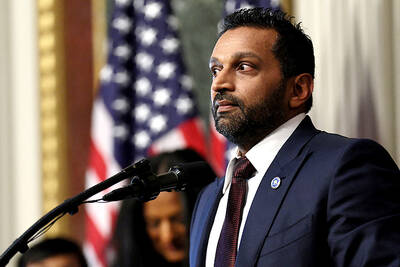
A pro-Iran hacking group claimed to breach FBI Director Kash Patel’s personal e-mail inbox and posted some of the contents online. The e-mails provided by the hacking group include travel details, correspondence with leasing agents in Washington and global entry, and loyalty account numbers. The e-mail address the hackers claim to have compromised has been previously tied to Patel’s personal details, and the leaked e-mails contain photos of Patel and others, in addition to correspondence with family members and colleagues. “The FBI is aware of malicious actors targeting Director Patel’s personal email information,” the agency said in a statement on
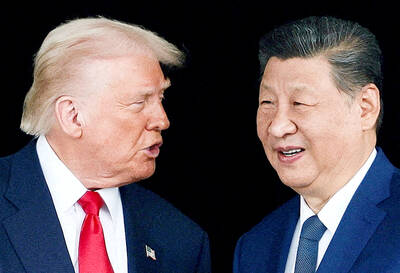
RIVALRY: ‘We know that these are merely symbolic investigations initiated by China, which is in fact the world’s most profligate disrupter of supply chains,’ a US official said China has started a pair of investigations into US trade practices, retaliating against similar probes by US President Donald Trump’s administration as the superpowers stake out positions before an expected presidential summit in May. The move, announced by the Chinese Ministry of Commerce on Friday, is a direct mirror of steps Trump took to revive his tariff agenda after the US Supreme Court last month struck down some of his duties. “China expresses its strong dissatisfaction and firm opposition to these actions,” a ministry spokesperson said in a statement, referring to the so-called Section 301 investigations initiated on March 11.


 RSS
RSS