


He barely escaped Pakistan with his life after angering its powerful military with his journalism. Now his story has become a comic book.
Taha Siddiqui’s therapist told him not to dwell on the attempted kidnapping he experienced five years ago, or he would never escape his trauma.
“Clearly, I didn’t listen to her at all,” Siddiqui said with a smile.
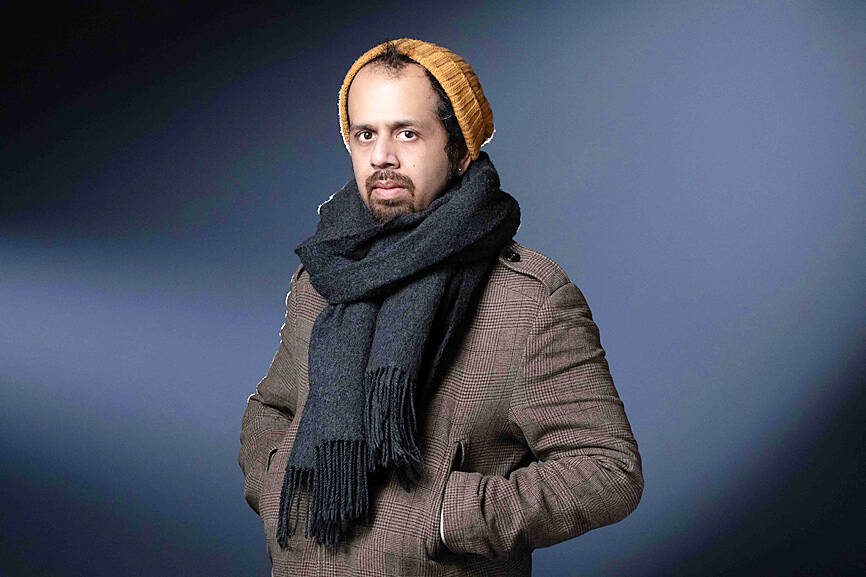
Photo: AFP
He was speaking in his Paris bar, The Dissident Club, which he opened in 2020 as a refuge for exiles like himself. It shares its name with his new autobiographical comic book — coauthored with cartoonist Hubert Maury who was previously a French diplomat in Pakistan — which is to be released tomorrow in France and soon in other languages.
It opens with the moment in January 2018 when members of Pakistan’s military pulled him from a taxi in broad daylight and shoved him into another car. Detention, torture and death were real possibilities.
Two strokes of luck saved Siddiqui — convincing the man holding his neck to release him, saying he would go quietly, and noticing that the passenger door was unlocked. He leapt from the moving car, ran down the busy highway and managed to alert his media friends, swiftly organizing a news conference about the attack to buy time.
Only after escaping to Paris did he discover he was on the military’s “kill list” and could never return.
The graphic novel goes beyond that incident to explain the spread of extremism and war in the region through the story of his religiously conservative upbringing in Saudi Arabia and Pakistan.
“I chose to tell my story as a comic book because I couldn’t have any when I was young,” Siddiqui said. “It will definitely piss off my father. I hope he won’t see it.”
Not that they have a good relationship. His father’s response to the attempted kidnapping was to say he was being punished by God for not praying enough.
It was a classic Romeo-and-Juliet experience that challenged Siddiqui’s faith, after his family opposed his marriage to a Shiite girl he met at university. The divide between the Sunni and Shiite branches of Islam is a fraught and often violent fault line in Pakistan.
“That really triggered this thing in me that there’s something wrong with the way we live,” said Siddiqui, who is now an atheist.
The attempted kidnapping put an end to a successful career. He had worked with many international media and won the prestigious Albert Londres Prize for an article on the Taliban banning polio vaccines.
His fearless criticism of the powerful Pakistani military made him a target, particularly a front-page story for the New York Times exposing their secret prisons.
“It was pretty crazy,” Maury said. “But that’s what makes it such an interesting story.”
“I find it impressive and remarkable. He risked not just his life, but exile as well and cutting ties with his family,” he added.
Siddiqui said he has no regrets.
“I chose this life, but I didn’t choose [the military’s] reaction. That’s on them, not me,” he said.
“Sometimes I’m sad. I really believed in the country at one time in my life, but now less and less. Pakistan is a very dysfunctional country,” he said.
He is already planning a follow-up that looks at the lives of other exiles.
“I wanted to take control because when I was attacked. I lost control,” he said.
His therapist is convinced, having recently visited the bar for a talk on exile and mental health.
“She said I was doing well and getting purpose out of what happened to me,” he said. “I was really happy.”

Kouri Richins, a Utah mother who published a children’s book about grief after the death of her husband is to serve a life sentence for his murder without the possibility of parole, a judge ruled on Wednesday. Richins was convicted in March of aggravated murder for lacing a cocktail given to her husband, Eric Richins, with five times the lethal dose of fentanyl at their home near Park City in 2022. A jury also found her guilty of four other felonies, including insurance fraud, forgery and attempted murder for trying to poison her husband weeks earlier on Feb. 14, 2022, with a
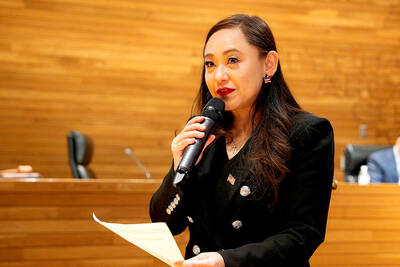
‘PERSONAL MISTAKES’: Eileen Wang has agreed to plead guilty to the felony, which comes with a maximum sentence of 10 years in federal prison A southern California mayor has agreed to plead guilty to acting as an illegal agent for the Chinese government and has resigned from her city position, officials said on Monday. Eileen Wang (王愛琳), mayor of Arcadia, was charged last month with one count of acting in the US as an illegal agent of a foreign government. She was accused of doing the bidding of Chinese officials, such as sharing articles favorable to Beijing, without prior notification to the US government as required by law. The 58-year-old was elected in November 2022 to a five-person city council, from which the mayor is selected

DELA ROSA CASE: The whereabouts of the senator, who is wanted by the ICC, was unclear, while President Marcos faces a political test over the senate situation Philippine authorities yesterday were seeking confirmation of reports that a top politician wanted by the International Criminal Court (ICC) had fled, a day after gunfire rang out at the Philippine Senate where he had taken refuge fearing his arrest. Senator Ronald “Bato” dela Rosa, the former national police chief and top enforcer of former Philippine president Rodrigo Duterte’s “war on drugs,” has been under Senate protection and is wanted for crimes against humanity, the same charges Duterte is accused of. “Several sources confirmed that the senator, Senator Bato, is no longer in the Senate premises, but we are still getting confirmation,” Presidential
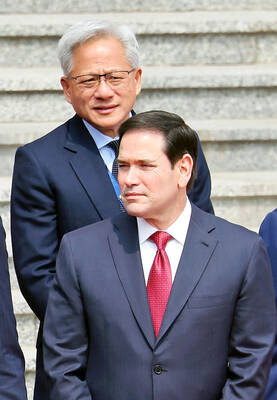
HELP DENIED? The US Department of State said that the Cuban leadership refuses to allow the US to provide aid to Cubans, ‘who are in desperate need of assistance’ US Secretary of State Marco Rubio on Wednesday said that Cuba’s leadership must change, as Washington renewed an offer of US$100 million in aid if the communist nation agrees to cooperate. Cuba has been suffering severe economic tumult led by an energy shortage that plunged 65 percent of the country into darkness on Tuesday. Cuba’s leaders have blamed US sanctions, but Rubio, a Cuban American and critic of the government established by Fidel Castro, said the system was to blame, including corruption by the military. “It’s a broken, nonfunctional economy, and it’s impossible to change it. I wish it were different,” he told


 RSS
RSS