


New Zealand yesterday passed into law a unique plan to phase out tobacco smoking by imposing a lifetime ban on young people buying cigarettes.
The law states that tobacco cannot ever be sold to anybody born on or after Jan. 1, 2009.
It means the minimum age for buying cigarettes would keep rising. In theory, somebody trying to buy a pack of cigarettes 50 years from now would need ID to show they were at least 63 years old.

Photo: EPA-EFE
Health authorities hope smoking would fade away well before then. They have a stated goal of making New Zealand smoke-free by 2025.
The new law also reduces the number of retailers allowed to sell tobacco from about 6,000 to 600 and decreases the amount of nicotine allowed in tobacco that is smoked.
“There is no good reason to allow a product to be sold that kills half the people that use it,” New Zealand Associate Minister of Health Ayesha Verrall told lawmakers in parliament.
“And I can tell you that we will end this in the future, as we pass this legislation,” Verrall said.
She said the health system would save billions of dollars from not needing to treat illnesses caused by smoking, such as cancer, heart attacks, strokes and amputations.
The bill would create generational change and leave a legacy of better health for youth, she said.
Lawmakers voted along party lines in passing the legislation 76 to 43.
The libertarian ACT party, which opposed the bill, said that many small corner stores, known in New Zealand as dairies, would go out of business because they would no longer be able to sell cigarettes.
“We stand opposed to this bill because it’s a bad bill and its bad policy. It’s that straightforward and simple,” ACT deputy leader Brooke van Velden said. “There won’t be better outcomes for New Zealanders.”
She said the gradual ban amounted to “nanny-state prohibition” that would end up creating a large black market.
Prohibition never worked and always ended with unintended consequences, she added.
The law does not affect vaping, which has already become more popular than smoking in New Zealand.
Statistics New Zealand last month reported that 8 percent of New Zealand adults smoked daily, down from 16 percent 10 years earlier. Meanwhile, 8.3 percent of adults vaped daily, up from less than 1 percent six years earlier.
Smoking rates remain higher among Maori, with about 20 percent reporting they smoked.
New Zealand already restricts cigarette sales to those aged 18 and older, requires tobacco packs to come with graphic health warnings and cigarettes to be sold in standardized packs.
New Zealand in the past few years also imposed a series of hefty tax hikes on cigarettes.
The law change was welcomed by several health agencies.
Health Coalition Aotearoa said the new law represented the culmination of decades of hard-fought advocacy by health and community organizations.

School bullies in Singapore are to face caning under new guidelines, but the education minister on Tuesday said it would be meted out only as a last resort with strict safeguards. Human rights groups regularly criticize Singapore for the use of corporal punishment, which remains part of the school and criminal justice systems, but authorities have defended it as a deterrent to crime and serious misconduct. Caning was discussed in the parliament after legislators asked how it would be used in relation to bullying in schools. The debate followed stricter guidelines on serious student misconduct, including bullying, unveiled by the Singaporean Ministry of

As evening falls in Fiji’s capital, a steady stream of people approaches a makeshift clinic that is a first line of defense against one of the world’s fastest-growing HIV epidemics. In the South Pacific nation — a popular tourist destination of just under a million people — more than 2,000 new HIV cases were recorded last year, a 26 percent increase from 2024. The government has declared an HIV outbreak and described it as a national crisis. “It’s spreading like wildfire,” said Siteri Dinawai, 46, who came to be tested. The Moonlight Clinic, a converted minibus parked in a suburban cul-de-sac in Suva, is
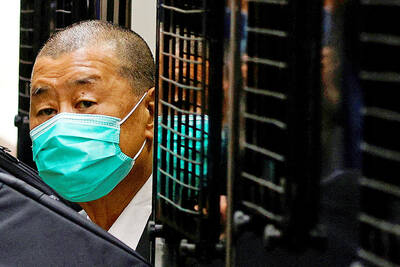
Jailed media entrepreneur Jimmy Lai (黎智英) has been awarded Deutsche Welle’s (DW) freedom of speech award for his contribution to Hong Kong’s pro-democracy movement. The German public broadcaster on Thursday said Lai would be presented in absentia with the 12th iteration of the award on June 23 at the DW Global Media Forum in Bonn. Deutsche Welle director-general Barbara Massing praised the 78-year-old founder of the now-shuttered news outlet Apple Daily for standing “unwaveringly for press freedom in Hong Kong at great personal risk.” “With Apple Daily, he gave journalists a platform for free reporting and a voice to the democracy movement in

A MESSAGE: Japan’s participation in the Balikatan drills is a clear deterrence signal to China not to attack Taiwan while the US is busy in the Middle East, an analyst said The Japan Self-Defense Forces yesterday fired a Type 88 anti-ship missile during a joint maritime exercise with US, Australian and Philippine forces, hitting a decommissioned Philippine Navy ship in waters facing the disputed South China Sea, in drills that underscore Tokyo’s rising willingness to project military power on China’s doorstep. The drill took place as Manila and Tokyo began talks on a potential defense equipment transfer, made possible by Japan’s decision to scrap restrictions on military exports. The discussions include the possible early transfer of Abukuma-class destroyers and TC-90 aircraft to the Philippines, Japanese Minister of Defense Shinjiro Koizumi said. Philippine Secretary of


 RSS
RSS