


South Korean truckers were yesterday on strike for a sixth consecutive day, after talks with transportation authorities failed to make progress over their demands for higher pay, crippling cargo shipping at the country’s industrial hubs and major ports.
South Korean Ministry of Land, Infrastructure and Transport officials on Saturday met for more than 10 hours with Cargo Truckers Solidarity union leaders for a third round of negotiations, urging them to return to work, but the two sides failed to resolve any of their differences, the ministry said.
A union official said he did not know whether talks would continue.
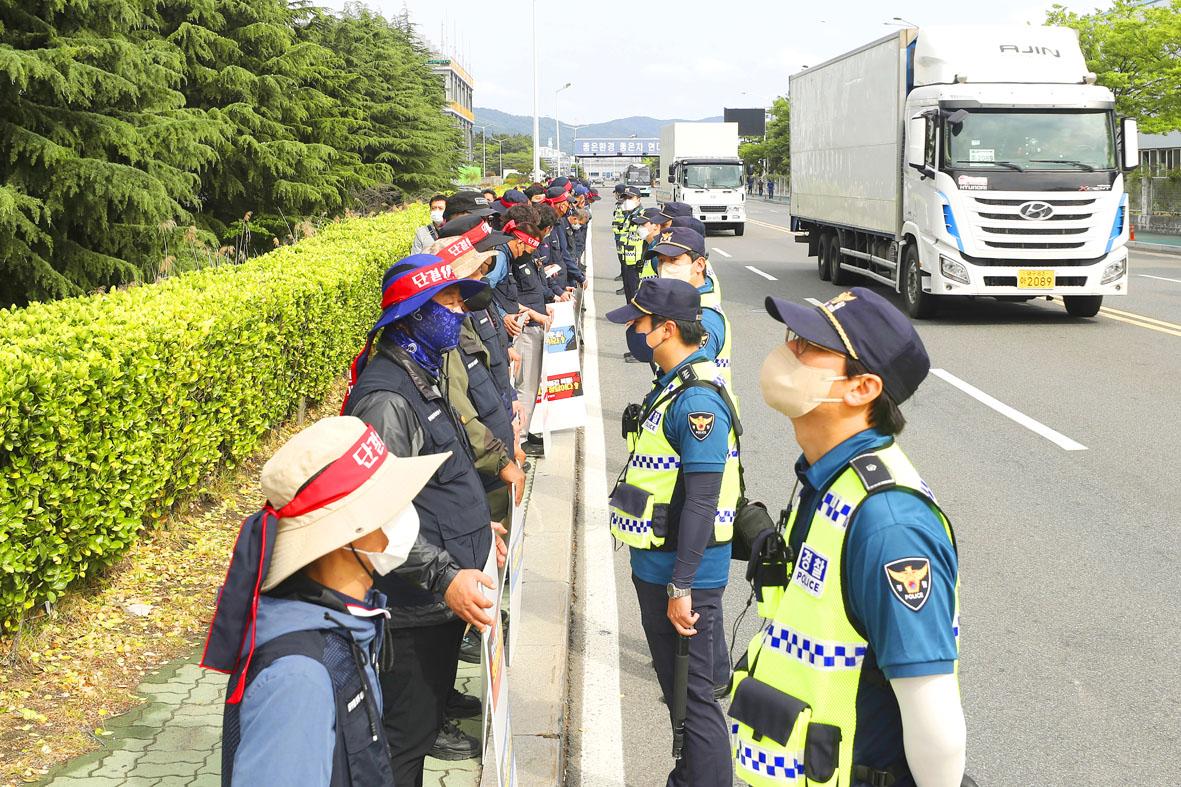
Photo: AP
The ministry said it would continue to hold talks with the union, without elaborating.
One senior union official from the Busan region said local heads of unions across the country’s 16 regions were gathering yesterday to discuss their next steps.
South Korea is a major supplier of semiconductors, smartphones, vehicles, batteries and electronics goods. The strike has deepened uncertainty over global supply chains already disrupted by China’s strict COVID-19 curbs and Russia’s invasion of Ukraine.
As ports worldwide struggle with supply bottlenecks, slowdowns in chip, petrochemical and vehicle deliveries threaten South Korea’s mainstay exports, while consumer inflation in Asia’s fourth-biggest economy is at a 14-year high.
Protesting soaring fuel prices and demanding minimum pay guarantees, about 100 unionized truckers yesterday gathered at the main gate of an enormous Hyundai Motor factory complex in the southern city of Ulsan, a union official said.
Hundreds more were expected to join today, he said.
The truckers are also demanding an extension of subsidies, set to expire this year, that guarantee minimum wages as fuel prices rise.
The ministry said it responded to the union by saying “that ship owners, the party of interest, demand the current Safe Trucking Freight Rates System be abolished.”
A joint statement from 31 industry associations urged truckers to end their strike and return to work, as bottlenecks are building up across cement, petrochemical, steel, vehicle and information technology component sectors.
“This lengthening strike by the Cargo Truckers Solidarity is nothing more than putting up a fight in an extreme way by holding national logistics as a hostage, even as the government has said it will find a way for an inclusive growth through talks,” a statement from associations representing employers in several sectors said.
About 40 people have been arrested in the strike, some of whom were later released. The actions have been largely peaceful, although tense at some locations.
About 6,600 truckers, or 30 percent of Cargo Truckers Solidarity union members, were on strike on Saturday, the ministry said, halting trucking activities at petrochemical complexes in Ulsan and slowing steel product deliveries for steelmaking giant POSCO.
The union said the number of strikers was higher, without specifying a number, and that non-union truckers were also choosing not to work.
Container traffic at the Port of Busan, which accounts for 80 percent of the nation’s total, had as of Friday plunged by two-thirds from normal levels, a South Korean government official said.
At the Port of Incheon, it had fallen 80 percent, while at the Port for Ulsan, the industrial hub where much of the strike action has occurred, container traffic has been halted since Tuesday.
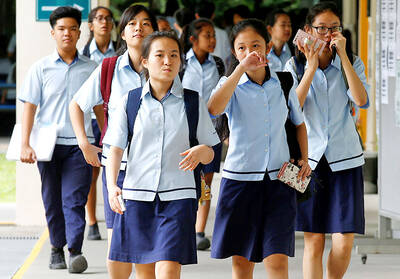
School bullies in Singapore are to face caning under new guidelines, but the education minister on Tuesday said it would be meted out only as a last resort with strict safeguards. Human rights groups regularly criticize Singapore for the use of corporal punishment, which remains part of the school and criminal justice systems, but authorities have defended it as a deterrent to crime and serious misconduct. Caning was discussed in the parliament after legislators asked how it would be used in relation to bullying in schools. The debate followed stricter guidelines on serious student misconduct, including bullying, unveiled by the Singaporean Ministry of

As evening falls in Fiji’s capital, a steady stream of people approaches a makeshift clinic that is a first line of defense against one of the world’s fastest-growing HIV epidemics. In the South Pacific nation — a popular tourist destination of just under a million people — more than 2,000 new HIV cases were recorded last year, a 26 percent increase from 2024. The government has declared an HIV outbreak and described it as a national crisis. “It’s spreading like wildfire,” said Siteri Dinawai, 46, who came to be tested. The Moonlight Clinic, a converted minibus parked in a suburban cul-de-sac in Suva, is
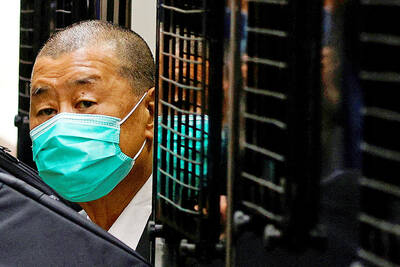
Jailed media entrepreneur Jimmy Lai (黎智英) has been awarded Deutsche Welle’s (DW) freedom of speech award for his contribution to Hong Kong’s pro-democracy movement. The German public broadcaster on Thursday said Lai would be presented in absentia with the 12th iteration of the award on June 23 at the DW Global Media Forum in Bonn. Deutsche Welle director-general Barbara Massing praised the 78-year-old founder of the now-shuttered news outlet Apple Daily for standing “unwaveringly for press freedom in Hong Kong at great personal risk.” “With Apple Daily, he gave journalists a platform for free reporting and a voice to the democracy movement in
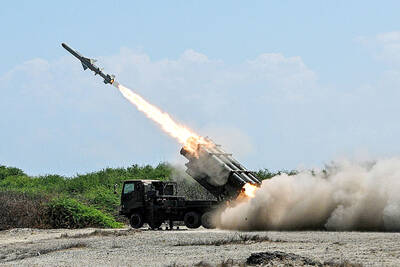
A MESSAGE: Japan’s participation in the Balikatan drills is a clear deterrence signal to China not to attack Taiwan while the US is busy in the Middle East, an analyst said The Japan Self-Defense Forces yesterday fired a Type 88 anti-ship missile during a joint maritime exercise with US, Australian and Philippine forces, hitting a decommissioned Philippine Navy ship in waters facing the disputed South China Sea, in drills that underscore Tokyo’s rising willingness to project military power on China’s doorstep. The drill took place as Manila and Tokyo began talks on a potential defense equipment transfer, made possible by Japan’s decision to scrap restrictions on military exports. The discussions include the possible early transfer of Abukuma-class destroyers and TC-90 aircraft to the Philippines, Japanese Minister of Defense Shinjiro Koizumi said. Philippine Secretary of


 RSS
RSS