


A Turkish court yesterday confirmed a halt to the trial in absentia of 26 suspects linked to the killing of Saudi Arabian critic Jamal Khashoggi and its transfer to Riyadh, a decision that has angered rights groups.
The 59-year-old journalist was killed inside the Saudi Arabian consulate in Istanbul on Oct. 2, 2018, in a gruesome murder that shocked the world.
A Turkish court began the trial in 2020 with relations tense between the two Sunni Muslim regional powers.

Photo: AFP
However, with Turkey desperate for investment to help pull it out of economic crisis, Ankara has sought to heal the rift with Riyadh.
“We decided to halt and hand over the case to Saudi Arabia,” the judge told the court.
The court decision comes almost a week after Turkish Minister of Justice Bekir Bozdag said that he would approve a Turkish prosecutor’s request to hand the case over to Saudi Arabia, at the latter’s demand.
The prosecutor said the case was “dragging” because, as the defendants were foreigners, the court’s orders could not be carried out.
Defense lawyer Ali Ceylan told the court that there would not be a fair trial in Saudi Arabia.
“Let’s not entrust the lamb to the wolf,” he said, using a Turkish saying.
Another defense lawyer, Gokmen Baspinar, said that the justice ministry’s move was “against the law.”
“There is no prosecution going on in Saudi Arabia at the moment,” he said. “Saudi authorities have concluded the trial and acquitted many suspects.”
He said the decision to hand over the case to Riyadh would be tantamount to a “breach of Turkish sovereignty” and “an example of irresponsibility against Turkish people.”
The decision has deeply angered rights groups.
The Istanbul tribunal “agreed to transfer the case to the Saudi authorities — in one sentence, just like that. Didn’t even bother to state the lawyers’ requests are rejected,” Milena Buyum of Amnesty International said.
“Appalling and clearly political decision,” she posted on Twitter.
Five people were sentenced to death by the kingdom over Khashoggi’s killing, but a Saudi Arabian court in September 2020 overturned the sentences, handing jail terms of up to 20 years to eight unnamed defendants following secretive legal proceedings.
Khashoggi’s fiancee, Hatice Cengiz, who was present at yesterday’s hearing, said that she would appeal the decision.
Turkey “is not ruled by a family like in Saudi Arabia. We have a justice system that addresses citizens’ grievances,” she told journalists outside Istanbul’s main court. “We will appeal the decision in line with our legal system.”
Speaking to reporters, she vowed to “continue to fight. Whoever gives up has given up. I will continue. Sometimes the legal battle itself is more important than the results.”
To Riyadh’s dismay, Turkey in 2018 pressed ahead with the Khashoggi case and Turkish President Recep Tayyip Erdogan at the time said the order to kill him came from the “highest levels” of government.
Subsequently, Saudi Arabia sought unofficially to put pressure on Turkey’s economy, with a boycott on Turkish imports.
Last year, Turkish Minister of Foreign Affairs Mevlut Cavusoglu visited Riyadh to mend fences with the kingdom. Transferring the case to Riyadh removes the last obstacle to a normalization of ties.
In an interview with Agence France-Presse in February, Cengiz urged Ankara to insist on justice, despite the rapprochement with Saudi Arabia.
“In order for such a thing to not happen again ...[Turkey] should not abandon this case,” she said.
Cengiz had been waiting outside the consulate for Khashoggi when he was murdered. He had gone there to obtain paperwork to marry her. His remains have never been found.

An American scientist convicted of lying to US authorities about payments from China while he was at Harvard University has rebuilt his research lab in Shenzhen, China, to pursue technology the Chinese government has identified as a national priority: embedding electronics into the human brain. Charles Lieber, 67, is among the world’s leading researchers in brain-computer interfaces. The technology has shown promise in treating conditions such as amyotrophic lateral sclerosis and restoring movement in paralyzed people. It also has potential military applications: Scientists at the Chinese People’s Liberation Army have investigated brain interfaces as a way to engineer super soldiers by boosting
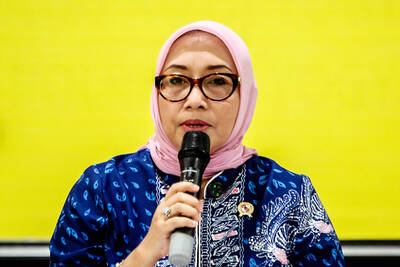
Indonesian police have arrested 13 people after shocking images of alleged abuse against small children at a daycare center went viral, sparking outrage across the nation, officials said on Monday. Police on Friday last week raided Little Aresha, a daycare center in Yogyakarta on Java island, following a report from a former employee. CCTV footage circulating on social media showed children, most younger than two, lying on the floor wearing only diapers, their hands and feet bound with rags. The police have confirmed that the footage is authentic. Police said they also found 20 children crammed into a room just 3m by 3m. “So

A highway bomb attack in a restive region of southwestern Colombia on Saturday killed 14 people and injured at least 38, the latest spate of violence ahead of next month’s presidential election. Authorities blamed the attack in the Cauca department — a conflict-ridden, coca-growing region — on dissidents of the now-disbanded FARC guerrilla army, who have been sowing violence across the country. “Those who carried out this attack ... are terrorists, fascists and drug traffickers,” Colombian President Gustavo Petro said on social media. “I want our very best soldiers to confront them,” he added. The leftist leader blamed the bombing
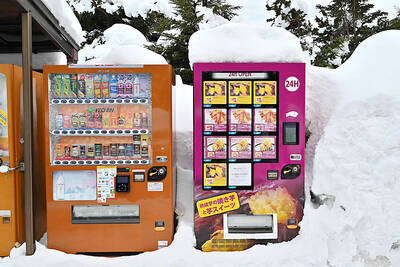
From post offices and parks to stations and even the summit of Mount Fuji, Japan’s vending machines are ubiquitous, but with the rapid pace of inflation cooling demand for their drinks, operators are being forced to rethink the business. Last month beverage giant DyDo Group Holdings announced it would remove about 20,000 vending machines — about 7 percent of their stock nationwide — by January next year, to “reconstruct a profitable network.” Pokka Sapporo Food & Beverage, based in Nagoya, also said last month it would sell its 40,000-machine operation to Osaka-based Lifedrink Co. “The strength of the vending machine


 RSS
RSS