


The International Committee of the Red Cross (ICRC) was targeted in a massive cyberattack, in which hackers seized the data of more than 515,000 extremely vulnerable people, some of whom had fled conflicts, the Red Cross said on Wednesday.
“A sophisticated cybersecurity attack against computer servers hosting information held by the International Committee of the Red Cross was detected this week,” it said in a statement.
“The attack compromised personal data and confidential information on more than 515,000 highly vulnerable people, including those separated from their families due to conflict, migration and disaster, missing persons and their families, and people in detention,” it said.
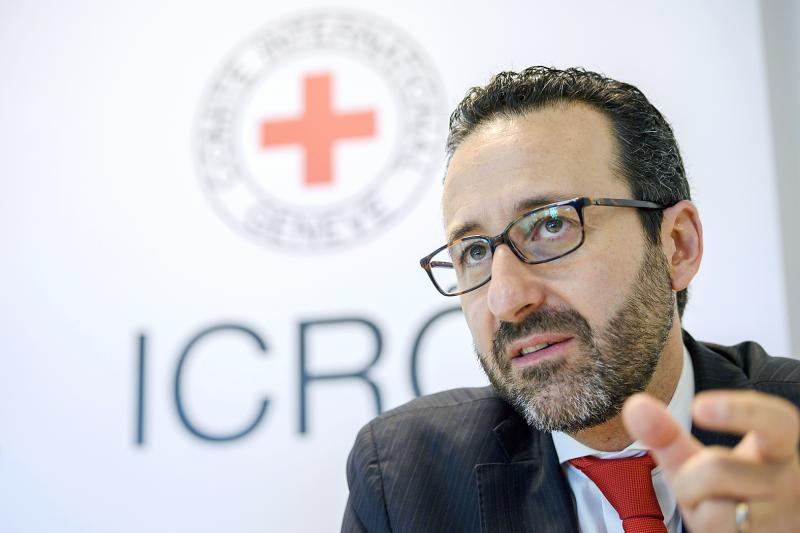
Photo: AP
The body, which has its headquarters in Geneva, Switzerland, had no immediate indication as to who might have carried out the attack.
The hackers targeted an external company in Switzerland that the Red Cross contracts to store data, it said.
There was no evidence so far that the compromised information had been leaked or put in the public domain, it said.
Its “most pressing concern” was the “potential risks that come with this breach — including confidential information being shared publicly — for people that the Red Cross and Red Crescent network seeks to protect and assist, as well as their families,” it said.
The data originated from at least 60 Red Cross and Red Crescent National Societies around the world.
“An attack on the data of people who are missing makes the anguish and suffering for families even more difficult to endure,” it said. “We are all appalled and perplexed that this humanitarian information would be targeted and compromised,” ICRC director-general Robert Mardini said. “This cyberattack puts vulnerable people, those already in need of humanitarian services, at further risk.”
Mardini called on those responsible to “do the right thing — do not share, sell, leak or otherwise use this data.”
“Your actions could potentially cause yet more harm and pain to those who have already endured untold suffering,” he said.
As a result of the attack, the Red Cross had been forced to shut down the computer systems underpinning its Restoring Family Links program, which seeks to reunite family members separated by conflict, disaster or migration, the statement said.
“We are working as quickly as possible to identify workarounds to continue this vital work,” it said.

Crowds in Bangladesh are flocking to snap photographs with an unlikely social media star — an albino buffalo with flowing blond hair nicknamed “Donald Trump” that is due to be sacrificed within days. Owner Zia Uddin Mridha, 38, said his brother named the 700kg bull over its flowing helmet of hair resembling the signature look of the US president. “My younger brother picked this name because of the buffalo’s extraordinary hair,” he said at his farm in Narayanganj, just outside the capital, Dhaka. Mridha said that a constant stream of curious visitors — social media fans, onlookers and children — have come throughout

The Bolivian government on Friday struck a deal with protesting miners, but was still grappling with blockades and demonstrations by other workers across La Paz. Other groups are still blocking access roads into the city, which is also the seat of the government. Police on Thursday prevented the miners from entering the main square by using tear gas, while the demonstrators hurled stones and explosives with slingshots. Protests against the policies of Bolivian President Rodrigo Paz have convulsed the Andean nation since early this month, and roadblocks were choking routes into La Paz throughout Friday, the national road authority said. Miners demanded that Paz
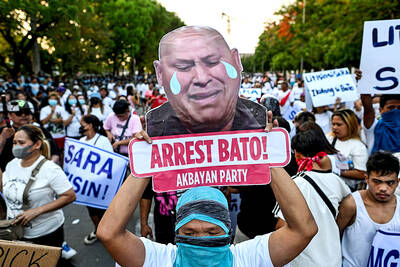
The Philippines said it has asked the country’s Supreme Court to allow it to arrest former Philippine president Rodrigo Duterte’s chief drug war enforcer to stand trial in an international tribunal. The International Criminal Court (ICC) last week unsealed an arrest warrant against Philippine Senator Ronald dela Rosa, accusing him along with Duterte and other “coperpetrators” of the “crime against humanity of murder.” Dela Rosa briefly sought refuge in the Philippine Senate last week while asking the Philippine Supreme Court to stop an ongoing attempt by government agents to arrest him. “By his own conduct, he has placed himself outside the protection of

The researchers in Ireland looked at their computer screen, marveling at a medieval book tracked down in a Roman library. They flipped through its digitized pages and found their sought-after treasure: the oldest surviving English poem. “We were extremely surprised. We were speechless. We couldn’t believe our eyes when we first saw that,” said Elisabetta Magnanti, a visiting research fellow at Trinity College Dublin’s school of English. The poem was also within the main body of Latin text, she said, calling it “extraordinary.” Composed in Old English by a Northumbrian agricultural worker in the 7th century, Caedmon’s Hymn appears within some copies of


 RSS
RSS