


Ukraine on Sunday said it had evidence that Russia was behind a massive cyberattack that knocked out key government Web sites last week, as Microsoft warned the hack could be far worse than first thought.
Tensions are at an all-time high between Ukraine and Russia, which Kiev accuses of having massed troops on its border ahead of a possible invasion.
On Friday, Washington also accused Russia of sending saboteurs trained in explosives to stage an incident that could be the pretext to invade its pro-Western neighbor.
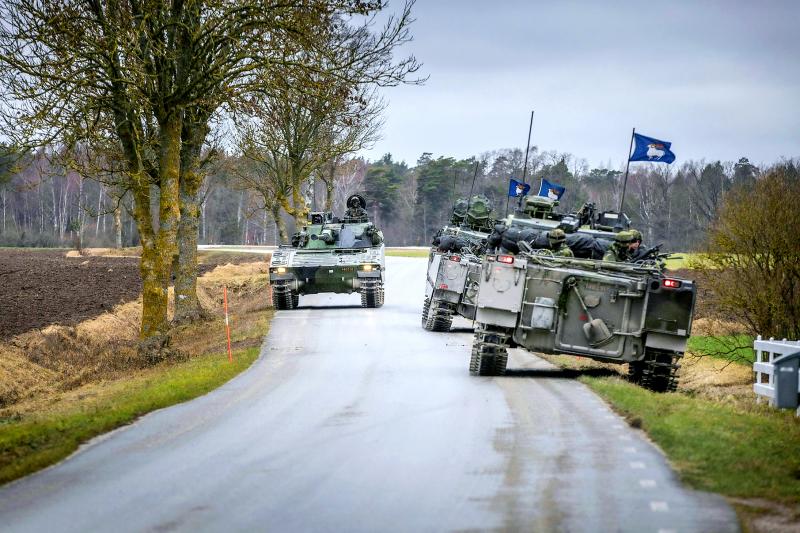
Photo: Reuters
“All the evidence points to Russia being behind the cyberattack,” the Ukrainian Ministry of Digital Transformation said in a statement.
“Moscow is continuing to wage a hybrid war,” it added.
The purpose of the attack “is not only to intimidate society, but also to destabilize the situation in Ukraine, halting the work of the public sector and crushing Ukrainians’ trust in the authorities,” it said.
The Kremlin has insisted there was no evidence Russia was behind the attack.
“We have nothing to do with it,” Russian President Vladimir Putin’s spokesman Dmitry Peskov told CNN.
“Ukrainians are blaming everything on Russia, even their bad weather in their country,” he said in English.
Kiev said late on Friday it had uncovered the first indications that Russian security services could have been behind the cyberattack.
Ukraine’s SBU security service said the attacks, in the early hours of Friday, had targeted a total of 70 government Web sites.
The Web site of the foreign ministry for a time displayed a message in Ukrainian, Russian and Polish that read: “Be afraid and expect the worst.”
Within hours of the breach, the security service said access to most affected sites had been restored and that the fallout was minimal.
However, Microsoft on Sunday warned that the cyberattack could prove destructive and affect more organizations than initially feared.
It said it was continuing to analyze the malware and warned it could render government digital infrastructure inoperable.
“The malware, which is designed to look like ransomware but lacking a ransom recovery mechanism, is intended to be destructive and designed to render targeted devices inoperable rather than to obtain a ransom,” Microsoft said in a blog post.
The number of affected organizations could be larger than initially thought, it said.
Rick Holland, chief information security officer at San Francisco-based Digital Shadows, said this kind of attack was part of the Russian playbook.
“Whether Russia encourages other actors or directs cyber operations themselves, Russia seeks to disrupt government and private institutions of their geopolitical opponents,” said John Bambenek, principal threat hunter at Netenrich. “Recovery depends on each entity, but Ukraine has a long history of responding to and recovering from sabotage attacks from Russia.”
Russia has amassed tanks, artillery and tens of thousands of troops near the border of Ukraine and demanded guarantees that its neighbor would never join NATO.
Senior Russian and Western officials held three rounds of talks in Geneva, Brussels and Vienna last week without achieving a breakthrough.
By the end of the week, Washington warned that Moscow could stage a false flag operation within weeks to precipitate an invasion.
US national security adviser Jake Sullivan said on Sunday that Washington would set out its next steps in the crisis after consulting with its partners in the coming days.
“But the key point here is that we’re ready either way,” Sullivan told CBS.
“If Russia wants to move forward with diplomacy, we are absolutely ready to do that in lockstep with our allies and partners,” he said.
“If Russia wants to go down the path of invasion and escalation, we’re ready for that too, with a robust response,” he added.
On Sunday, NATO Secretary-General Jens Stoltenberg again called on Russia to de-escalate, saying: “We are ready to sit down and also listen to their concerns.”
Peskov said that there were “some understandings between” Russia and the West.
“But in general, in principle, we can now say that we are staying on different tracks, on totally different tracks. And this is not good. This is disturbing,” he told CNN.
Ukrainian Minister of Foreign Affairs Dmytro Kuleba said Kiev and its Western partners were working on a broad “package to contain Russia” that would include “painful” new sanctions and moves to ramp up defense cooperation with the West.
“If Putin wants to know why neighbors are seeking to join NATO he only needs to look in the mirror,” he said in remarks released by the foreign ministry on Sunday.

An American scientist convicted of lying to US authorities about payments from China while he was at Harvard University has rebuilt his research lab in Shenzhen, China, to pursue technology the Chinese government has identified as a national priority: embedding electronics into the human brain. Charles Lieber, 67, is among the world’s leading researchers in brain-computer interfaces. The technology has shown promise in treating conditions such as amyotrophic lateral sclerosis and restoring movement in paralyzed people. It also has potential military applications: Scientists at the Chinese People’s Liberation Army have investigated brain interfaces as a way to engineer super soldiers by boosting

Indonesian police have arrested 13 people after shocking images of alleged abuse against small children at a daycare center went viral, sparking outrage across the nation, officials said on Monday. Police on Friday last week raided Little Aresha, a daycare center in Yogyakarta on Java island, following a report from a former employee. CCTV footage circulating on social media showed children, most younger than two, lying on the floor wearing only diapers, their hands and feet bound with rags. The police have confirmed that the footage is authentic. Police said they also found 20 children crammed into a room just 3m by 3m. “So

A grieving mother has ended her life at a clinic in Switzerland four years after the death of her only child. Wendy Duffy, 56, a physically healthy woman, died at the Pegasos clinic in Basel after struggling to cope with the death of her 23-year-old son, Marcus. The former care worker, from the West Midlands, England, had previously attempted to take her own life. The case comes as assisted dying would not become law in England and Wales after proposed legislation, branded “hopelessly flawed” by opponents, ran out of time. Ruedi Habegger, the founder of Pegasos, described Duffy’s death as

From post offices and parks to stations and even the summit of Mount Fuji, Japan’s vending machines are ubiquitous, but with the rapid pace of inflation cooling demand for their drinks, operators are being forced to rethink the business. Last month beverage giant DyDo Group Holdings announced it would remove about 20,000 vending machines — about 7 percent of their stock nationwide — by January next year, to “reconstruct a profitable network.” Pokka Sapporo Food & Beverage, based in Nagoya, also said last month it would sell its 40,000-machine operation to Osaka-based Lifedrink Co. “The strength of the vending machine


 RSS
RSS