


Twenty years ago, an area of ice thought to weigh almost 500 billion tonnes dramatically broke off the Antarctic continent and shattered into thousands of icebergs into the Weddell Sea.
The 3,250km2 Larsen B ice shelf was known to be melting fast, but no one had predicted that it would take just one month for the 200m-thick behemoth to completely disintegrate.
Glaciologists were shocked as much by the speed as by the scale of the collapse.
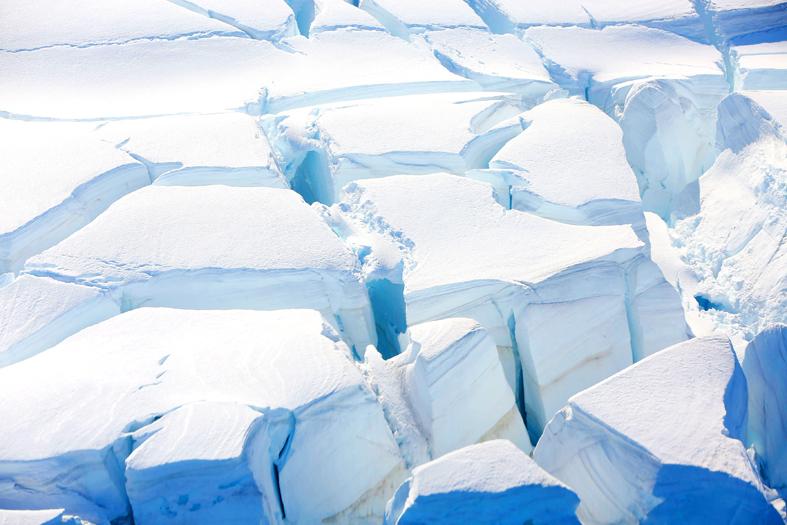
Photo: Reuters
“This is staggering. It’s just broken apart. It fell over like a wall and has broken as if into hundreds of thousands of bricks” one said.
This week, ice scientists meeting in New Orleans said that something even more alarming is brewing on the West Antarctic ice sheet — a vast basin of ice on the Antarctic peninsula.
Years of research by teams of British and US researchers showed that great cracks and fissures have opened up both on top of and underneath the Thwaites glacier, one of the biggest in the world, and it is feared that parts of it, too, might fracture and collapse within five years or less.
Thwaites makes Larsen B look like an icicle. It is roughly 100 times larger, about the size of the UK, and contains enough water on its own to raise sea levels worldwide by more than half a meter. It contributes to about 4 percent of annual global sea level rise and has been called the most important glacier in the world, even the “doomsday” glacier.
Satellite studies show it is melting far faster than it did in the 1990s.
Thwaites is worrisome, but there are many other great glaciers in Antarctica also retreating, thinning and melting as the Southern Ocean warms. Many are being held back because Thwaites acts like a cork, blocking their exit to the sea.
Should Thwaites fall apart, scientists believe the others would speed up, leading to the collapse of the whole ice sheet and catastrophic global sea level rises of several meters.
Whether and how quickly they could collapse are some of the most important questions of the age. Sea levels are rising fast: The annual rate of increase more than doubled from 1.4mm to 3.6mm between 2006 and 2015, and it is accelerating. A few millimeters a year does not sound like much, but the loss of even a small part of Thwaites would not just help to speed this up further, but would likely increase the severity of storm surges.
Should all West Antarctica’s glaciers ever collapse, there is no coastal city in the world that would not, over time, be swamped at ruinous cost to life and economies.
The consensus of glaciologists used to be that it would take centuries of global heating before glaciers the size of Thwaites shattered and collapsed, but so rapid and unexpected has been the loss of sea ice at the opposite end of the earth in the Arctic, and so sudden was the loss of Larsen B that it is now considered possible it could happen rapidly in Antarctica, too.
Ice loss in the Arctic barely affects sea levels because it mostly forms at sea.
However, Antarctic ice is mostly on land so any melting adds to sea levels.
The tipping point for the Larsen B ice shelf came suddenly. How Thwaites and other glaciers respond to global heating is still not known, but these big global physical processes are under way and can be addressed only by global action.
Yet just one month after COP26 ended in Glasgow, Scotland, the warning that the 300m thick, 80km-wide Thwaites glacier has started to crack up has been met with silence from governments preoccupied by COVID-19 and the return of normal politics.
The danger is that the many actions pledged last month to address global heating will be shelved for another year, to become just one more risk in an increasingly dangerous world.
Thwaites underlines that global heating and glaciers do not wait for politicians, and every year action to reduce climate emissions is delayed only accelerates global disaster.

The Bolivian government on Friday struck a deal with protesting miners, but was still grappling with blockades and demonstrations by other workers across La Paz. Other groups are still blocking access roads into the city, which is also the seat of the government. Police on Thursday prevented the miners from entering the main square by using tear gas, while the demonstrators hurled stones and explosives with slingshots. Protests against the policies of Bolivian President Rodrigo Paz have convulsed the Andean nation since early this month, and roadblocks were choking routes into La Paz throughout Friday, the national road authority said. Miners demanded that Paz
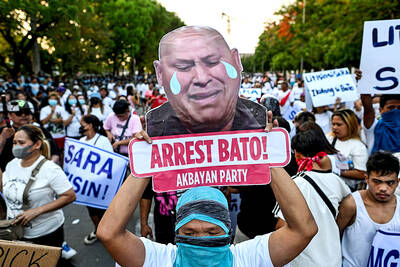
The Philippines said it has asked the country’s Supreme Court to allow it to arrest former Philippine president Rodrigo Duterte’s chief drug war enforcer to stand trial in an international tribunal. The International Criminal Court (ICC) last week unsealed an arrest warrant against Philippine Senator Ronald dela Rosa, accusing him along with Duterte and other “coperpetrators” of the “crime against humanity of murder.” Dela Rosa briefly sought refuge in the Philippine Senate last week while asking the Philippine Supreme Court to stop an ongoing attempt by government agents to arrest him. “By his own conduct, he has placed himself outside the protection of
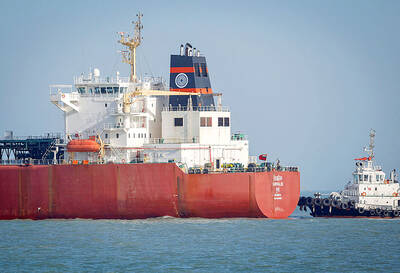
A ship anchored off the United Arab Emirates (UAE) was seized and taken toward Iran and another — a cargo ship near Oman — sank after being attacked, authorities said on Thursday, as tensions escalated near the Strait of Hormuz. It was not immediately clear who was behind these incidents, but they happened as a senior Iranian official reiterated his country’s claim of control over the waterway and another said it had a right to seize oil tankers connected to the US. The turmoil in the strait has been a sticking point for weeks in talks between the US and Iran to

The researchers in Ireland looked at their computer screen, marveling at a medieval book tracked down in a Roman library. They flipped through its digitized pages and found their sought-after treasure: the oldest surviving English poem. “We were extremely surprised. We were speechless. We couldn’t believe our eyes when we first saw that,” said Elisabetta Magnanti, a visiting research fellow at Trinity College Dublin’s school of English. The poem was also within the main body of Latin text, she said, calling it “extraordinary.” Composed in Old English by a Northumbrian agricultural worker in the 7th century, Caedmon’s Hymn appears within some copies of


 RSS
RSS