


An organization that bought a human body and organized its public dissection has said that it had a contract saying the body could be used for education, and its “Cadaver Lab Class” was appropriately educational, despite criticism from the man’s widow.
Death Science said it does not have any information about the man whose body was dissected on Oct. 17 in Portland, Oregon, with tickets sold through a separate “Oddities and Curiosities Expo.”
Seattle station KING-TV identified the man from a typed ID bracelet as David Saunders, 98, of Baker, Louisiana, a Baton Rouge suburb.
Such use of the World War II and Korean War veteran’s body was horrible and unethical, his wife, Elsie Saunders, told the Advocate of Baton Rouge: “I have all this paperwork that says his body would be used for science — nothing about this commercialization of his death.”
Death Science responded on Friday with a statement saying its contract with Med Ed Labs of Las Vegas, Nevada, certified that “the provided cadaver was donated for research, medical and educational purposes.”
“My goal was to create an educational experience for individuals who have an interest in learning more about human anatomy. We understand that this event has caused undue stress for the family and we apologize for that,” wrote Jeremy Ciliberto, who described himself as “communications consultant” for the group.
KING-TV described him as a founder of Death Science.
Ciliberto told the station that Death Science paid more than US$10,000 for the cadaver.
About 70 people paid US$100 to US$500 to attend its dissection, depending on whether they were doing so virtually or in person, the seat location and whether they were watching for a whole or half day, the prepared statement said.
“Med Ed Labs provided the cadaver, supplied the anatomist (the individual who instructed/conducted the class), tools and equipment for the procedure, a completed serology report, booked the venue for the course, and was responsible for the handling of the cadaver before, during and after the event,” the Death Science statement said.
Med Ed manager Obteen Nassiri told the newspaper that he did not know people would be buying tickets.
Death Science had promised everything would be professional, he said.
Death Science said it had been in touch with Nassiri for months, “including, but not limited to, the fact that the attendees are not exclusively medical students and ticket sales.”
Both said it was Death Science’s first contract with Med Ed, and would be the last.
The company had been slated to provide a cadaver for a Halloween class in Seattle, which was canceled after KING-TV’s reports.
“Death Science and Med Ed Labs dissolved their working relationship and the event was canceled,” Death Science’s statement said.
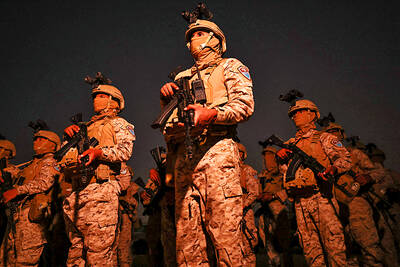
PRECARIOUS RELATIONS: Commentators in Saudi Arabia accuse the UAE of growing too bold, backing forces at odds with Saudi interests in various conflicts A Saudi Arabian media campaign targeting the United Arab Emirates (UAE) has deepened the Gulf’s worst row in years, stoking fears of a damaging fall-out in the financial heart of the Middle East. Fiery accusations of rights abuses and betrayal have circulated for weeks in state-run and social media after a brief conflict in Yemen, where Saudi airstrikes quelled an offensive by UAE-backed separatists. The United Arab Emirates is “investing in chaos and supporting secessionists” from Libya to Yemen and the Horn of Africa, Saudi Arabia’s al-Ekhbariya TV charged in a report this week. Such invective has been unheard of
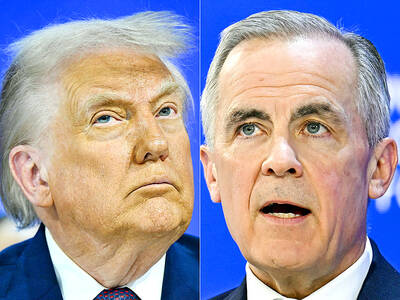
US President Donald Trump on Saturday warned Canada that if it concludes a trade deal with China, he would impose a 100 percent tariff on all goods coming over the border. Relations between the US and its northern neighbor have been rocky since Trump returned to the White House a year ago, with spats over trade and Canadian Prime Minister Mark Carney decrying a “rupture” in the US-led global order. During a visit to Beijing earlier this month, Carney hailed a “new strategic partnership” with China that resulted in a “preliminary, but landmark trade agreement” to reduce tariffs — but
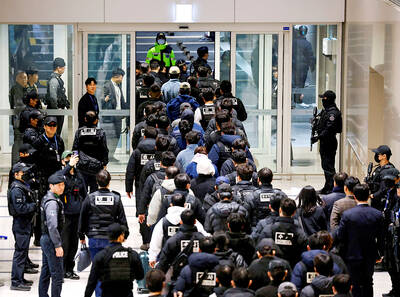
SCAM CLAMPDOWN: About 130 South Korean scam suspects have been sent home since October last year, and 60 more are still waiting for repatriation Dozens of South Koreans allegedly involved in online scams in Cambodia were yesterday returned to South Korea to face investigations in what was the largest group repatriation of Korean criminal suspects from abroad. The 73 South Korean suspects allegedly scammed fellow Koreans out of 48.6 billion won (US$33 million), South Korea said. Upon arrival in South Korea’s Incheon International Airport aboard a chartered plane, the suspects — 65 men and eight women — were sent to police stations. Local TV footage showed the suspects, in handcuffs and wearing masks, being escorted by police officers and boarding buses. They were among about 260 South
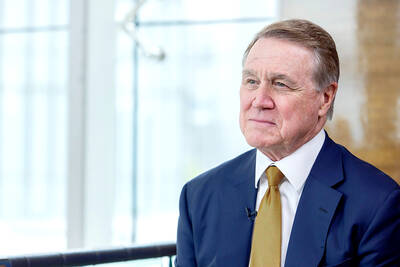
Chinese President Xi Jinping’s (習近平) purge of his most senior general is driven by his effort to both secure “total control” of his military and root out corruption, US Ambassador to China David Perdue said told Bloomberg Television yesterday. The probe into Zhang Youxia (張又俠), Xi’s second-in-command, announced over the weekend, is a “major development,” Perdue said, citing the family connections the vice chair of China’s apex military commission has with Xi. Chinese authorities said Zhang was being investigated for suspected serious discipline and law violations, without disclosing further details. “I take him at his word that there’s a corruption effort under


 RSS
RSS