


Philippine President Rodrigo Duterte on Monday unabashedly renewed his threat to kill drug dealers in his final state of the nation speech, while defending his nonconfrontational approach in the country’s territorial dispute with China in the South China Sea.
Duterte, 76, who won a six-year presidential term in 2016, is winding down his often-tumultuous presidency amid a resurging COVID-19 outbreak, a battered economy and a legacy overshadowed by his deadly campaign against illegal drugs, which has set off complaints of mass murder before the International Criminal Court (ICC).
While many expected him to focus on ways to combat COVID-19, which has devastated the economy, and worsened hunger and poverty, Duterte instead devoted most of a rambling, nearly three-hour televised speech to non-pandemic topics he has repeatedly addressed in the past.
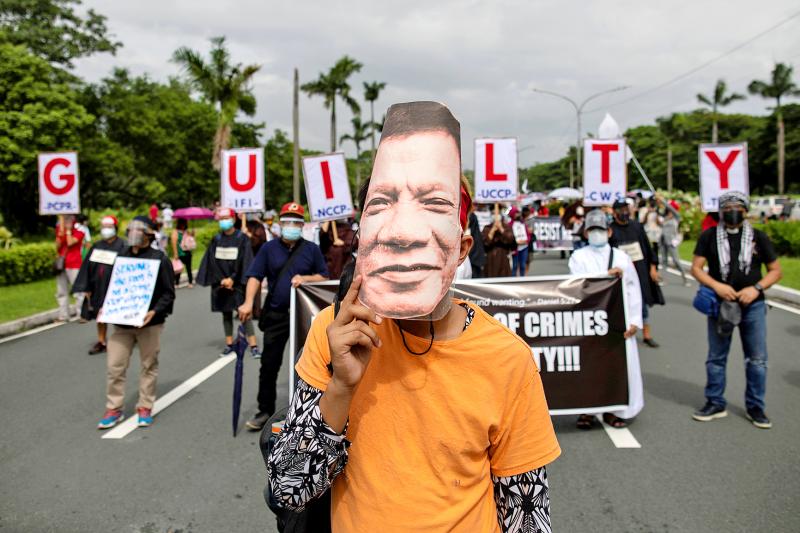
Photo: Reuters
Duterte reiterated his threat to kill drug dealers, saying that it is tougher to fight criminals the “legal way,” while daring the ICC to record his remarks.
“I would never deny and the ICC can record it: Those who destroy my country, I will kill you. And those who destroy the young people of our country, I will kill you,” Duterte said. “I will really bring you down because I love my country.”
“You can do it the legal way, but it would take you months and years,” Duterte told an audience of legislators, Cabinet members and foreign diplomats.
Duterte and police officials have denied condoning extrajudicial killings, but he has repeatedly threatened to kill suspects in his public speeches.
More than 6,000 mostly petty suspects have been killed during police drug raids. A large number have also been gunned down by motorcycle-riding assassins who human rights groups suspect are linked to law enforcement.
Duterte has acknowledged that he failed to fulfill a campaign promise to eradicate the drug menace and deeply entrenched corruption within six months of becoming president, but he said he had found that at least nine police generals and Philippine Bureau of Customs officials were involved in the drug trade.
“I did not know that I was fighting my own government,” he said, although the involvement of law enforcers and public officials has long been reported.
Randy Delos Santos, whose 17-year-old nephew, Kian, was shot to death in 2017 by three officers who were later convicted of murder, said that the poor have been traumatized by the drug crackdown.
“He has not won this war on drugs, because the problem is still there, but a lot of families have lost their breadwinners,” Delos Santos said. “We’re the biggest loser and we still live in fear.”
Allies have defended Duterte’s record, with documentaries on state-run TV and speeches highlighting his administration’s efforts to fight criminality, poverty, corruption, and decades-long communist and Muslim insurgencies, as well as build infrastructure.
However, increasingly vocal opponents have criticized Duterte’s handling of key issues, including his refusal to confront China’s pressing of territorial claims in the South China Sea.
Duterte said that he had not aggressively confronted China because a military solution is not an option for the weaker Philippines.
“It will be a massacre if I go and fight a war now,” Duterte said. “We are not yet a competent and able enemy of the other side.”
Duterte thanked medical workers who are fighting COVID-19, along with private companies and foreign banks that have provided assistance and funds allowing the country to deal with the outbreak.
The economy could hardly endure more lockdowns, Duterte said, adding that he would have little option but to resort to more restrictions if the Delta variant of SARS-CoV-2 spreads widely.
“I really do not know what to do. I have to listen to the task force,” he said, referring to a government body of Cabinet officials and medical experts.
Philippine Senator Risa Hontiveros said that she failed to hear clear plans in Duterte’s speech for dealing with inadequate virus testing and contact tracing, and the massive number of Filipinos who have lost their livelihoods because of the outbreak.
“Our people wanted to hear about jobs and health from the president. He should have focused on these most of all,” Hontiveros said.
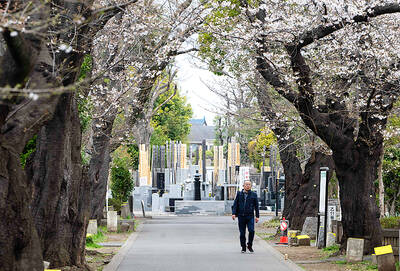
ROCKY RELATIONS: The figures on residents come as Chinese tourist numbers drop following Beijing’s warnings to avoid traveling to Japan The number of Chinese residents in Japan has continued to rise, even as ties between the two countries have become increasingly fractious, data released on Friday showed. As of the end of December last year, the number of Chinese residents had increased by 6.5 percent from the previous year to 930,428. Chinese people accounted for 22.6 percent of all foreign residents in Japan, making them by far the largest group, Japanese Ministry of Justice data showed. Beijing has criticized Tokyo in increasingly strident terms since Japanese Prime Minister Sanae Takaichi last year suggested that a military conflict around Taiwan could

A retired US colonel behind a privately financed rocket launch site in the Dominican Republic sees the project as a response to China’s dominance of the space race in Latin America. Florida-based Launch on Demand is slated to begin building a US$600 million facility in a remote region near the border with Haiti late this year. The project is designed to meet surging demand for the heavy-lift rockets needed to put clusters of satellites into orbit. It is also an answer to China’s growing presence in the region, said CEO Burton Catledge, a former commander of the US Air Force’s 45th Operations

Germany is considering Australia’s Ghost Bat robot fighter as it looks to select a combat drone to modernize its air force, German Minister of Defense Boris Pistorius said yesterday. Germany has said it wants to field hundreds of uncrewed fighter jets by 2029, and would make a decision soon as it considers a range of German, European and US projects developing so-called “collaborative combat aircraft.” Australia has said it will integrate the Ghost Bat, jointly developed by Boeing Australia and the Royal Australian Air Force, into its military after a successful weapons test last year. After inspecting the Ghost Bat in Queensland yesterday,
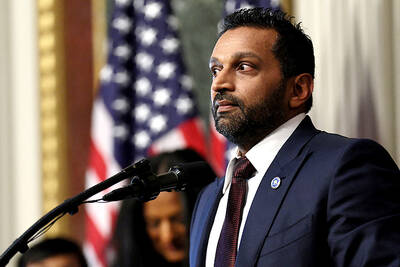
A pro-Iran hacking group claimed to breach FBI Director Kash Patel’s personal e-mail inbox and posted some of the contents online. The e-mails provided by the hacking group include travel details, correspondence with leasing agents in Washington and global entry, and loyalty account numbers. The e-mail address the hackers claim to have compromised has been previously tied to Patel’s personal details, and the leaked e-mails contain photos of Patel and others, in addition to correspondence with family members and colleagues. “The FBI is aware of malicious actors targeting Director Patel’s personal email information,” the agency said in a statement on


 RSS
RSS