


Hackers involved in the hijacking of Twitter accounts earlier this week were young pals with no links to state or organized crime, the New York Times (NYT) reported on Friday.
The attack, which Twitter and US federal police are investigating, started with a playful message between hackers on the platform Discord, a chat service popular with gamers, according to NYT.
The paper said it had interviewed four people who participated in the hacking, who shared logs and screenshots backing up their accounts of what happened.
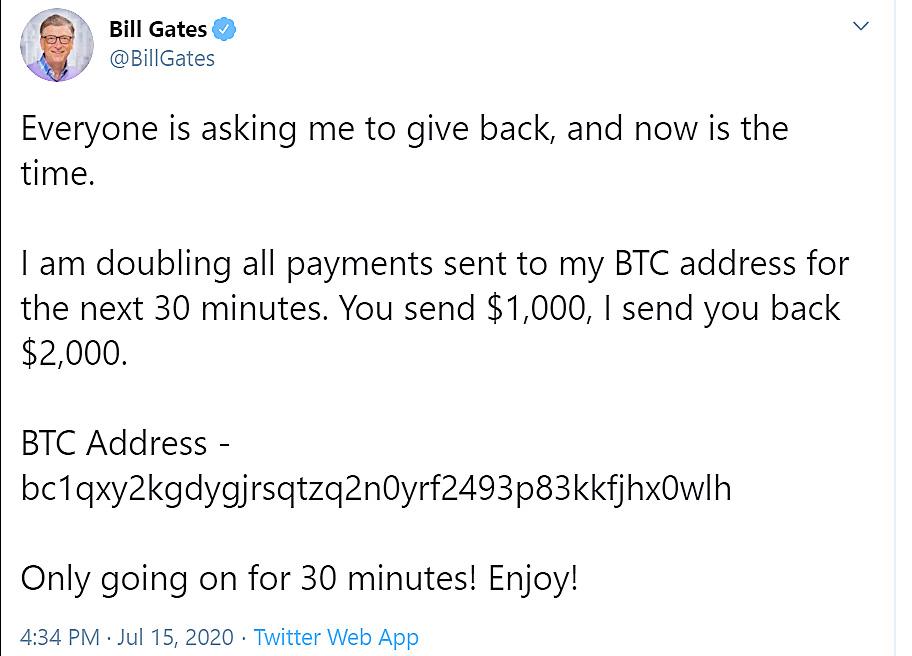
Photo: AP
“The interviews indicate that the attack was not the work of a single country like Russia or a sophisticated group of hackers,” the NYT reported. “Instead, it was done by a group of young people — one of whom says he lives at home with his mother — who got to know one another because of their obsession with owning early or unusual screen names, particularly one letter or number, like @y or @6.”
The massive hack of high-profile users from Tesla chief executive Elon Musk to former US vice president Joe Biden has raised questions about Twitter’s security, as it serves as a megaphone for US politicians ahead of November’s US presidential election.
“Based on what we know right now, we believe approximately 130 accounts were targeted by the attackers in some way as part of the incident,” Twitter said in a tweet. “For a small subset of these accounts, the attackers were able to gain control of the accounts and then send Tweets from those accounts.”
Posts trying to dupe people into sending hackers bitcoin were on Wednesday tweeted by the official accounts of Apple, Uber, Kanye West, Microsoft cofounder Bill Gates, former US president Barack Obama and many others.
Twitter said it appeared to be a “coordinated social engineering attack by people who successfully targeted some of our employees with access to internal systems and tools.”
Fraudulent posts, which were largely deleted, said that people had 30 minutes to send US$1,000 in bitcoin, promising they would receive twice as much in return.
More than US$100,000 of bitcoin was sent to e-mail addresses mentioned in the tweets, according to Blockchain.com, which monitors crypto transactions.
The young hackers interviewed by the NYT said that a mysterious user who went by the name “Kirk” initiated the scheme with a message and was the one with access to Twitter accounts.
They said they were only involved in commandeering lesser-known Twitter accounts, particularly to swipe coveted short handles, such as an “@” sign and single letters or numbers, that could easily be sold, according to the report.
The hackers said they stopped serving as intermediary for “Kirk” when high-profile accounts became targets.
Some hackers are “obsessed” with hijacking “original gangster” (OG) social media accounts staked out in the services’ early days that have short profile names, said Brian Krebs of the blog Krebs on Security.
“Possession of these OG accounts confers a measure of status and perceived influence and wealth in SIM-swapping circles, as such accounts can often fetch thousands of dollars when resold in the underground,” Krebs said in a post.
Hackers involved in the attack on Twitter advertised account names at the OGusers.com Web site, asking for payment in bitcoin, the NYT reported.


PHISHING: The con might appear convincing, as the scam e-mails can coincide with genuine messages from Apple saying you have run out of storage For a while you have been getting messages from Apple saying “your iCloud storage is full.” They say you have exceeded your storage plan, so documents are no longer being backed up, and photos you take are not being uploaded. You have been resisting Apple’s efforts to get you to pay a minimum of £0.99 (US$1.33) a month for more storage, but it seems that you cannot keep putting off the inevitable: You have received an e-mail which says your iCloud account has been blocked, and your photos and videos would be deleted very soon. To keep them you need

For two decades, researchers observed members of the Ngogo chimpanzee group of Kibale National Park in Uganda spend their days eating fruits and leaves, resting, traveling and grooming in their tropical rainforest abode, but this stable community then fractured and descended into years of deadly violence. The researchers are now describing the first clearly documented example of a group of wild chimpanzees splitting into two separate factions, with one launching a series of coordinated attacks against the other. Adult males and infants were targeted, with 28 deaths. “Biting, pounding the victim with their hands, dragging them, kicking them — mostly adult males,

The Israeli military has demolished entire villages as part of its invasion of south Lebanon, rigging homes with explosives and razing them to the ground in massive remote detonations. The Guardian reviewed three videos posted by the Israeli military and on social media, which showed Israel carrying out mass detonations in the villages of Taybeh, Naqoura and Deir Seryan along the Israel-Lebanon border. Lebanese media has reported more mass detonations in other border villages, but satellite imagery was not readily available to verify these claims. The demolitions came after Israeli Minister of Defense Israel Katz called for the destruction of

SUPERFAN: The Japanese PM played keyboard in a Deep Purple tribute band in middle school and then switched to drums at university, she told the British rock band Legendary British rock band Deep Purple yesterday made Japanese Prime Minister Sanae Takaichi’s day with a brief visit to their high-profile superfan as they returned to the nation they first toured more than half a century ago. Takaichi’s reputation as an amateur drummer, and a fan of hard rock and heavy metal has been well documented, and she has referred to Deep Purple as one of her favorite bands along with the likes of Black Sabbath and Iron Maiden. “You are my god,” a giddy Takaichi said in English to Deep Purple drummer Ian Paice, presenting him with a set of made-in-Japan


 RSS
RSS