


The Japanese government yesterday began preparing for the declaration of a state of emergency over the COVID-19 outbreak, as infections spike in the capital, Tokyo, and elsewhere.
Japanese Prime Minister Shinzo Abe was expected to meet late yesterday with a panel of experts advising the government on the global pandemic, with widespread reports that he would announce a state of emergency as soon as today.
The preparations come as infections grow steadily — although in far smaller numbers than in Europe or the US.
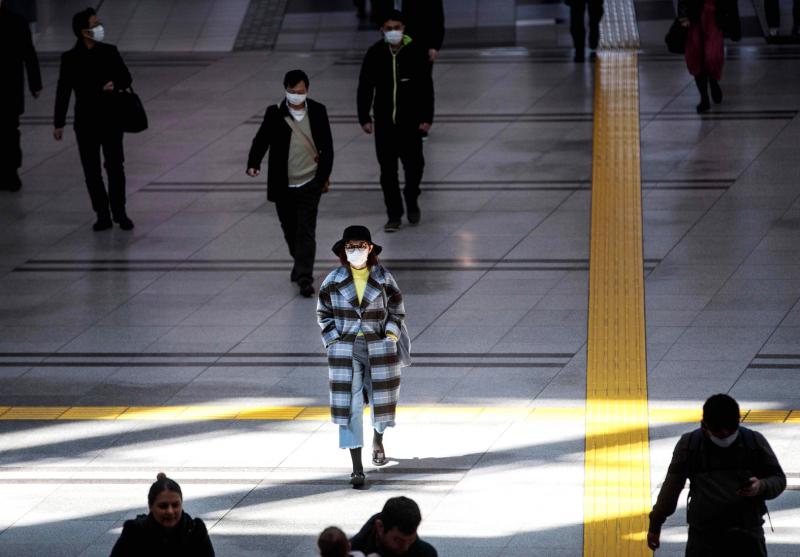
Photo: AFP
Tokyo announced a record 148 new cases on Sunday and pressure has increased on the government to take fresh action.
Tokyo Governor Yuriko Koike has already urged residents of the capital to avoid non-essential outings on weekends and to work from home during the week.
“We’ve not received anything formal, but we are preparing various things, assuming Tokyo will be designated,” she told reporters yesterday, when asked about a possible declaration.
The declaration would reportedly only cover parts of the country where infections are increasing rapidly, and falls far short of the strict lockdown measures seen elsewhere in the world.
It would allow governors of areas affected to ask, but not order, residents to stay home, and call on businesses that attract crowds to shut their doors.
It allows the commandeering of land and buildings for medical purposes.
However, there is no legal power to enforce requests for people to stay inside and no punishments mandated for those who fail to do so.
Public transport would continue to run, although reports yesterday said that Tokyo might ask train operators to reduce services by up to 50 percent, and supermarkets, banks and hospitals would remain open.
Experts say that Japan’s legal system restricts the government’s ability to limit the movement of citizens.
“Japan is still haunted by the negative legacy of the war [World War II] and the oppression of its citizens,” said Yoshinobu Yamamoto, an emeritus professor of international politics at the University of Tokyo.
However, he said if the relatively relaxed measures proved insufficient to curb the spread of the virus, “calls for a stronger power to control people may grow.”
“This case could be a touchstone,” he said.
Japan has so far been spared the sort of crisis seen in parts of Europe and the US, with about 3,650 cases across the country — compared with more than 335,000 in the US and about 130,000 in Italy and Spain.
It recorded its first infection in the middle of January, and Abe stunned the country by calling for nationwide school closures in February — far earlier than in many countries.
In the past few days, Tokyo’s streets have been noticeably quieter as residents heeded the request to stay home.
Many businesses have already announced voluntary, temporary closures.
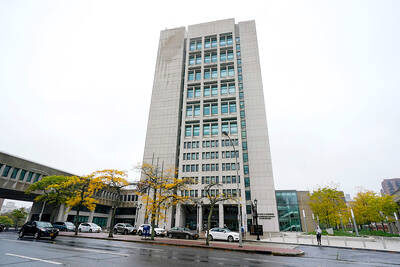
A coalition of civil rights groups on Tuesday asked a New York State judge to order one of its largest suburban counties to stop its deployment of nearly 600 license plate readers, calling it a warrantless and “indiscriminate surveillance system” that violates the state constitution. The class action lawsuit also alleged that Westchester County never got proper authorization to launch the program, which has amassed a database of 1.6 billion plate scans that has been shared with more than 50 outside law enforcement agencies. The complaint said the network “records the long-term travel patterns, daily habits, and intimate information of millions of
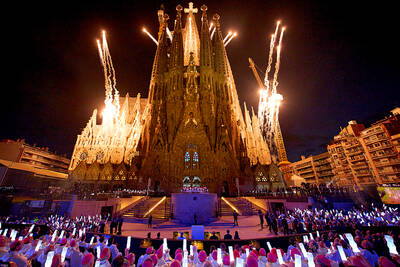
Pope Leo XIV on Wednesday blessed a giant new tower at Barcelona’s famed Sagrada Familia Basilica after celebrating mass inside what is now the world’s tallest church. A fireworks and light show illuminated the exterior of the temple at the end of the ceremony, bathing the unfinished basilica in shifting colours that highlighted its towering spires. A choir of 600 singers performed at the service which lasted around 90 minutes and was attended by Spanish Prime Minister Pedro Sanchez as well as King Felipe VI and Queen Letizia. The stained-glass windows in various colours shone brightly in between the tree-like

Voters in Switzerland yesterday cast their ballots on an initiative championed by the top right-wing party to cap the Alpine country’s population at 10 million. As of press time last night, early results showed that Swiss voters were leaning against it. The populist Swiss People’s Party, which has the most seats in parliament, has stirred up and fostered anti-migration sentiment over the years, notably about an influx of workers from the neighboring EU. Critics called the bid a self-inflicted wound, saying the boom in migration over the past generation has brought foreign labor and skills to sectors such as healthcare, finance, pharmaceuticals

Scientists have discovered communities of marine life — including jellyfish, tubeworms and brittle stars — thriving on a whale graveyard. The graveyards form when whale carcasses fall to the sea floor, becoming a sustaining snack for nearby critters. This one, which is up to 7km below the surface of the southeastern Indian Ocean, spans the largest area, and is so far the deepest found. A whale’s sheer size and the unique chemistry of its bones are the keys to forming these unique underwater neighborhoods, said Song Xikun (宋希坤), a biologist with the Chinese Academy of Sciences’ Institute of Deep-sea Science and Engineering


 RSS
RSS