


Indian Prime Minister Narendra Modi is to declare that his flagship sanitation program has ended open defecation in India, despite accusations that the scheme has sparked violence and abuse.
Modi is to make the announcement tomorrow at an event in his home state of Gujarat, attended by 20,000 village chiefs and international dignitaries, according to the government.
However, Modi’s claims about the success of his Swachh Bharat (Clean India) program mask reports of intimidation, harassment and violence.
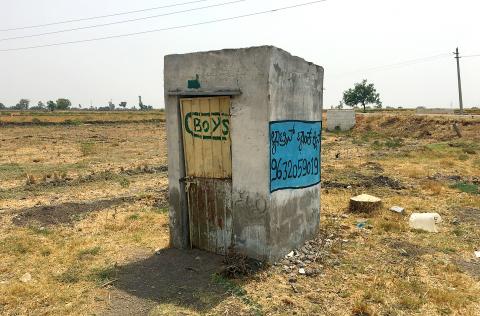
Photo: Reuters
Last week, two low-caste children caught defecating outside were lynched.
The program was launched in 2014 and sparked a flurry of toilet-building — more than 100 million in five years.
Politicians and Bollywood stars have participated in huge government publicity campaigns to promote the scheme, and children in rural schools have marched around villages singing about the public health benefits of eliminating open defecation.
Many government and independent studies show that open defecation has dramatically declined.
However, the program has been dogged by criticism that overzealous government workers, volunteers and vigilantes have used coercive tactics to help the government’s effort.
An Indian news channel reported that the children — a 12-year-old girl and a 10-year-old boy — killed last week in Madhya Pradesh lived in a small hut without a toilet in a village that was declared open-defecation free in April last year.
The boy’s father, Manoj Valmiki, told al-Jazeera that the children were killed after an altercation, during which caste-based slurs were used toward the family.
The building of toilets has led to huge advances in sanitation. An independent study of four states by the Institute of Labour Economics found that, from the program’s launch to the end of last year, the number of people who admitted to defecating in the open declined from 70 percent to approximately 40 to 50 percent.
The report was disputed by India’s government, who said that rural toilet usage was 93.4 percent.
Academics and opposition parties have accused the government of “fudging data” to meet the government’s ambitious targets.
A report listed a number of alarming incidents. One video showed a woman screaming as she was dragged into a car by village “motivators.” Another showed men holding their ears and doing sit-ups surrounded by police officers and government staff as a punishment for openly defecation.
The study also listed local news reports documenting attacks against open defecators, and showed billboards in one district that warned: “If you defecate in the open, you will soon get death.”
“As an unintended consequence of the desire to obtain rewards, including the title of ‘open-defecation free,’ some aggressive and abusive practices seem to have emerged,” wrote Leo Heller, UN special rapporteur for safe drinking water and sanitation.

School bullies in Singapore are to face caning under new guidelines, but the education minister on Tuesday said it would be meted out only as a last resort with strict safeguards. Human rights groups regularly criticize Singapore for the use of corporal punishment, which remains part of the school and criminal justice systems, but authorities have defended it as a deterrent to crime and serious misconduct. Caning was discussed in the parliament after legislators asked how it would be used in relation to bullying in schools. The debate followed stricter guidelines on serious student misconduct, including bullying, unveiled by the Singaporean Ministry of

As evening falls in Fiji’s capital, a steady stream of people approaches a makeshift clinic that is a first line of defense against one of the world’s fastest-growing HIV epidemics. In the South Pacific nation — a popular tourist destination of just under a million people — more than 2,000 new HIV cases were recorded last year, a 26 percent increase from 2024. The government has declared an HIV outbreak and described it as a national crisis. “It’s spreading like wildfire,” said Siteri Dinawai, 46, who came to be tested. The Moonlight Clinic, a converted minibus parked in a suburban cul-de-sac in Suva, is
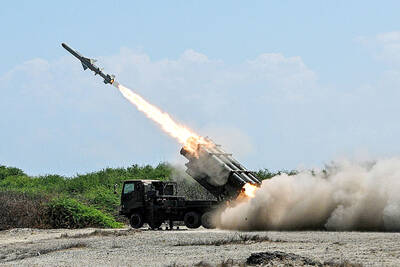
A MESSAGE: Japan’s participation in the Balikatan drills is a clear deterrence signal to China not to attack Taiwan while the US is busy in the Middle East, an analyst said The Japan Self-Defense Forces yesterday fired a Type 88 anti-ship missile during a joint maritime exercise with US, Australian and Philippine forces, hitting a decommissioned Philippine Navy ship in waters facing the disputed South China Sea, in drills that underscore Tokyo’s rising willingness to project military power on China’s doorstep. The drill took place as Manila and Tokyo began talks on a potential defense equipment transfer, made possible by Japan’s decision to scrap restrictions on military exports. The discussions include the possible early transfer of Abukuma-class destroyers and TC-90 aircraft to the Philippines, Japanese Minister of Defense Shinjiro Koizumi said. Philippine Secretary of
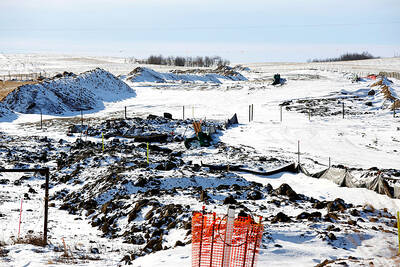
Separatists in Alberta are preparing to submit a petition tomorrow that they said has enough signatures to force a referendum on independence for the oil-rich Canadian province. Polls indicate the pro-independence camp remains a minority among Alberta’s 5 million people, but has hit a historic high of roughly 30 percent. Alberta separatists are also closer than ever to forcing a referendum, riding momentum fueled by intensifying grievances over Ottawa’s control of the provincial oil industry. They have also undeniably gotten a boost from the return to power of US President Donald Trump. After launching a petition in January, Stay Free Alberta, the group


 RSS
RSS