


A former Rohingya legislator has been arrested in Myanmar in move that has been condemned as a further escalation of the attacks on the Rohingya community.
Aung Zaw Win, a major property tycoon and former legislator for the Union Solidarity and Development party, was on Wednesday last week arrested at Yangon International Airport as he was about to leave on a business trip to Bangkok.
A government statement said he has been accused of financing the Arakan Rohingya Salvation Army (ARSA), the Rohingya military group.
Aung Zaw Win remains in custody in the Mingaladon police station near the airport, but despite being held for five days, has undergone no questioning.
“The government and military [are] sending a signal to all of the Rohingya living and working in Yangon that they are also under threat, that they want to destroy the whole Rohingya community, not just those in Rahkine,” Rohingya activist Nay San Lwin said.
Since August last year, thousands of Rohingya have been killed and more than 700,000 fled to neighboring Bangladesh after a military-led campaign of violence.
Aung Zaw Win is one of the most prominent Rohingya businesspeople in Myanmar, with a vast property empire that includes hotels in Yangon and and Naypyidaw, as well as numerous construction companies. He was also a legislator for Maungdaw in Rahkine until 2015.
“It’s extremely worrying that he has been arrested like this. This is just how the old military dictatorship acted,” Burma Campaign UK director Mark Farmaner said.
Aung Zaw Win’s arrest has come as a surprise to many, for he is well known for his close ties to the military and is a divisive figure among the Rohingya. His involvement in politics was mainly for business purposes and he steered clear of making any political statement regarding the plight of the Rohingya in Myanmar.
As a lawmaker, he was even among those who pressured the Rohingya community to accept Bengali identity, a proposal that reinforced the idea that they are not native to Myanmar, but immigrants from Bangladesh.
The timing of the arrest, against the backdrop of the attacks against the Rohingya, was “a clear threat to all the Rohingya in Yangon. That no one is safe from arrest, even if you have big business or are close links to the military,” Nay San Lwin said.
It was “extremely unlikely” that Aung Zaw Win was involved in funding ARSA, because “he has never been an activist and as a businessman with billions in property, he would never engage in this kind of activity — he only cared about his business,” he added.
Some have controversially suggested that ARSA was a proxy of the Burmese military, created to give them a legitimate reason to step up their attacks on the Rohingya.
“He is the military’s man and if he did finance ARSA, it’s my view it would only have been because of pressure from them,” Nay San Lwin added.
Another source who preferred to be unnamed for security reasons echoed the view that “average Rohingya have long distrusted [Aung Zaw Win].
Many believe he is connected to the military, and some believe he was instrumental in fomenting violence in 2012, after which he was rewarded land in Yangon and Naypyidaw.
“Some believe he worked with the military to create and instigate al-Yaqin [ARSA], creating the conditions for a military takedown of all civilians, and now they’re taking him down,” the source said.
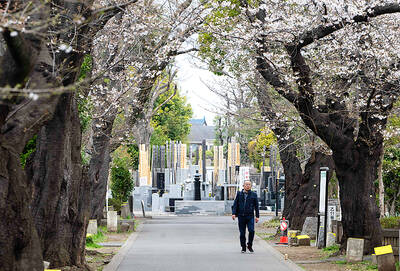
ROCKY RELATIONS: The figures on residents come as Chinese tourist numbers drop following Beijing’s warnings to avoid traveling to Japan The number of Chinese residents in Japan has continued to rise, even as ties between the two countries have become increasingly fractious, data released on Friday showed. As of the end of December last year, the number of Chinese residents had increased by 6.5 percent from the previous year to 930,428. Chinese people accounted for 22.6 percent of all foreign residents in Japan, making them by far the largest group, Japanese Ministry of Justice data showed. Beijing has criticized Tokyo in increasingly strident terms since Japanese Prime Minister Sanae Takaichi last year suggested that a military conflict around Taiwan could

A retired US colonel behind a privately financed rocket launch site in the Dominican Republic sees the project as a response to China’s dominance of the space race in Latin America. Florida-based Launch on Demand is slated to begin building a US$600 million facility in a remote region near the border with Haiti late this year. The project is designed to meet surging demand for the heavy-lift rockets needed to put clusters of satellites into orbit. It is also an answer to China’s growing presence in the region, said CEO Burton Catledge, a former commander of the US Air Force’s 45th Operations

Germany is considering Australia’s Ghost Bat robot fighter as it looks to select a combat drone to modernize its air force, German Minister of Defense Boris Pistorius said yesterday. Germany has said it wants to field hundreds of uncrewed fighter jets by 2029, and would make a decision soon as it considers a range of German, European and US projects developing so-called “collaborative combat aircraft.” Australia has said it will integrate the Ghost Bat, jointly developed by Boeing Australia and the Royal Australian Air Force, into its military after a successful weapons test last year. After inspecting the Ghost Bat in Queensland yesterday,
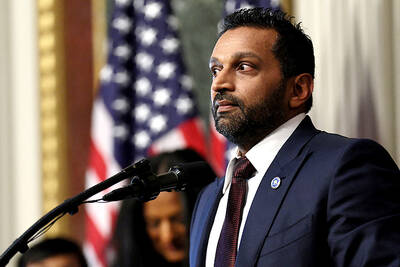
A pro-Iran hacking group claimed to breach FBI Director Kash Patel’s personal e-mail inbox and posted some of the contents online. The e-mails provided by the hacking group include travel details, correspondence with leasing agents in Washington and global entry, and loyalty account numbers. The e-mail address the hackers claim to have compromised has been previously tied to Patel’s personal details, and the leaked e-mails contain photos of Patel and others, in addition to correspondence with family members and colleagues. “The FBI is aware of malicious actors targeting Director Patel’s personal email information,” the agency said in a statement on


 RSS
RSS