


Venezuelan President Nicolas Maduro was expecting few surprises in yesterday’s municipal elections, amid an opposition boycott and voter enthusiasm undercut by an economic crisis.
The main opposition parties are boycotting the vote, saying they lack any guarantees of fairness or transparency as voters were to pick 335 mayors across the country.
However, the lack of a serious challenge to Maduro candidates has led to skepticism in the main cities of Caracas, Maracaibo and San Cristobal.
“I’m not going to vote because I don’t believe in the transparency of the CNE [National Election Council],” said Nerver Huerta, a 38-year-old graphic designer in Caracas.
Maduro’s ruling socialist party was handed a clear path to victory after the three main parties in the opposition coalition Democratic Union Roundtable refused to participate, although smaller parties have decided to contest the election.
In the cards is a repeat of the electoral drubbing suffered by the opposition in October’s regional elections, which they claim were fraudulent, analysts have said.
Those supporting the government are a combination of ideological loyalists and pragmatists aware that their electronic Fatherland Card, courtesy of the government, could help them get access to scarce medicine or food.
Opposition critics have called it bald-faced social control.
“The president, despite everything, has helped me. I could not be ungrateful,” said William Lugo, 65, as he managed the payment of Christmas bonuses that the government has said benefits 4 million people.
“I will vote on Sunday, and if we have to re-elect him, I will be there,” he said.
Yon Goicoechea is contesting the election against the wishes of his party, because he said the opposition must “defend” the political space it occupies.
Goicoechea, who is running for mayor in a Caracas municipality, said the government “will try to steal the vote, but we will not give it away.”
The opposition would do well to hold on to even 50 percent of its 72 mayorships, electoral expert Eugenio Martinez said.
“The absence of the main opposition parties and the pressure of the Chavez machinery make it unfeasible for the opposition to maintain even half of the mayorships it controls,” Martinez told reporters.
Key opposition leaders Maria Corina Machado and Henrique Capriles left the coalition when four of the five elected opposition governors in the regional elections were sworn in before Maduro’s Constituent Assembly, which he formed in July to bypass the opposition-dominated parliament.
Any opposition mayors elected yesterday would also have to accept to be sworn in before the Assembly.
“They are not elections, but adjudications,” Machado said, adding that voting would mean recognition for the Constituent Assembly and thus constitute a “betrayal” of the 125 people killed this year in four months of anti-government protests.
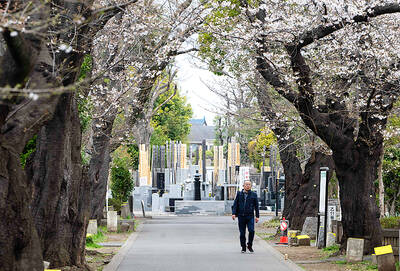
ROCKY RELATIONS: The figures on residents come as Chinese tourist numbers drop following Beijing’s warnings to avoid traveling to Japan The number of Chinese residents in Japan has continued to rise, even as ties between the two countries have become increasingly fractious, data released on Friday showed. As of the end of December last year, the number of Chinese residents had increased by 6.5 percent from the previous year to 930,428. Chinese people accounted for 22.6 percent of all foreign residents in Japan, making them by far the largest group, Japanese Ministry of Justice data showed. Beijing has criticized Tokyo in increasingly strident terms since Japanese Prime Minister Sanae Takaichi last year suggested that a military conflict around Taiwan could

A retired US colonel behind a privately financed rocket launch site in the Dominican Republic sees the project as a response to China’s dominance of the space race in Latin America. Florida-based Launch on Demand is slated to begin building a US$600 million facility in a remote region near the border with Haiti late this year. The project is designed to meet surging demand for the heavy-lift rockets needed to put clusters of satellites into orbit. It is also an answer to China’s growing presence in the region, said CEO Burton Catledge, a former commander of the US Air Force’s 45th Operations

Germany is considering Australia’s Ghost Bat robot fighter as it looks to select a combat drone to modernize its air force, German Minister of Defense Boris Pistorius said yesterday. Germany has said it wants to field hundreds of uncrewed fighter jets by 2029, and would make a decision soon as it considers a range of German, European and US projects developing so-called “collaborative combat aircraft.” Australia has said it will integrate the Ghost Bat, jointly developed by Boeing Australia and the Royal Australian Air Force, into its military after a successful weapons test last year. After inspecting the Ghost Bat in Queensland yesterday,
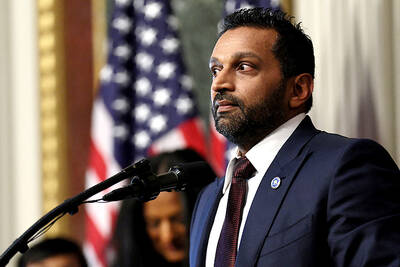
A pro-Iran hacking group claimed to breach FBI Director Kash Patel’s personal e-mail inbox and posted some of the contents online. The e-mails provided by the hacking group include travel details, correspondence with leasing agents in Washington and global entry, and loyalty account numbers. The e-mail address the hackers claim to have compromised has been previously tied to Patel’s personal details, and the leaked e-mails contain photos of Patel and others, in addition to correspondence with family members and colleagues. “The FBI is aware of malicious actors targeting Director Patel’s personal email information,” the agency said in a statement on


 RSS
RSS