


Draped in dazzling kimonos, thousands of expensively made-up young Japanese women yesterday marked their entry into adulthood, with many planning a night on the booze to celebrate.
Formal “coming of age” ceremonies, which began as a rite of ancient samurai families, were held nationwide for Japan’s 20-year-olds, reminding them of their responsibilities after becoming old enough to legally drink and smoke.
As they fidgeted with mobile phones and stifled yawns during the speeches, the contrast in financial outlay between the sexes was obvious, with most males opting for the kind of plain business suit they will wear as future “salarymen.”
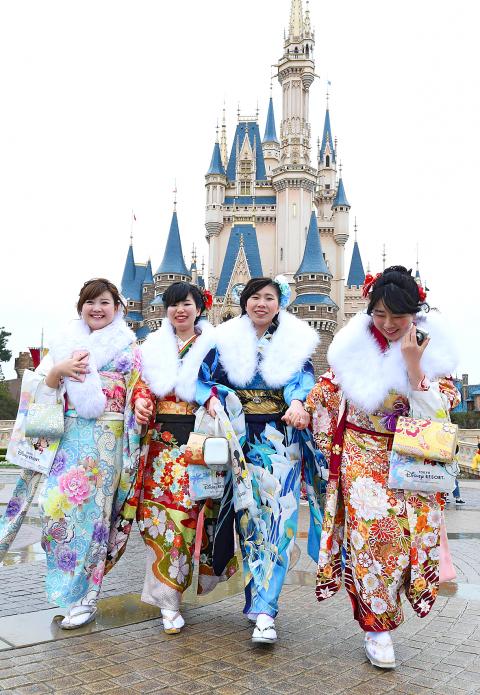
Photo: AFP
“I’m happy I can finally drink alcohol and go clubbing,” college student Rumiko Matsumoto said while getting a US$100 manicure in Tokyo’s Shibuya District ahead of the ceremony. “When my nails are dry, I have to get my eyelash extensions done, do my hair and get fitted for my kimono.”
“I’m very nervous,” she said. “It’s a special day, the first step towards being an adult. My parents told me I have to take responsibility for my own actions now, but first I want to celebrate by going drinking.”
As more than four thousand people gathered at Tokyo’s Toshimaen Amusement Park yesterday, the fog of hairspray used to fix exquisitely coiffured perms hung in the cold air as young women queued for a roller-coaster ride. Some women make appointments a year in advance to have their hair and make-up done, and beauty salons often stay open all night to meet the rush for styling.
Many pay more than US$10,000 for their glittery kimonos, with beauty treatments such as elaborate nail decorations often costing hundreds of dollars more.
“I did think: ‘Yikes, I’m an adult,’ when I turned 20,” said sales assistant Reiko Nakamura as a beautician fussed over her synthetic lashes.
“I have to think about my future so it’s a little scary,” she added, admiring her dagger-sharp Hello Kitty nails. “For now I just want to enjoy a night out drinking with friends I haven’t seen since primary school.”
Celebrated on the second Monday of the year from snow-swept northern Japan to the subtropical south, Coming of Age Day includes those who turned 20 over the previous year or will do so before March 31 this year.
The age a young person entered adulthood was set at 20 for both genders in 1876.
Crowds of kimono-clad ladies and suited young men offered prayers at Tokyo’s Meiji Shrine over the holiday weekend, while thousands more flocked to Tokyo Disneyland and posed for photos with Mickey and Minnie Mouse.
However, in Japan’s disaster-hit northwest ceremonies were tinged with sadness as young people remembered classmates who perished in the 2011 tsunami.
There were an estimated 1.21 million new adults as of Sunday last week — a decrease of about 50,000 from last year and half the 1970 peak of 2.46 million, according to Japanese government figures, mirroring the country’s shrinking population.
Japan’s annual birth rate recently dipped below 1 million for the first time in more than 100 years, reflecting its rapidly aging society.
However, a population crisis was the last thing on Riki Hayashi’s mind after a ceremony in Tokyo.
“The speeches went on for ages,” he said. “We will all be getting drunk tonight.”
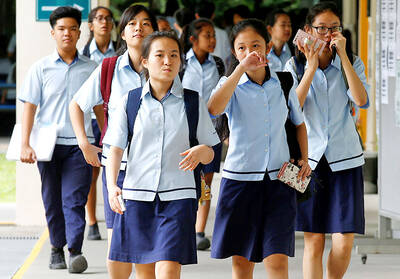
School bullies in Singapore are to face caning under new guidelines, but the education minister on Tuesday said it would be meted out only as a last resort with strict safeguards. Human rights groups regularly criticize Singapore for the use of corporal punishment, which remains part of the school and criminal justice systems, but authorities have defended it as a deterrent to crime and serious misconduct. Caning was discussed in the parliament after legislators asked how it would be used in relation to bullying in schools. The debate followed stricter guidelines on serious student misconduct, including bullying, unveiled by the Singaporean Ministry of

As evening falls in Fiji’s capital, a steady stream of people approaches a makeshift clinic that is a first line of defense against one of the world’s fastest-growing HIV epidemics. In the South Pacific nation — a popular tourist destination of just under a million people — more than 2,000 new HIV cases were recorded last year, a 26 percent increase from 2024. The government has declared an HIV outbreak and described it as a national crisis. “It’s spreading like wildfire,” said Siteri Dinawai, 46, who came to be tested. The Moonlight Clinic, a converted minibus parked in a suburban cul-de-sac in Suva, is
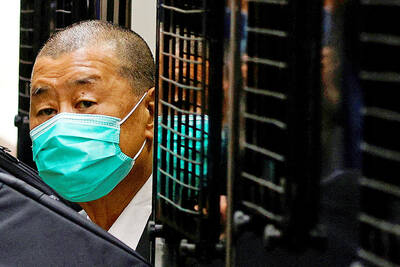
Jailed media entrepreneur Jimmy Lai (黎智英) has been awarded Deutsche Welle’s (DW) freedom of speech award for his contribution to Hong Kong’s pro-democracy movement. The German public broadcaster on Thursday said Lai would be presented in absentia with the 12th iteration of the award on June 23 at the DW Global Media Forum in Bonn. Deutsche Welle director-general Barbara Massing praised the 78-year-old founder of the now-shuttered news outlet Apple Daily for standing “unwaveringly for press freedom in Hong Kong at great personal risk.” “With Apple Daily, he gave journalists a platform for free reporting and a voice to the democracy movement in

A MESSAGE: Japan’s participation in the Balikatan drills is a clear deterrence signal to China not to attack Taiwan while the US is busy in the Middle East, an analyst said The Japan Self-Defense Forces yesterday fired a Type 88 anti-ship missile during a joint maritime exercise with US, Australian and Philippine forces, hitting a decommissioned Philippine Navy ship in waters facing the disputed South China Sea, in drills that underscore Tokyo’s rising willingness to project military power on China’s doorstep. The drill took place as Manila and Tokyo began talks on a potential defense equipment transfer, made possible by Japan’s decision to scrap restrictions on military exports. The discussions include the possible early transfer of Abukuma-class destroyers and TC-90 aircraft to the Philippines, Japanese Minister of Defense Shinjiro Koizumi said. Philippine Secretary of


 RSS
RSS