


Police said they averted a “massacre” after foiling a suicide bombing and gun attack on Wednesday at one of Egypt’s most popular ancient attractions.
Egypt has been shaken by several attacks claimed by Muslim militants since the Egyptian army toppled the democratically elected government two years ago, but the incident in the southern city of Luxor was a rare assault targeting holidaymakers in a country that depends on tourism for more than a 10th of its GDP.
Police said two attackers died and another was seriously wounded near the Karnak temple in Luxor, a popular site close to the famed Valley of the Kings.
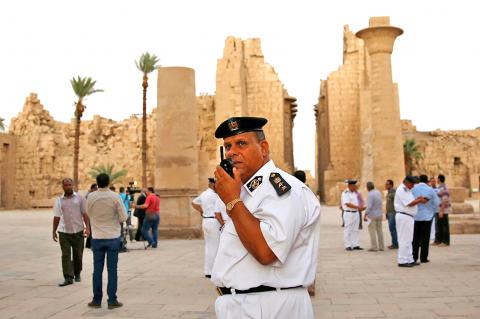
Photo: AP
No tourists were hurt in the mid-morning incident and visitors were kept inside Karnak’s ruins, an Egyptian Ministry of Antiquities official said.
The incident unfolded after a taxi carrying two passengers attempted to enter the parking lot and was stopped by a policeman, Egyptian Minister of Tourism Khaled Ramy said in a statement.
Police asked to search the trunk, where they found two large bags that made them suspicious, a Luxor police general told reporters.
When asked to open the bags, one of the men jumped out of the car, ran away and detonated his explosives-rigged vest.
In the ensuing confusion, the other passenger emerged from the car and, joined by an accomplice who had come in on foot, pulled assault rifles from the bags and started shooting.
The police responded, killing one and seriously wounding the other.
Egyptian Ministry of Health official Nahed Mohamed told reporters that two civilians and two policemen were wounded in the shootout, but not seriously.
Police said the taxi driver was not a suspect.
“If they had managed to enter the temple, it would have been a massacre,” said the police general, as 19 fully loaded rifle magazines were found in the bags and there were 604 tourists were in the temple at the time of the incident.
“We have enhanced security measures in place at all our sites and we continue to take every possible measure to ensure that no harm comes to anyone visiting Egypt,” Ramy said.
No group had yet claimed responsibility for the attack.
Mathieu Guidere, professor of Arab geopolitics at France’s University of Toulouse, said the incident indicated a change in strategy in militants choosing targets.
The aim is “to weaken the Egyptian economy by destroying the tourism industry” and to have “the maximum media impact,” as attacks on local targets were not drawing international attention, he said.
Zack Gold of the American Security Project think tank said that “such events are likely to worry the international community at a time that tourists are starting to return to places like Cairo and Luxor.”
Karnak in central Luxor was built on the ruins of Thebes, the capital of ancient Egypt. The huge temple lies in the heart of a vast complex of religious buildings in the city, which is 700km south of Cairo.
Tourism in Egypt has faltered since early 2011, when a popular uprising toppled former Egyptian president Hosni Mubarak after three decades in power.
Years of instability scared off visitors from overseas, damaging the economy and sending Egypt’s foreign-currency reserves plunging.
However, the sector was showing signs of recovery.
Tourism income last year rose 20 percent from a year earlier as 10 million tourists visited Egypt, bringing with them US$7.5 billion in revenues.
World Bank President Jim Yong-kim, who happened to be in Luxor on business on Wednesday, strongly criticized the attack.
“We abhor violence of all types, which runs completely counter to our work to end extreme poverty in the world,” he said in a statement, adding that “we must confront extremism by relentlessly creating hope.”
The Karnak temple was open yesterday, but policemen appeared to outnumber tourists.
At about 10am, by which time dozens of tourist buses would normally be parked around the ancient temple, only seven coaches and three minibuses had arrived, a correspondent said.
About 200 tourists were strolling inside the temple itself, about 50m from the scene of Wednesday’s attack, but were far outnumbered by police stationed at the site.
A local official said that several tours had been canceled.
“For sure, there are fewer tourists than yesterday. Organized trips coming from the Red Sea resort town of Hurghada were canceled,” director of excavations at Karnak Salah al-Masekh said.
Authorities have beefed up security all over the city, especially outside its archaeological sites, with police vehicles full of masked special forces officers patrolling every monument, an unusual activity according to residents.
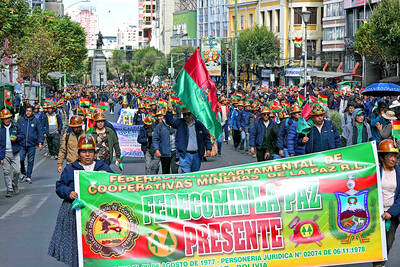
The Bolivian government on Friday struck a deal with protesting miners, but was still grappling with blockades and demonstrations by other workers across La Paz. Other groups are still blocking access roads into the city, which is also the seat of the government. Police on Thursday prevented the miners from entering the main square by using tear gas, while the demonstrators hurled stones and explosives with slingshots. Protests against the policies of Bolivian President Rodrigo Paz have convulsed the Andean nation since early this month, and roadblocks were choking routes into La Paz throughout Friday, the national road authority said. Miners demanded that Paz
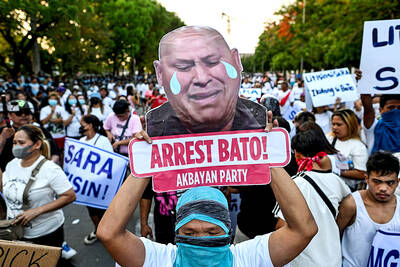
The Philippines said it has asked the country’s Supreme Court to allow it to arrest former Philippine president Rodrigo Duterte’s chief drug war enforcer to stand trial in an international tribunal. The International Criminal Court (ICC) last week unsealed an arrest warrant against Philippine Senator Ronald dela Rosa, accusing him along with Duterte and other “coperpetrators” of the “crime against humanity of murder.” Dela Rosa briefly sought refuge in the Philippine Senate last week while asking the Philippine Supreme Court to stop an ongoing attempt by government agents to arrest him. “By his own conduct, he has placed himself outside the protection of
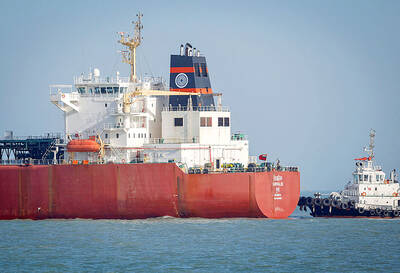
A ship anchored off the United Arab Emirates (UAE) was seized and taken toward Iran and another — a cargo ship near Oman — sank after being attacked, authorities said on Thursday, as tensions escalated near the Strait of Hormuz. It was not immediately clear who was behind these incidents, but they happened as a senior Iranian official reiterated his country’s claim of control over the waterway and another said it had a right to seize oil tankers connected to the US. The turmoil in the strait has been a sticking point for weeks in talks between the US and Iran to

The researchers in Ireland looked at their computer screen, marveling at a medieval book tracked down in a Roman library. They flipped through its digitized pages and found their sought-after treasure: the oldest surviving English poem. “We were extremely surprised. We were speechless. We couldn’t believe our eyes when we first saw that,” said Elisabetta Magnanti, a visiting research fellow at Trinity College Dublin’s school of English. The poem was also within the main body of Latin text, she said, calling it “extraordinary.” Composed in Old English by a Northumbrian agricultural worker in the 7th century, Caedmon’s Hymn appears within some copies of


 RSS
RSS