


Canadian Prime Minister Stephen Harper said on Friday that China’s “very different” political and economic systems are a concern as his government decides whether to approve CNOOC Ltd’s US$15.1 billion bid for oil producer Nexen Inc.
The comments were some of the most revealing Harper has made in connection with the landmark CNOOC deal, which has raised fears over Chinese state-owned enterprises buying up Canadian energy assets.
Some members of Canada’s governing Conservative Party are wary of the CNOOC bid, in part because of what they say are unfair Chinese business practices.
Harper, speaking to reporters in Dakar, Senegal, said Canada wants a growing relationship with China, but added that Chinese investments must be scrutinized from a national security perspective.
This week Ottawa hinted strongly that it would exclude Chinese telecommunication equipment giant Huawei Technologies Co Ltd from participating in the construction of a secure Canadian government communications network because of security risks.
Harper, asked about Huawei and the CNOOC takeover, began his answer by saying he would not comment on any particular transaction, but in his subsequent remarks he clearly touched upon both cases.
“The relationship with China is important. At the same time it’s complex. It’s complex because the Chinese obviously have very different systems than we do, economic and political systems, and that’s why obviously some of these particular transactions raise concerns,” he told reporters in Senegal.
The Conservatives need to balance concerns over security and an increased Chinese presence in Canada with their push to attract more foreign investment for the Canadian resource sector.
Ottawa says the oil and gas industry needs C$650 billion (US$663 billion) to fund new projects over the next decade alone and concedes that much of the money will have to come from abroad.
The Canadian government this week extended its review of CNOOC’s bid for Nexen by 30 days, to Nov. 11. Earlier it had invoked a national security exemption that would allow it to block Huawei from participation in its new telecoms network. The extension, while expected, comes amid a growing furore over alleged Chinese espionage in North America. Some Canadians also fear that a successful CNOOC bid for Nexen could spark a wave of mega takeovers of Canadian energy producers by foreign enterprises.
“We will ensure as a government that we have not only a growing relationship with China, but a relationship with China that is in Canada’s best interests,” Harper said.
“And of course ... there’s a national security dimension to this relationship, in fact to all our activities, that we take very seriously,” he added.
Ottawa says that at about the same time it announces a verdict on the CNOOC bid, it is also to unveil clearer guidelines indicating the kind of foreign investment Canada wants.
The oil sands of the Western Canadian province of Alberta are the world’s third-largest oil deposit and Nexen’s portfolio includes operations in the oil sands as well as shale assets in the province of British Columbia and projects in other parts of the world. If approved, the CNOOC bid would be the biggest Chinese takeover of a foreign company. The deal is being reviewed under the Investment Canada Act, which allows the government to examine whether a transaction is of “net benefit” to the country.
The government last blocked a foreign takeover deal in 2010 when it stunned markets by preventing Australia’s BHP Billiton Ltd from buying fertilizer maker Potash Corp.

Kouri Richins, a Utah mother who published a children’s book about grief after the death of her husband is to serve a life sentence for his murder without the possibility of parole, a judge ruled on Wednesday. Richins was convicted in March of aggravated murder for lacing a cocktail given to her husband, Eric Richins, with five times the lethal dose of fentanyl at their home near Park City in 2022. A jury also found her guilty of four other felonies, including insurance fraud, forgery and attempted murder for trying to poison her husband weeks earlier on Feb. 14, 2022, with a
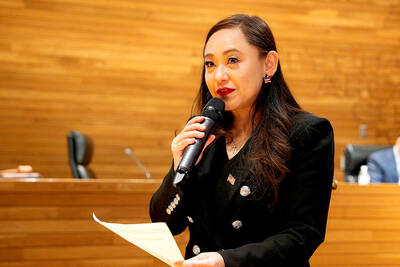
‘PERSONAL MISTAKES’: Eileen Wang has agreed to plead guilty to the felony, which comes with a maximum sentence of 10 years in federal prison A southern California mayor has agreed to plead guilty to acting as an illegal agent for the Chinese government and has resigned from her city position, officials said on Monday. Eileen Wang (王愛琳), mayor of Arcadia, was charged last month with one count of acting in the US as an illegal agent of a foreign government. She was accused of doing the bidding of Chinese officials, such as sharing articles favorable to Beijing, without prior notification to the US government as required by law. The 58-year-old was elected in November 2022 to a five-person city council, from which the mayor is selected

DELA ROSA CASE: The whereabouts of the senator, who is wanted by the ICC, was unclear, while President Marcos faces a political test over the senate situation Philippine authorities yesterday were seeking confirmation of reports that a top politician wanted by the International Criminal Court (ICC) had fled, a day after gunfire rang out at the Philippine Senate where he had taken refuge fearing his arrest. Senator Ronald “Bato” dela Rosa, the former national police chief and top enforcer of former Philippine president Rodrigo Duterte’s “war on drugs,” has been under Senate protection and is wanted for crimes against humanity, the same charges Duterte is accused of. “Several sources confirmed that the senator, Senator Bato, is no longer in the Senate premises, but we are still getting confirmation,” Presidential
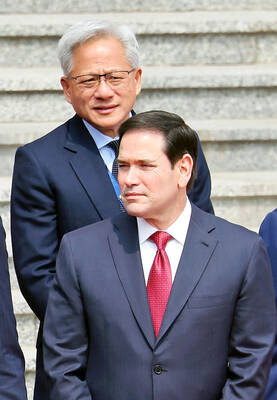
HELP DENIED? The US Department of State said that the Cuban leadership refuses to allow the US to provide aid to Cubans, ‘who are in desperate need of assistance’ US Secretary of State Marco Rubio on Wednesday said that Cuba’s leadership must change, as Washington renewed an offer of US$100 million in aid if the communist nation agrees to cooperate. Cuba has been suffering severe economic tumult led by an energy shortage that plunged 65 percent of the country into darkness on Tuesday. Cuba’s leaders have blamed US sanctions, but Rubio, a Cuban American and critic of the government established by Fidel Castro, said the system was to blame, including corruption by the military. “It’s a broken, nonfunctional economy, and it’s impossible to change it. I wish it were different,” he told


 RSS
RSS