


Philippine authorities yesterday appealed for help in getting relief to 2 million people affected by deadly floods in and around the capital, saying that evacuation centers were overwhelmed.
After more than a month’s worth of rain was dumped on Metro Manila in 48 hours, entire districts remained submerged, although overflowing rivers had started to recede and neck-high waters seen earlier were typically down to knee deep.
The state weather service also dropped its rain warning yesterday afternoon for the sprawling metropolis of 15 million people.
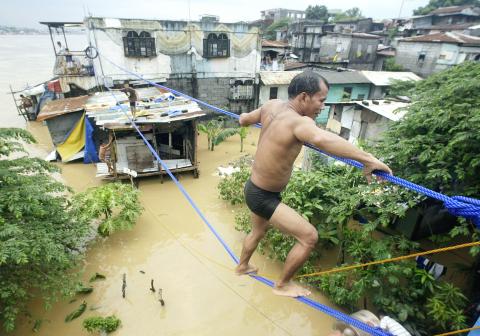
Photo: EPA
Disaster chiefs said the top priority was to help the 1.95 million people affected by the floods, as masses flocked to evacuation centers in search of a dry place to sleep, food, water, medicine and clothes.
“We are repacking a lot of relief items, we need more help and are asking for more volunteers,” Philippine Social Welfare Secretary Corazon Soliman said.
“We have the food, but we need to pack them, deliver and distribute them in this massive operation,” she said.
Soliman said many evacuation centers were not able to provide much-needed warm meals to the growing number of displaced.
“Most local government units do a community kitchen, but the volume of evacuees is so big that they have been overwhelmed. We are also appealing for more medicines, blankets, mats and, more importantly, dry clothes,” she said.
The number of people in schools, gymnasiums and other buildings that had been turned into evacuation centers rose to 293,000 yesterday, from 150,000 on Wednesday, according to the government’s disaster management council.
Meanwhile, hundreds of thousands of others were left largely to fend for themselves, seeking refuge with friends and relatives, or staying in partly submerged homes.
In a riverside district of Marikina, where massive squatter communities were inundated, some residents returned to their homes on Wednesday night only for another deluge to hit a few hours later and cause another flood spike.
“Last night many came back, but when the alarm rang at 3am, they had to evacuate again,” said Colonel Perfecto Penaredondo, chief military aide at the civil defense office.
One of those forced to evacuate once more, housewife Alona Geronimo, said she and her neighbors were exhausted and feeling hopeless.
“We were cleaning our house yesterday when the water rose again. No one has caught a wink of sleep here. If we fall asleep, we might die,” Geronimo saidm as she huddled with 13 other people under a gray tarpaulin.
Geronimo said she had not been able to save anything in the floods.
“We have just the clothes on our backs. It was just like Ondoy,” she said, referring to a tropical storm in 2009 known as Ketsana in English that submerged 80 percent of Metro Manila and killed 464 people.
Twenty people have died from this week’s rains in Metro Manila and nearby provinces, authorities said.
The deluge came after nearly two weeks of monsoon rains, compounded by a typhoon and tropical storm, that have left 73 people dead across the Philippines.
Philippine Environment Secretary Ramon Paje warned the public to be prepared for more intense rains caused by climate change, describing this week’s deluge as the “new normal.”
However, he and other politicians emphasized that the extent of the current crisis and the fatalities were manmade, with people being allowed to live in danger-zones and watershed areas being damaged.
Millions of slum dwellers live along rivers such as in Marikina, the swampy surrounds of a huge lake, canals and other areas susceptible to flooding.
Vast amounts of garbage are also being dumped by a fast-growing population into drainage systems.
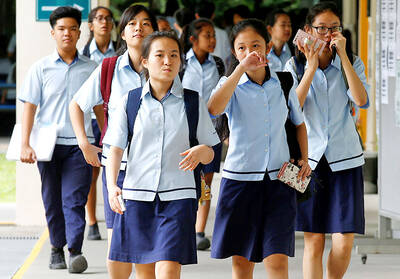
School bullies in Singapore are to face caning under new guidelines, but the education minister on Tuesday said it would be meted out only as a last resort with strict safeguards. Human rights groups regularly criticize Singapore for the use of corporal punishment, which remains part of the school and criminal justice systems, but authorities have defended it as a deterrent to crime and serious misconduct. Caning was discussed in the parliament after legislators asked how it would be used in relation to bullying in schools. The debate followed stricter guidelines on serious student misconduct, including bullying, unveiled by the Singaporean Ministry of
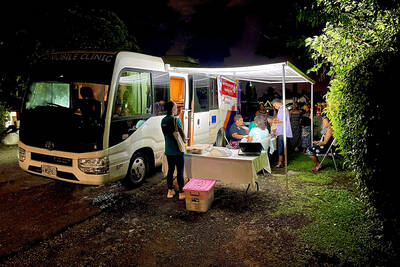
As evening falls in Fiji’s capital, a steady stream of people approaches a makeshift clinic that is a first line of defense against one of the world’s fastest-growing HIV epidemics. In the South Pacific nation — a popular tourist destination of just under a million people — more than 2,000 new HIV cases were recorded last year, a 26 percent increase from 2024. The government has declared an HIV outbreak and described it as a national crisis. “It’s spreading like wildfire,” said Siteri Dinawai, 46, who came to be tested. The Moonlight Clinic, a converted minibus parked in a suburban cul-de-sac in Suva, is
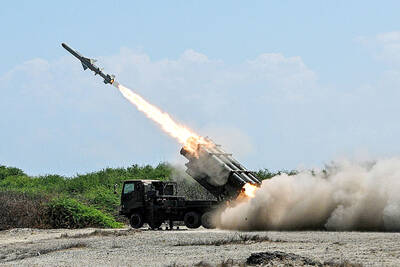
A MESSAGE: Japan’s participation in the Balikatan drills is a clear deterrence signal to China not to attack Taiwan while the US is busy in the Middle East, an analyst said The Japan Self-Defense Forces yesterday fired a Type 88 anti-ship missile during a joint maritime exercise with US, Australian and Philippine forces, hitting a decommissioned Philippine Navy ship in waters facing the disputed South China Sea, in drills that underscore Tokyo’s rising willingness to project military power on China’s doorstep. The drill took place as Manila and Tokyo began talks on a potential defense equipment transfer, made possible by Japan’s decision to scrap restrictions on military exports. The discussions include the possible early transfer of Abukuma-class destroyers and TC-90 aircraft to the Philippines, Japanese Minister of Defense Shinjiro Koizumi said. Philippine Secretary of
Separatists in Alberta are preparing to submit a petition tomorrow that they said has enough signatures to force a referendum on independence for the oil-rich Canadian province. Polls indicate the pro-independence camp remains a minority among Alberta’s 5 million people, but has hit a historic high of roughly 30 percent. Alberta separatists are also closer than ever to forcing a referendum, riding momentum fueled by intensifying grievances over Ottawa’s control of the provincial oil industry. They have also undeniably gotten a boost from the return to power of US President Donald Trump. After launching a petition in January, Stay Free Alberta, the group


 RSS
RSS