


Chinese telecom giant Huawei has been blocked from tendering for equipment contracts with Australia’s National Broadband Network (NBN) because of security concerns, a report said yesterday.
The government refused to confirm the specifics of the Australian Financial Review (AFR) report. However, a spokesperson for Australian Attorney General Nicola Roxon said protecting the integrity of the ambitious NBN was of paramount importance.
“The National Broadband Network is the largest nation-building project in Australian history and it will become the backbone of Australia’s information infrastructure,” Roxon’s spokesperson said. “As such, and as a strategic and significant government investment, we have a responsibility to do our utmost to protect its integrity and that of the information carried on it.”
Huawei, which was founded by a former Chinese People’s Liberation Army engineer, was instructed late last year by Canberra that it was banned from bidding for NBN equipment contracts, the AFR said.
NBN Co, the government corporation implementing Australia’s largest ever infrastructure project, had internally endorsed Huawei, but the government intervened because of concerns about cyberattacks from China, the AFR said.
Huawei’s technology is used to build mobile phone networks around the world. It has repeatedly denied any links to the Chinese military, but has also run afoul of regulators and lawmakers in the US.
There was no immediate comment from Huawei to the AFR report. Officials say the A$35.9 billion (US$37.5 billion) NBN will connect 93 percent of Australian homes to high-speed fiber Internet, with the remainder linked via fixed-wireless services and satellite.
Roxon’s spokesperson said Canberra’s stringent approach to the network was “consistent with the government’s practice for ensuring the security and resilience of Australia’s critical infrastructure more broadly.”
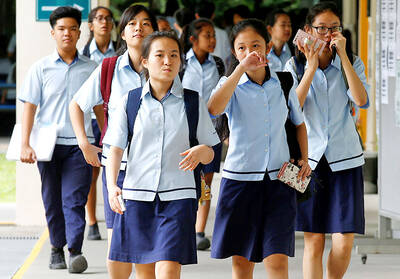
School bullies in Singapore are to face caning under new guidelines, but the education minister on Tuesday said it would be meted out only as a last resort with strict safeguards. Human rights groups regularly criticize Singapore for the use of corporal punishment, which remains part of the school and criminal justice systems, but authorities have defended it as a deterrent to crime and serious misconduct. Caning was discussed in the parliament after legislators asked how it would be used in relation to bullying in schools. The debate followed stricter guidelines on serious student misconduct, including bullying, unveiled by the Singaporean Ministry of

As evening falls in Fiji’s capital, a steady stream of people approaches a makeshift clinic that is a first line of defense against one of the world’s fastest-growing HIV epidemics. In the South Pacific nation — a popular tourist destination of just under a million people — more than 2,000 new HIV cases were recorded last year, a 26 percent increase from 2024. The government has declared an HIV outbreak and described it as a national crisis. “It’s spreading like wildfire,” said Siteri Dinawai, 46, who came to be tested. The Moonlight Clinic, a converted minibus parked in a suburban cul-de-sac in Suva, is
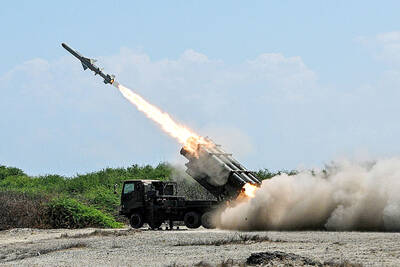
A MESSAGE: Japan’s participation in the Balikatan drills is a clear deterrence signal to China not to attack Taiwan while the US is busy in the Middle East, an analyst said The Japan Self-Defense Forces yesterday fired a Type 88 anti-ship missile during a joint maritime exercise with US, Australian and Philippine forces, hitting a decommissioned Philippine Navy ship in waters facing the disputed South China Sea, in drills that underscore Tokyo’s rising willingness to project military power on China’s doorstep. The drill took place as Manila and Tokyo began talks on a potential defense equipment transfer, made possible by Japan’s decision to scrap restrictions on military exports. The discussions include the possible early transfer of Abukuma-class destroyers and TC-90 aircraft to the Philippines, Japanese Minister of Defense Shinjiro Koizumi said. Philippine Secretary of
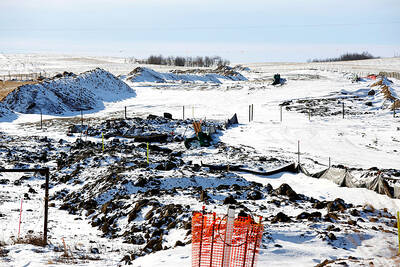
Separatists in Alberta are preparing to submit a petition tomorrow that they said has enough signatures to force a referendum on independence for the oil-rich Canadian province. Polls indicate the pro-independence camp remains a minority among Alberta’s 5 million people, but has hit a historic high of roughly 30 percent. Alberta separatists are also closer than ever to forcing a referendum, riding momentum fueled by intensifying grievances over Ottawa’s control of the provincial oil industry. They have also undeniably gotten a boost from the return to power of US President Donald Trump. After launching a petition in January, Stay Free Alberta, the group


 RSS
RSS