


It took her 33 years to put pen to paper and write the screenplay that would change everything. However, for Khmer Rouge survivor Khauv Sotheary, producing a film about her mother’s experience of the brutal period instead of her own has allowed the 47-year-old professor to understand her family’s past even more profoundly.
Lost Loves is Cambodia’s first feature film about the Khmer Rouge in more than 20 years and coincides with a key hearing at the UN-backed war crimes court. This is the first time in 30 years that the regime has been discussed so much and so openly, and that, experts say, proves that Cambodia is truly on the road to reconciliation.
“We’ve grown up far from the story [of the regime] because so much time has passed, but the memory — of the pain, the starvation, the separation — is always there,” a soft-spoken Sotheary said from a cafe in Phnom Penh. “Even though we live in peace now and have food on the table, we have to keep this story alive. We have to communicate it.”
Lost Loves focuses on Sotheary’s mother, who lost seven members of her family — including her father, husband and four children — during the hardline communist regime of 1975 to 1979, which killed about 2 million people. The film premiered in 2010 at the Cambodian international film festival to a riveted audience and last week finally appeared in city cinemas. Critics have called it “groundbreaking” and “beautiful.”
Relying heavily on traditional Cambodian drama, the film depicts everyday life under the Khmer Rouge in striking but emotionally provocative ways. In one scene, Amara, stripped of her “capitalist” identity and clad in revolutionary, communist black, drags a fellow farmer to hospital as she suffers a miscarriage from overwork in the rice paddies, her blood staining the emerald grasses where they eat, sleep and toil.
“This is the only way to really bring the story to the people here,” said director Chhay Bora, 49, who lost two brothers at the hands of the regime and said that a documentary would have had a less profound effect.
“A docu-drama actually brings you to the experience by making you feel like you’re in it. You become emotionally engaged,” Bora said.
Sotheary, who survived the regime despite chronic malnutrition and a permanent state of despair, said she commends her mother for her “strength and resolve to survive what she did.”
“As a mother now, I don’t know if I’d have the same strength,” she added.
Bora and Sotheary — both university professors — chose Cambodia’s youth as the film’s target audience and have provided discounted tickets to schools and universities to encourage students to watch it. They aim to screen the film in provinces beyond the capital.
“Children need to see history with their eyes to understand what they read,” Bora said. “A film like this helps them understand their textbooks better.”
The filmmakers are aided, in part, by a recent movement to teach the history of the genocide to students and the public at Cambodia’s most famous torture prison, S-21, or Tuol Sleng. Organized by the country’s leading Khmer Rouge research group, the Documentation Center of Cambodia (DC-Cam), the biweekly lectures discuss the rise and fall of a government that considered education a disease of the elite and converted many of the country’s schools into prisons and warehouses.
While the genocide is required teaching from grades nine to 12 in Cambodia, many students doubt the extent of the atrocities committed and some teachers are loth to address the issue in class, “in part because they don’t understand the period and how to integrate it into the curriculum,” oral historian and S-21 lecturer Farina So said.
“Many parents and grandparents don’t like to discuss what happened, because it is such a painful and sensitive issue,” she said. “But if we don’t talk about it at home, and we don’t talk about it in our communities, how can kids understand the history? This is about solace, about reconciling the past with the present and future.”
DC-Cam has trained about 3,000 teachers to approach the genocide, partly through its independently funded guidebooks that encourage teachers to ask students questions such as “What would life be like today if money and free markets were abolished?” and “How has the regime affected life in Cambodia today?”
However, the organization knows it has an uphill battle on its hands.
“I believe some of what you say happened, but not everything,” said high school student Luy Srey Mech, 17, at a recent S-21 lecture. “My great-grandparents were killed during the revolution, but it was a long time ago. I guess now that I see these pictures, these videos, I start to understand it a little more.”

JAN. 1 CLAUSE: As military service is voluntary, applications for permission to stay abroad for over three months for men up to age 45 must, in principle, be granted A little-noticed clause in sweeping changes to Germany’s military service policy has triggered an uproar after it emerged that the law requires men aged up to 45 to get permission from the armed forces before any significant stay abroad, even in peacetime. The legislation, which went into effect on Jan. 1 aims to bolster the military and demands all 18-year-old men fill out a questionnaire to gauge their suitability to serve in the armed forces, but stops short of conscription. If the “modernized” model fails to pull in enough recruits, parliament will be compelled to discuss the reintroduction of compulsory service, German

PHISHING: The con might appear convincing, as the scam e-mails can coincide with genuine messages from Apple saying you have run out of storage For a while you have been getting messages from Apple saying “your iCloud storage is full.” They say you have exceeded your storage plan, so documents are no longer being backed up, and photos you take are not being uploaded. You have been resisting Apple’s efforts to get you to pay a minimum of £0.99 (US$1.33) a month for more storage, but it seems that you cannot keep putting off the inevitable: You have received an e-mail which says your iCloud account has been blocked, and your photos and videos would be deleted very soon. To keep them you need

For two decades, researchers observed members of the Ngogo chimpanzee group of Kibale National Park in Uganda spend their days eating fruits and leaves, resting, traveling and grooming in their tropical rainforest abode, but this stable community then fractured and descended into years of deadly violence. The researchers are now describing the first clearly documented example of a group of wild chimpanzees splitting into two separate factions, with one launching a series of coordinated attacks against the other. Adult males and infants were targeted, with 28 deaths. “Biting, pounding the victim with their hands, dragging them, kicking them — mostly adult males,
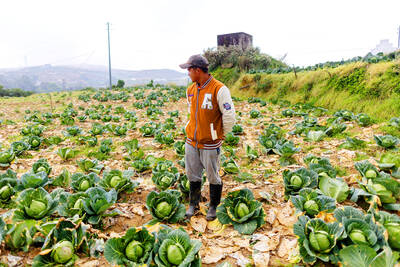
Filipino farmers like Romeo Wagayan have been left with little choice but to let their vegetables rot in the field rather than sell them at a loss, as rising oil prices linked to the Iran war drive up the cost of harvesting, labor and transport. “There’s nothing we can do,” said Wagayan, a 57-year old vegetable farmer in the northern Philippine province of Benguet. “If we harvest it, our losses only increase because of labor, transportation and packing costs. We don’t earn anything from it. That’s why we decided not to harvest at all,” he said. Soaring costs caused by the Middle East


 RSS
RSS