


Like any good private eye, Hong Kong-based Ted Kavowras has a range of whisky bottles by his desk, but these aren’t for swigging between jobs — they’re samples of counterfeit spirits whose makers he has helped shut down.
He and his detective firm Panoramic Consulting occupy a growing niche in the fight against China’s mammoth fake goods industry, posing as buyers to enter factories and gather evidence that can lead to fines, arrests and shutdowns.
From an office littered with disguises and bling accessories containing hidden cameras, he and his staff travel to China in the guise of Middle Eastern businessmen, shady European traders or Latin Americans seeking a quick buck.
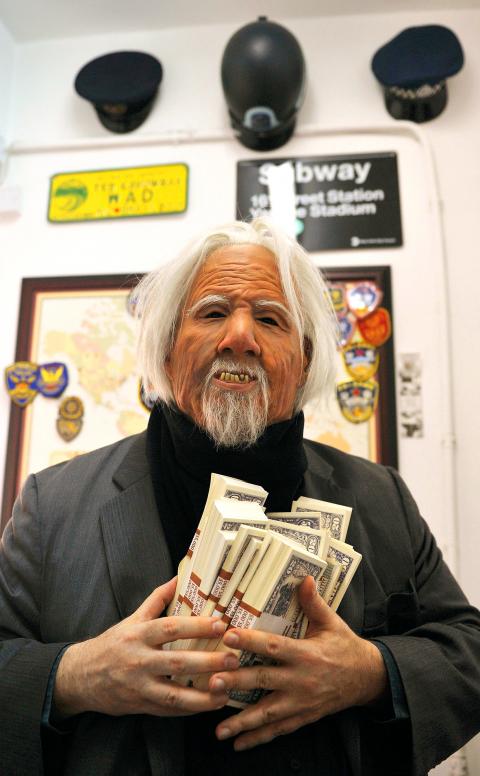
Photo: AFP
“I’m everybody’s dream in China, some rich fat guy,” the beard-sporting former New York Police Department (NYPD) officer said. “The bigger the lie, the more they believe it.”
His firm has been in ever greater demand as China has become not only the workshop of the world, but the source of more than two-thirds of its counterfeit products.
Often working on behalf of high-profile brands such as New Balance sportswear and Bulova designer watches, the firm has put together cases against manufacturers of illicit goods from toilet seats to handbags to medicines.
Its staff of 10 operates from a tiny Hong Kong office, plus discreet premises in China and an array of front companies used to convince factories that their interest in purchasing is genuine.
“I do what Chinese investigators can’t do, because I have the ethnic diversity. They can’t pretend to be buyers from overseas,” Kavowras said.
A row of costume heads in his office, modeled to look like members of staff, wear elaborate fake hairstyles and hats, while several fax machines used for different front companies beep regularly with messages from eager sellers.
Kavowras displays video footage of a recent case in which he and his colleagues lured a group making counterfeit injectable drugs to meet them in a southern Chinese hotel.
The criminals were confident enough to sit down, light cigarettes and hand over a consignment of fake medicines in exchange for a wad of foreign currency — not realizing police were watching from the next room on a live camera feed.
On a signal from Kavowras, police stormed the room, but the counterfeiters sat quietly, realizing the game was up.
“China’s a very civilized place, it’s not the Wild West,” Kavowras said.
However, that does not mean the counterfeiters are not dangerous.
These fake drugs “were causing injuries all over the world,” he said.
China has faced accusations, including from the US, that it does not do enough to fight counterfeiting and intellectual property theft.
Kavowras says markets for illicit consumer goods operate openly in Shenzhen, with wholesalers grading their wares from A to C. Top-grade fakes are made in the same factory as the originals.
However, he said that Chinese police and trademark authorities have a genuine desire to fight the problem, and praised changes to the law that have allowed civil litigation on counterfeiting and admitted notarized evidence.
“They’re really doing their best — they’re overwhelmed, and in some places, given the vastness and population density of the country, there are issues with corruption. But overall the Chinese are reacting to it as much as possible,” Kavowras said. “People forget that China is a poor country.”
“It’s the demand from overseas that is causing all of these counterfeits to be made,” he said.
Another recent case involved a major clothing brand Kavowras cannot name, which looked to enter the European market only to find a copycat brand making “slave copies,” or exact reproductions of its range, had got there first.
A quest via Amsterdam and Vienna, backed up by European and Chinese authorities, ended with Panoramic identifying both manufacturers and sellers of the clothing in an illicit business that involved 30 to 40 Chinese factories.
Customs authorities seized 300,000 euros (US$400,000) of goods.
“We put [them] out of business. For me that’s a great result,” Kavowras said.
A police officer with the NYPD until an injury forced his retirement, Kavowras, 49, moved to China in 1994 to study Mandarin.
He found work with the famed detective agency Pinkerton in Guangzhou before moving to Hong Kong, where he set up Panoramic 13 years ago.
His charm tactics with factory bosses include claiming to have a local mistress and turning up with distracting props, such as an Olympic torch that he pretended the Beijing government had given him ahead of the 2008 Games.
Wary of touching on politics, Panoramic avoids cases involving military technology or strategic industries such as petroleum. They also steer clear of gangster-dominated counterfeit goods such as tobacco.
However, most counterfeiting is relatively safe to probe, they said.
“The people we investigate are business people who are seeking to move on to legitimate stuff,” not professional criminals, one employee said.
All staff speak Chinese, but pretend not to when undercover — giving them advance knowledge if a situation turns sour.
Panoramic also carries out due diligence for potential investors, making use of the firm’s understanding of Chinese bureaucracy and sometimes also of its ability to get inside the gates of heavily fortified factories.
Uncovering secrets sometimes involves outdoing local shysters at their own game.
“What works a lot is that I only speak pidgin Chinese, I overpay, and then my Chinese agent will say: ‘Charge him 10 percent extra and give me a kickback.’ They love that,” Kavowras said. “That’s how we get over the trust factor. They love that — then they really feel at home.”
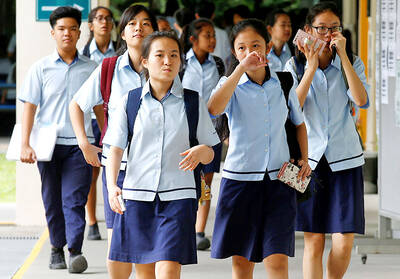
School bullies in Singapore are to face caning under new guidelines, but the education minister on Tuesday said it would be meted out only as a last resort with strict safeguards. Human rights groups regularly criticize Singapore for the use of corporal punishment, which remains part of the school and criminal justice systems, but authorities have defended it as a deterrent to crime and serious misconduct. Caning was discussed in the parliament after legislators asked how it would be used in relation to bullying in schools. The debate followed stricter guidelines on serious student misconduct, including bullying, unveiled by the Singaporean Ministry of
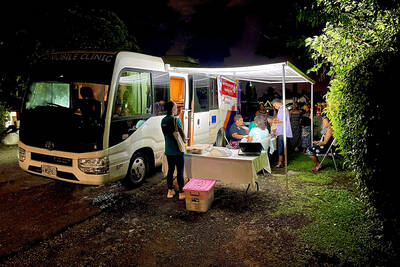
As evening falls in Fiji’s capital, a steady stream of people approaches a makeshift clinic that is a first line of defense against one of the world’s fastest-growing HIV epidemics. In the South Pacific nation — a popular tourist destination of just under a million people — more than 2,000 new HIV cases were recorded last year, a 26 percent increase from 2024. The government has declared an HIV outbreak and described it as a national crisis. “It’s spreading like wildfire,” said Siteri Dinawai, 46, who came to be tested. The Moonlight Clinic, a converted minibus parked in a suburban cul-de-sac in Suva, is
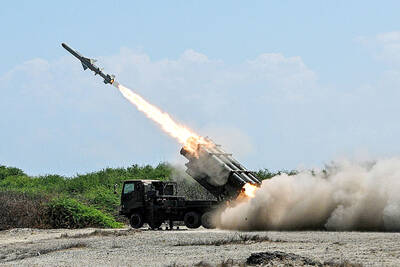
A MESSAGE: Japan’s participation in the Balikatan drills is a clear deterrence signal to China not to attack Taiwan while the US is busy in the Middle East, an analyst said The Japan Self-Defense Forces yesterday fired a Type 88 anti-ship missile during a joint maritime exercise with US, Australian and Philippine forces, hitting a decommissioned Philippine Navy ship in waters facing the disputed South China Sea, in drills that underscore Tokyo’s rising willingness to project military power on China’s doorstep. The drill took place as Manila and Tokyo began talks on a potential defense equipment transfer, made possible by Japan’s decision to scrap restrictions on military exports. The discussions include the possible early transfer of Abukuma-class destroyers and TC-90 aircraft to the Philippines, Japanese Minister of Defense Shinjiro Koizumi said. Philippine Secretary of
Separatists in Alberta are preparing to submit a petition tomorrow that they said has enough signatures to force a referendum on independence for the oil-rich Canadian province. Polls indicate the pro-independence camp remains a minority among Alberta’s 5 million people, but has hit a historic high of roughly 30 percent. Alberta separatists are also closer than ever to forcing a referendum, riding momentum fueled by intensifying grievances over Ottawa’s control of the provincial oil industry. They have also undeniably gotten a boost from the return to power of US President Donald Trump. After launching a petition in January, Stay Free Alberta, the group


 RSS
RSS