


Royal Dutch Shell has never denied that its oil operations have polluted large areas of the Niger Delta — land and air. However, the oil company had resisted charges of complicity in human rights abuses.
Court documents now reveal that in the 1990s Shell routinely worked with the Nigerian military to suppress resistance to its activities, often from activists in Ogoniland, in the delta region.
Confidential memos, faxes, witness statements and other documents, released in 2009, show the company regularly paid the military to stop the peaceful movement against pollution, even helping to plan raids on villages suspected of opposing the company. Several thousand people were killed in the 1990s and many more fled.
In 2009, in a New York federal court, that evidence never saw light during the trial. Shell had been accused of collaborating with the state in the execution in 1995 of writer Ken Saro-Wiwa and other leaders of the Ogoni tribe. Instead, Shell paid US$15.5 million to the eight families in settlement.
Among the documents was a 1994 letter from Shell agreeing to pay a unit of the Nigerian army to retrieve a truck, an action that left one Ogoni man dead and two wounded.
Shell said it was making the payment “as a show of gratitude and motivation for a sustained favorable disposition in future assignments.”
Brian Anderson, the director of Shell Nigeria during those years, said in 2009, after the New York settlement, the company “played no part in any military operations against the Ogoni people, or any other communities in the Niger Delta and we have never been approached for financial or logistical support for any action.”
However, he conceded that Shell had paid the military on two occasions.
Amnesty International and Human Rights Watch say oil companies working in the delta, of which Shell is the largest, have overseen a “human rights tragedy.”
Most of the alleged human rights abuses, they say, follow the companies’ refusal to abide by acceptable environmental standards.
Despite the flood of lawsuits, cases can be delayed for years. Very few people are able to take on the oil giant, which has 90 oil fields in the delta where it has operated since the 1950s.
Increasingly, though, international groups are using courts in Europe and the US against big oil companies.
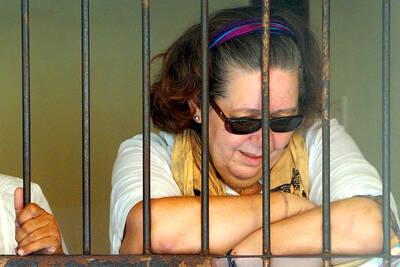
Indonesia was to sign an agreement to repatriate two British nationals, including a grandmother languishing on death row for drug-related crimes, an Indonesian government source said yesterday. “The practical arrangement will be signed today. The transfer will be done immediately after the technical side of the transfer is agreed,” the source said, identifying Lindsay Sandiford and 35-year-old Shahab Shahabadi as the people being transferred. Sandiford, a grandmother, was sentenced to death on the island of Bali in 2013 after she was convicted of trafficking drugs. Customs officers found cocaine worth an estimated US$2.14 million hidden in a false bottom in Sandiford’s suitcase when
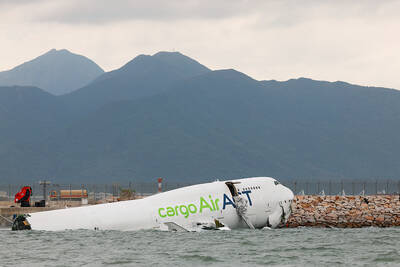
CAUSE UNKNOWN: Weather and runway conditions were suitable for flight operations at the time of the accident, and no distress signal was sent, authorities said A cargo aircraft skidded off the runway into the sea at Hong Kong International Airport early yesterday, killing two ground crew in a patrol car, in one of the worst accidents in the airport’s 27-year history. The incident occurred at about 3:50am, when the plane is suspected to have lost control upon landing, veering off the runway and crashing through a fence, the Airport Authority Hong Kong said. The jet hit a security patrol car on the perimeter road outside the runway zone, which then fell into the water, it said in a statement. The four crew members on the plane, which
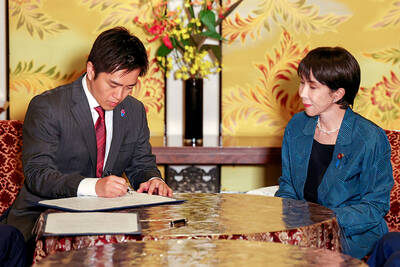
Japan’s ruling Liberal Democratic Party (LDP) and its junior partner yesterday signed a coalition deal, paving the way for Sanae Takaichi to become the nation’s first female prime minister. The 11th-hour agreement with the Japan Innovation Party (JIP) came just a day before the lower house was due to vote on Takaichi’s appointment as the fifth prime minister in as many years. If she wins, she will take office the same day. “I’m very much looking forward to working with you on efforts to make Japan’s economy stronger, and to reshape Japan as a country that can be responsible for future generations,”
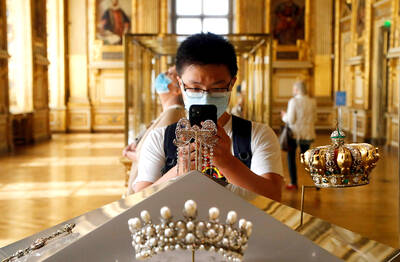
SEVEN-MINUTE HEIST: The masked thieves stole nine pieces of 19th-century jewelry, including a crown, which they dropped and damaged as they made their escape The hunt was on yesterday for the band of thieves who stole eight priceless royal pieces of jewelry from the Louvre Museum in the heart of Paris in broad daylight. Officials said a team of 60 investigators was working on the theory that the raid was planned and executed by an organized crime group. The heist reignited a row over a lack of security in France’s museums, with French Minister of Justice yesterday admitting to security flaws in protecting the Louvre. “What is certain is that we have failed, since people were able to park a furniture hoist in the middle of


 RSS
RSS