


Chile’s state television channel has reported that long-secret documents support the theory that former Chilean president Salvador Allende was assassinated and did not commit suicide during the 1973 coup.
TVN’s Special Report based its report late on Monday on a copy of a 300-page military review of Allende’s death long thought to be lost.
Chile’s military announced during the Sept. 11, 1973, coup that the socialist president had killed himself with an AK-47 given to him by former Cuban president Fidel Castro. Allende was later buried in a closed casket in a secretive nighttime ceremony with only his widow present.
The comprehensive military review reportedly describes ballistics and fingerprint evidence and includes photos and witness testimony as well as the original autopsy report, which was made public years ago. Two forensics experts who analyzed the more complete set of documents told TVN they believe more than ever that Allende was shot first through the face with a small-caliber weapon, and that an AK-47 blast blew out the top of his skull after he was already dead.
One of the experts, Luis Ravanal, confirmed this with reporters on Tuesday. Ravanal said that the crime scene photos show Allende sitting slumped but upright in a chair, but with no signs of blood on his collar, sweater or throat. The review does not make any reference to the presence of blood on his clothes either. And yet the initial autopsy described Allende’s undergarments as drenched with blood.
Because of gravity alone, his throat would have been bloodied had Allende fired the AK-47 while still alive, Ravanal said.
“The bullet hole below the chin was of large dimensions. It ripped apart the tongue, the palate, the nose. It goes against logic that there’s no blood ... The only explanation is that the second bullet was fired when he was already dead and in another position,” Ravanal said.
Ravanal has for years advocated the theory that another weapon was involved, citing a reference in the initial military autopsy to a small bullet hole in the back of Allende’s skull that he alleges is inconsistent with an AK-47 fired from below the chin through the top of his head.
The official version is that Allende killed himself, based chiefly on testimony from Dr Patricio Guijon, who maintained that he saw Allende shoot himself with an AK-47 and that he was the only eyewitness. Guijon reiterated that testimony to reporters in a recent interview.
Allende’s family has come to support the suicide theory, but also supports an ongoing judicial investigation to dispel any doubts and to develop evidence that might solve other human rights crimes. Allende’s body was exhumed last week and a top team of world forensic experts is now conducting an autopsy.
Chilean Senator Isabel Allende was furious on Tuesday that Chilean state television aired a report on her father’s death before it had been resolved. She said TVN’s report was mere speculation, based on what she said was flawed military evidence from 1973.
“TVN is speculating in the middle of a judicial process where only the scientific investigation of his remains will reach a conclusive review,” Allende wrote on Twitter.
Meanwhile, the Communist Party of Chile wants a formal investigation into the death of the country’s revered poet Pablo Neruda, who officially died of cancer only days after the 1973 coup toppled Allende, a close friend of his.
Several witnesses have raised doubts about his death recently, including Neruda’s driver, who says he was poisoned by government agents.
Neruda died at the age of 69 on Sept. 23, 1973, 12 days after the coup. He had just published a withering criticism of General Augusto Pinochet’s dictatorship that eulogized Allende and accused Chile’s soldiers of having betrayed their country. He had won the Nobel Prize for Literature two years earlier, giving him great international prestige.
Neruda died, officially of prostate cancer, in the same clinic where former Chilean president Eduardo Frei was allegedly poisoned in 1981 by six people, including several Pinochet agents, who were charged last year in connection with his death.
Now Neruda’s driver, Manuel Araya, has alleged that Pinochet agents injected deadly poison into Neruda’s stomach.
The Neruda Foundation, which administers his estate and legacy, has said there’s no evidence supporting the driver’s claims.
However, Guillermo Teillier, president of the Communist Party that Neruda belonged to, told the Appellate Court in Santiago that it’s a moral requirement to clarify whether Neruda was killed to silence his criticism.
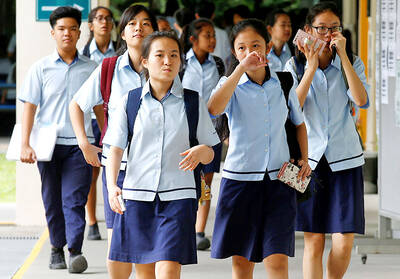
School bullies in Singapore are to face caning under new guidelines, but the education minister on Tuesday said it would be meted out only as a last resort with strict safeguards. Human rights groups regularly criticize Singapore for the use of corporal punishment, which remains part of the school and criminal justice systems, but authorities have defended it as a deterrent to crime and serious misconduct. Caning was discussed in the parliament after legislators asked how it would be used in relation to bullying in schools. The debate followed stricter guidelines on serious student misconduct, including bullying, unveiled by the Singaporean Ministry of
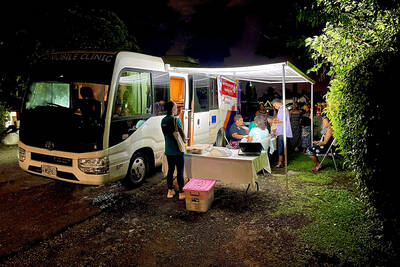
As evening falls in Fiji’s capital, a steady stream of people approaches a makeshift clinic that is a first line of defense against one of the world’s fastest-growing HIV epidemics. In the South Pacific nation — a popular tourist destination of just under a million people — more than 2,000 new HIV cases were recorded last year, a 26 percent increase from 2024. The government has declared an HIV outbreak and described it as a national crisis. “It’s spreading like wildfire,” said Siteri Dinawai, 46, who came to be tested. The Moonlight Clinic, a converted minibus parked in a suburban cul-de-sac in Suva, is
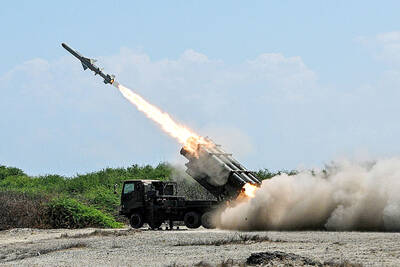
A MESSAGE: Japan’s participation in the Balikatan drills is a clear deterrence signal to China not to attack Taiwan while the US is busy in the Middle East, an analyst said The Japan Self-Defense Forces yesterday fired a Type 88 anti-ship missile during a joint maritime exercise with US, Australian and Philippine forces, hitting a decommissioned Philippine Navy ship in waters facing the disputed South China Sea, in drills that underscore Tokyo’s rising willingness to project military power on China’s doorstep. The drill took place as Manila and Tokyo began talks on a potential defense equipment transfer, made possible by Japan’s decision to scrap restrictions on military exports. The discussions include the possible early transfer of Abukuma-class destroyers and TC-90 aircraft to the Philippines, Japanese Minister of Defense Shinjiro Koizumi said. Philippine Secretary of
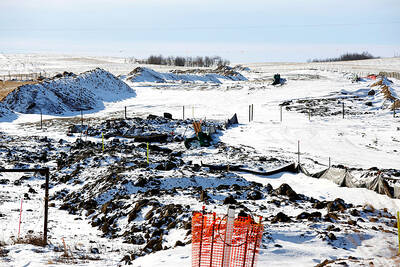
Separatists in Alberta are preparing to submit a petition tomorrow that they said has enough signatures to force a referendum on independence for the oil-rich Canadian province. Polls indicate the pro-independence camp remains a minority among Alberta’s 5 million people, but has hit a historic high of roughly 30 percent. Alberta separatists are also closer than ever to forcing a referendum, riding momentum fueled by intensifying grievances over Ottawa’s control of the provincial oil industry. They have also undeniably gotten a boost from the return to power of US President Donald Trump. After launching a petition in January, Stay Free Alberta, the group


 RSS
RSS