


A US activist freed by Myanmar expressed his determination yesterday to fight for the release of thousands of political prisoners held by the regime, as he returned home.
Kyaw Zaw Lwin, 40, a Myanmar-born rights activist who holds US citizenship, was reunited with his fiancee before telling journalists about his ordeal.
He spoke of the “mental torture” he had suffered in the six months since his arrest, during which he said he was kept mostly in a solitary, insect-infested cell.
A small crowd of fellow Washington area residents originally from Myanmar cheered him and offered congratulatory balloons as he walked off his commercial flight on Friday with a State Department escort.
Kyaw Zaw Lwin, who was thin and suffers leg pains but spoke lucidly, immediately embraced his fiancee Wa Wa Kyaw, a nurse also born in Myanmar who had lobbied the US government to take up his case.
“I am really happy to meet my fiancee ... but my family and all my friends stay in prison, so I feel not really happy,” said Kyaw Zaw Lwin, who also goes by the name Nyi Nyi Aung.
“I learned from people how much they really want to get freedom,” he said. “They are really trying hard, but the regime is so terrible.”
“I have a lot of responsibility to do more for a free Burma,” he added, referring to Myanmar by its former name.
Kyaw Zaw Lwin said he had traveled to Myanmar to visit his mother, who is also detained for political activities and is suffering from cancer, but he never got to see her.
He was arrested on Sept. 3 and said he was deprived of food and water during his first two weeks of detention. The treatment later improved, but only slightly.
“The prison is physically fine, but mentally they torture,” he said, recalling he stayed in a dark room with a vile stench.
“There were a lot of insects. In the nighttime you couldn’t sleep — the dog is barking. All day long you have to stay in that cell,” he said.
Kyaw Zaw Lwin said he would seek a medical assessment on his leg, which gives him pain after the solitary confinement.
He was sentenced to three years in prison last month on charges of forging an identity card, failing to declare currency at customs and violating immigration law for not formally renouncing his earlier nationality.
Following his sentence, his supporters criticized US President Barack Obama’s administration.
They said it had failed to take up Kyaw Zaw Lwin’s case as the US pursued a new policy of dialogue with the junta aimed at ending its isolation.
His fiancee Wa Wa Kyaw wrote an opinion piece in the Wall Street Journal Asia, saying she felt “betrayed” by her adopted country for not doing enough in this human rights case.
On Friday, however, the couple went out of their way to thank the administration.
Wa Wa Kyaw said she was “very happy” with the State Department and that she had been in contact with Kurt Campbell and Scot Marciel, top US officials handling Asian affairs.
The regime released Kyaw Zaw Lwin as it comes under intensifying international criticism ahead of elections it plans later this year.
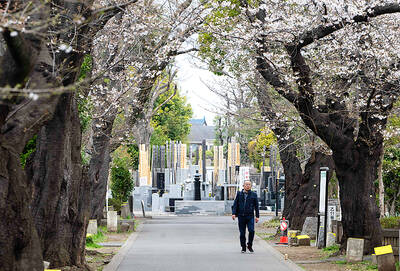
ROCKY RELATIONS: The figures on residents come as Chinese tourist numbers drop following Beijing’s warnings to avoid traveling to Japan The number of Chinese residents in Japan has continued to rise, even as ties between the two countries have become increasingly fractious, data released on Friday showed. As of the end of December last year, the number of Chinese residents had increased by 6.5 percent from the previous year to 930,428. Chinese people accounted for 22.6 percent of all foreign residents in Japan, making them by far the largest group, Japanese Ministry of Justice data showed. Beijing has criticized Tokyo in increasingly strident terms since Japanese Prime Minister Sanae Takaichi last year suggested that a military conflict around Taiwan could

A retired US colonel behind a privately financed rocket launch site in the Dominican Republic sees the project as a response to China’s dominance of the space race in Latin America. Florida-based Launch on Demand is slated to begin building a US$600 million facility in a remote region near the border with Haiti late this year. The project is designed to meet surging demand for the heavy-lift rockets needed to put clusters of satellites into orbit. It is also an answer to China’s growing presence in the region, said CEO Burton Catledge, a former commander of the US Air Force’s 45th Operations
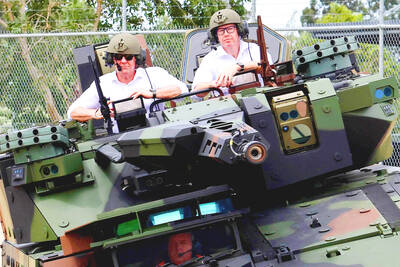
Germany is considering Australia’s Ghost Bat robot fighter as it looks to select a combat drone to modernize its air force, German Minister of Defense Boris Pistorius said yesterday. Germany has said it wants to field hundreds of uncrewed fighter jets by 2029, and would make a decision soon as it considers a range of German, European and US projects developing so-called “collaborative combat aircraft.” Australia has said it will integrate the Ghost Bat, jointly developed by Boeing Australia and the Royal Australian Air Force, into its military after a successful weapons test last year. After inspecting the Ghost Bat in Queensland yesterday,
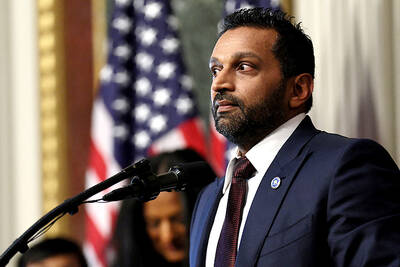
A pro-Iran hacking group claimed to breach FBI Director Kash Patel’s personal e-mail inbox and posted some of the contents online. The e-mails provided by the hacking group include travel details, correspondence with leasing agents in Washington and global entry, and loyalty account numbers. The e-mail address the hackers claim to have compromised has been previously tied to Patel’s personal details, and the leaked e-mails contain photos of Patel and others, in addition to correspondence with family members and colleagues. “The FBI is aware of malicious actors targeting Director Patel’s personal email information,” the agency said in a statement on


 RSS
RSS