


Supporters of Sri Lankan Tamil Tiger leader Velupillai Prabhakaran fete him as a “Sun God,” while his opponents brand him a ruthless megalomaniac.
Few, however, can dispute he has been one of the most effective and feared guerrilla leaders in the history of modern warfare — at times displaying the tactical prowess of Afghanistan’s Ahmad Shah Masood, the ruthlessness of Osama bin Laden and the conviction of Latin American revolutionary Che Guevara.
In three decades of savage ethnic conflict aimed at carving out a separate Tamil homeland in the north and east, Prabhakaran managed to consolidate a de facto state and — up until now — outsmart successive government offensives.
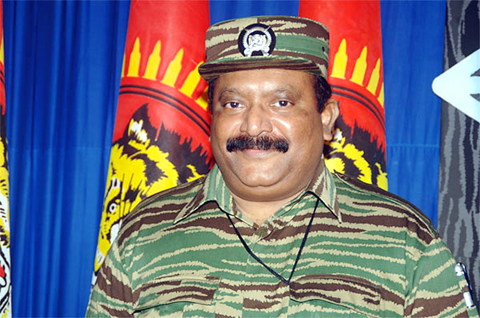
PHOTO: AFP
He terrorized the island and even neighboring powerhouse India, perfecting the recruitment and use of suicide bomber units even before al-Qaeda existed.
His fighters usually took no prisoners and were notorious for assaults that often left every single enemy soldier dead.
The mustachioed, portly warlord has been blamed for ordering the 1991 assassination of former Indian prime minister Rajiv Gandhi, who in 1987 sent Indian troops to disarm the Tamil Tigers but ended up with a bloody nose when troops withdrew after 32 months of jungle combat.
His killing apparatus also claimed the lives of Sri Lankan president Ranasinghe Premadasa in 1993, foreign minister Lakshman Kadirgamar in 2005 and countless mayors, police officials and army brass.
His Liberation Tigers of Tamil Eelam (LTTE) had their own army, navy and air force — built up by an illicit international fundraising network and the use of smugglers on ships and speedboats.
“His dedication to the cause of Tamil Eelam,” the separate state he fought for, “was unquestionable,” recalled former Tamil guerrilla Dharmalingam Sithadthan, now a politician. “He was the only man in Sri Lanka who could decide if there should be war or peace.”
Sithadthan said Prabhakaran, 54, was neither mellowed by age or by his family of three children.
Born on Nov. 26, 1954, in the Tamil heartland of Jaffna, Prabhakaran was a guerrilla fighter for most of his life and has presided over a war that has left at least 70,000 dead — roughly a third of whom were his own fighters.
The youngest of four children from a middle-class family, he went underground in 1972 as the head of a rag-tag band of brigands.
He claimed that he decided to take up arms after seeing Sri Lankan security forces harass Tamil civilians in the Jaffna peninsula.
He went on to attract thousands of young men and women to his army. Like the master himself, all LTTE cadres carry a cyanide capsule to commit suicide rather than be captured alive.
He banned smoking and drinking within the ranks and enforced a strict code of discipline.
Prabhakaran conferred military ranks on his cadres only after their deaths. He built a cult of venerating the dead. Every street corner in rebel-held territory became a monument to a fallen Tiger “martyr.”
Despite earning international terrorist status in the corridors of Washington and Europe and being wanted in India, he was sought out by diplomats seeking to bring an end to Asia’s longest running civil war.
But since the island’s government lost patience with a peace plan and decided to defeat the rebels once and for all, Prabhakaran’s empire has crumbled.
Weakened by defections — and, critics say, ruthless purges — the rebels lost control over the east and then the north.
The defense ministry says the level of resistance the military continues to encounter in the sliver of coastal jungle still in rebel hands indicates he may have chosen to fight to the death rather than slip away by boat.
Indian writer Narayan Swamy, a biographer of Prabhakaran, said he believes the rebel leader has little choice but to stay and fight.
“He cannot give up — or cannot be even seen to be giving up,” he said. “A Prabhakaran who fights and goes down will become a legend, at least to his people. A Prabhakaran who runs away will be seen differently by even many of those who have supported him.”

Kouri Richins, a Utah mother who published a children’s book about grief after the death of her husband is to serve a life sentence for his murder without the possibility of parole, a judge ruled on Wednesday. Richins was convicted in March of aggravated murder for lacing a cocktail given to her husband, Eric Richins, with five times the lethal dose of fentanyl at their home near Park City in 2022. A jury also found her guilty of four other felonies, including insurance fraud, forgery and attempted murder for trying to poison her husband weeks earlier on Feb. 14, 2022, with a
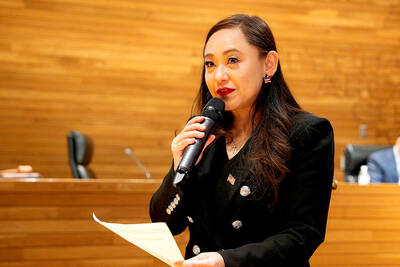
‘PERSONAL MISTAKES’: Eileen Wang has agreed to plead guilty to the felony, which comes with a maximum sentence of 10 years in federal prison A southern California mayor has agreed to plead guilty to acting as an illegal agent for the Chinese government and has resigned from her city position, officials said on Monday. Eileen Wang (王愛琳), mayor of Arcadia, was charged last month with one count of acting in the US as an illegal agent of a foreign government. She was accused of doing the bidding of Chinese officials, such as sharing articles favorable to Beijing, without prior notification to the US government as required by law. The 58-year-old was elected in November 2022 to a five-person city council, from which the mayor is selected
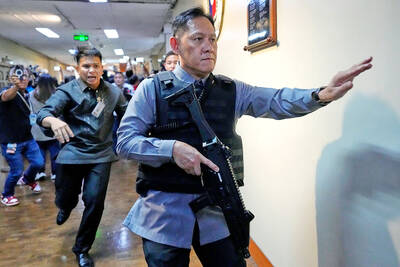
DELA ROSA CASE: The whereabouts of the senator, who is wanted by the ICC, was unclear, while President Marcos faces a political test over the senate situation Philippine authorities yesterday were seeking confirmation of reports that a top politician wanted by the International Criminal Court (ICC) had fled, a day after gunfire rang out at the Philippine Senate where he had taken refuge fearing his arrest. Senator Ronald “Bato” dela Rosa, the former national police chief and top enforcer of former Philippine president Rodrigo Duterte’s “war on drugs,” has been under Senate protection and is wanted for crimes against humanity, the same charges Duterte is accused of. “Several sources confirmed that the senator, Senator Bato, is no longer in the Senate premises, but we are still getting confirmation,” Presidential
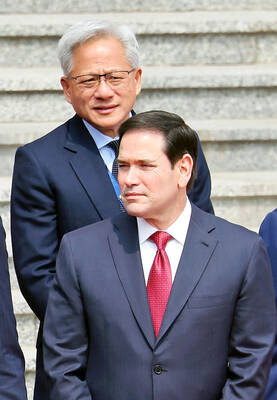
HELP DENIED? The US Department of State said that the Cuban leadership refuses to allow the US to provide aid to Cubans, ‘who are in desperate need of assistance’ US Secretary of State Marco Rubio on Wednesday said that Cuba’s leadership must change, as Washington renewed an offer of US$100 million in aid if the communist nation agrees to cooperate. Cuba has been suffering severe economic tumult led by an energy shortage that plunged 65 percent of the country into darkness on Tuesday. Cuba’s leaders have blamed US sanctions, but Rubio, a Cuban American and critic of the government established by Fidel Castro, said the system was to blame, including corruption by the military. “It’s a broken, nonfunctional economy, and it’s impossible to change it. I wish it were different,” he told


 RSS
RSS