


Iraq yesterday renewed a call to foreign creditors to cancel about US$60 billion in debts and asked that compensation payments imposed after former president Saddam Hussein’s invasion of Kuwait be scrapped.
Iraqi Prime Minister Nuri al-Maliki made the call at an international conference convened in Stockholm to assess progress in a five-year plan to rebuild Iraq.
“Iraq is not a poor country. It possesses tremendous human and material resources, but the debts of Iraq ... which we inherited from the dictator hamper the reconstruction process,” Maliki told the conference.
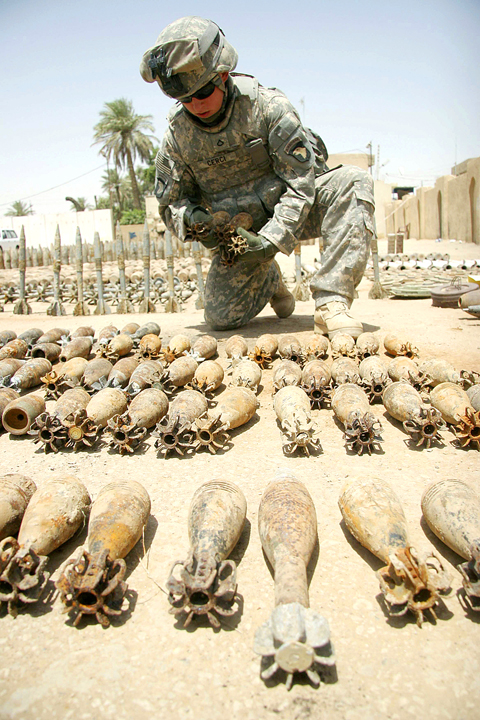
PHOTO: AP
“We are looking forward to the brother countries writing off its [Iraq’s] debts, which are a burden on the Iraqi government,” he said, a pointed reference to Kuwait and Saudi Arabia, which are Iraq’s biggest Arab creditors.sThe foreign ministers of Saudi Arabia and Kuwait were not present at yesterday’s conference, with junior officials representing both countries. A member of the Iraqi delegation said they were disappointed by the foreign ministers’ absence.
US State Department estimates show about US$66.5 billion of Iraq’s US$120.2 billion in foreign debt has been forgiven.
More than half of the outstanding debt is owed to Gulf Arab states, mainly Saudi Arabia and Kuwait.
Arab League chief Amr Moussa backed Maliki’s call for debt relief saying: “I call upon everybody, including the Arab countries, to accelerate this issue.”
Iraq is pushing for an end to the billions of dollars it pays in compensation for the 1990 invasion of Kuwait.
At present it is required to set aside 5 percent of its oil revenues, which Iraq says will amount to US$3.5 billion this year.
The Stockholm meeting is the first annual review of the International Compact with Iraq agreed in the Egyptian resort of Sharm el-Sheikh last year, which committed Iraq to implement reforms in exchange for greater international support.
Opening the conference, UN Secretary-General Ban Ki-moon praised the Iraqi government for making “notable progress” in meeting economic, political and security benchmarks set at last year’s conference.
Maliki told the conference his government was pushing ahead with plans to hold provincial elections in October, despite the top US commander in Iraq, General David Petraeus, saying last week that November was a more likely date.
In a 75-page progress report to the conference, Iraq stressed it was not looking for money from the international community but for technical help to get its economy back on its feet after decades of wars and sanctions.
Meanwhile, at least 16 people were killed and 18 injured yesterday when a suicide bomber attacked police volunteers near the main police department in Sinjar in Nineveh Province.
The bomber, wearing an explosive vest, blew himself up targeting the police recruits in Sinjar, local police sources told the Voices of Iraq news agency.
The death toll was expected to rise as some people were very seriously injured, said the director of Sinjar hospital, Kifah Mahmud.
HOSTAGES REMEMBERED
In related news, relatives of five British civilian contractors held hostage in Iraq marked the first anniversary of their captivity yesterday.
The men, who worked for a US management consultancy and a Canadian security firm, were abducted in an audacious raid on the Finance Ministry in Baghdad by up to 40 gunmen, some dressed in Iraqi police uniforms.
In interviews and statements yesterday, relatives told of their agony of missing their loved ones.
The Foreign Office has imposed a virtual news blackout on the case, saying that sensitive negotiations for the men’s release are going on behind the scenes.
The kidnappers, who call themselves the Islamic Shiite Resistance in Iraq, have released two videos of the men over the past 12 months.
The Foreign Office said it did not want anything to get in the way of its negotiations, through third parties, to get the men released.
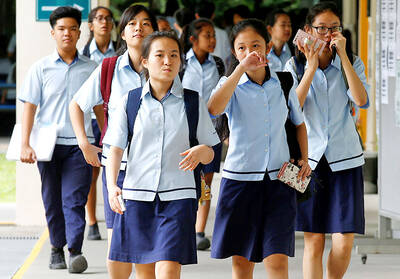
School bullies in Singapore are to face caning under new guidelines, but the education minister on Tuesday said it would be meted out only as a last resort with strict safeguards. Human rights groups regularly criticize Singapore for the use of corporal punishment, which remains part of the school and criminal justice systems, but authorities have defended it as a deterrent to crime and serious misconduct. Caning was discussed in the parliament after legislators asked how it would be used in relation to bullying in schools. The debate followed stricter guidelines on serious student misconduct, including bullying, unveiled by the Singaporean Ministry of
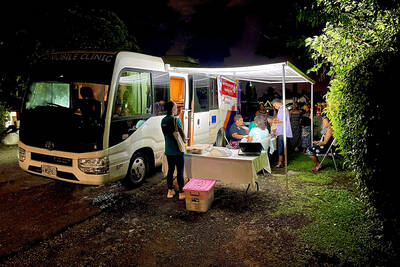
As evening falls in Fiji’s capital, a steady stream of people approaches a makeshift clinic that is a first line of defense against one of the world’s fastest-growing HIV epidemics. In the South Pacific nation — a popular tourist destination of just under a million people — more than 2,000 new HIV cases were recorded last year, a 26 percent increase from 2024. The government has declared an HIV outbreak and described it as a national crisis. “It’s spreading like wildfire,” said Siteri Dinawai, 46, who came to be tested. The Moonlight Clinic, a converted minibus parked in a suburban cul-de-sac in Suva, is
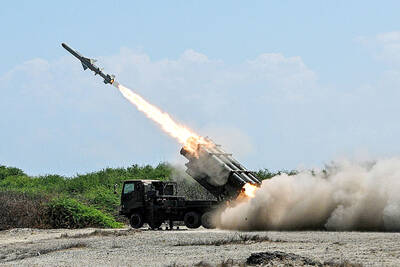
A MESSAGE: Japan’s participation in the Balikatan drills is a clear deterrence signal to China not to attack Taiwan while the US is busy in the Middle East, an analyst said The Japan Self-Defense Forces yesterday fired a Type 88 anti-ship missile during a joint maritime exercise with US, Australian and Philippine forces, hitting a decommissioned Philippine Navy ship in waters facing the disputed South China Sea, in drills that underscore Tokyo’s rising willingness to project military power on China’s doorstep. The drill took place as Manila and Tokyo began talks on a potential defense equipment transfer, made possible by Japan’s decision to scrap restrictions on military exports. The discussions include the possible early transfer of Abukuma-class destroyers and TC-90 aircraft to the Philippines, Japanese Minister of Defense Shinjiro Koizumi said. Philippine Secretary of
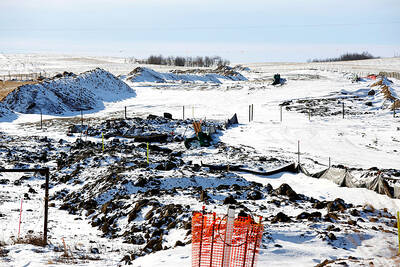
Separatists in Alberta are preparing to submit a petition tomorrow that they said has enough signatures to force a referendum on independence for the oil-rich Canadian province. Polls indicate the pro-independence camp remains a minority among Alberta’s 5 million people, but has hit a historic high of roughly 30 percent. Alberta separatists are also closer than ever to forcing a referendum, riding momentum fueled by intensifying grievances over Ottawa’s control of the provincial oil industry. They have also undeniably gotten a boost from the return to power of US President Donald Trump. After launching a petition in January, Stay Free Alberta, the group


 RSS
RSS