


The assassination of opposition leader Benazir Bhutto deals a stunning blow to liberal political forces trying to combat rising Islamic extremism in Pakistan.
Gathering unrest by her supporters also risks tipping the volatile country into chaos and puts additional pressure on President Pervez Musharraf as he struggles to keep order and stay in power.
It scuppers hopes of Western governments that the charismatic, two-time former prime minister could team up with Musharraf and galvanize Pakistan's struggling fight against Taliban and al-Qaeda militants after Jan. 8 elections that are now themselves in doubt.
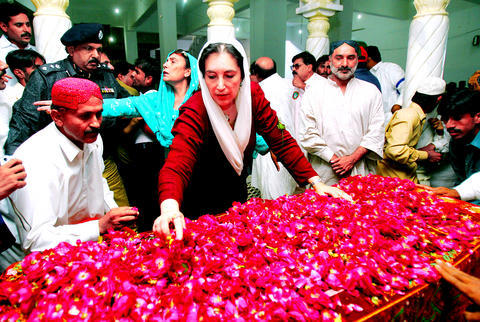
PHOTO: AFP
"This assassination is the most serious setback for democracy in Pakistan," said Rasul Baksh Rais, a political scientist at Lahore's University of Management Sciences. "It shows extremists are powerful enough to disrupt the democratic process. Musharraf's major concern now will be maintain law and order and make sure this does not turn into a major movement against him."
SUICIDE ATTACK
Bhutto died on Thursday when an attacker shot her and then blew himself up as she left a political rally in Rawalpindi, a city near the capital where Pakistan's army has its headquarters. It was second suicide attack against her since her tumultuous homecoming from an eight-year exile in October.
The other key opposition leader, Nawaz Sharif -- whose government was ousted in the 1999 coup that brought Musharraf to power -- quickly announced he was boycotting the parliamentary elections that are meant to usher Pakistan toward civilian government after years of military dominance.
Talat Masood, a retired general and now a political analyst, expected Bhutto's party to follow suit -- a move that would rob the vote of legitimacy.
Musharraf could become a political casualty of the unfolding crisis amid perceptions his government failed to provide adequate security for Bhutto. She had accused elements in the ruling party of backing militants to kill her -- claims that could gain more traction now despite government denials.
DANGEROUS
At the very least, the government will appear to be losing its grip on Pakistan.
"Conditions in the country have reached a point where it is too dangerous for political parties to operate," Masood said.
He anticipated that Musharraf, who recently suspended the Constitution for six weeks and purged the Supreme Court of judges who could have scuppered his own election to a new five-year term, could take drastic steps.
"It is possible they could declare an emergency again," Masood said.
Musharraf, who was himself targeted twice in Rawalpindi by al-Qaeda bombers in December 2003, gave no immediate sign of an authoritarian backlash to Bhutto's assassination. He declared three days of national mourning and vowed to fight the terrorists behind her killing.
AMNESTY
Only a few months ago, he held direct talks with Bhutto and later signed a corruption amnesty that paved the way for her return from exile.
But Anthony Cordesman at the Center for Strategic and International Studies in Washington, warned that any suspicion that Musharraf had a role in Bhutto's killing or knew about the plot and failed to prevent it could pitch Pakistan "to the edge of civil conflict."
"Much will depend on whether some Islamist extremist movement announces that it committed the attack, but even then a substantial number of Pakistanis will still see the Musharraf government as being at least indirectly involved and there would be a flood of destabilizing conspiracy theories," Cordesman said.
Bhutto was the figurehead of Pakistan's most prominent political family and party -- a mantle she adopted following the execution of her father Zulfiqar Ali Bhutto in 1979 during a former military regime. Her demise was a shock to Pakistanis, capping one of the most turbulent years in the country's six-decade history that has shaken Musharraf's standing both at home and abroad.
VOLATILE
Taliban militants that have caused havoc in neighboring Afghanistan in recent years have become a threat to Pakistan's own stability -- not only grabbing effective control of tracts of the volatile northwestern frontier, but launching attacks in cities elsewhere.
Western allies, particularly the US and Britain, viewed Bhutto as a potential ally for Musharraf who could stand up to this growing militant threat and galvanize the campaign against terrorism, amid signs that al-Qaeda's leadership has reconstituted itself inside Pakistan, posing a risk to global security.
"In a society becoming increasingly intolerant, she was being viewed by the international community as a person who could make a difference as a moderate politician, who, if she came to power, could turn the tide of religious extremism in this country," said Zaffar Abbas, an editor for the Dawn newspaper.
BUSH ADMINISTRATION
The Bush administration, which had invested much diplomatic capital in achieving a rapprochement between Musharraf and Bhutto scrambled on Thursday with the implications of her death.
Christine Fair, a South Asia expert with Rand Corp, said that demands for Musharraf's departure will increase after Bhutto's assassination. But Washington still views him as a critical ally and "likely does not have a plan" for the contingency of him stepping down in these circumstances, Fair said.
In a harbinger of the political instability that now beckons, Sharif, a longtime rival of Bhutto, sounded defiant on Thursday and Bhutto's supporters rampaged across Pakistan's cities.
"We will take the revenge on the rulers," a tearful Sharif said after he rushed to the Rawalpindi hospital where Bhutto was taken and sat beside her corpse.
Bhutto's Pakistan People's Party, the largest secular political group in Pakistan, itself faces a challenge to find a successor to the former prime minister. The party proved largely ineffectual in opposition to Musharraf during her years in exile or as a bulwark against extremism.
"She was the most powerful leader with a liberal background and had the confidence to confront religious extremists ... Among Pakistanis in general there will be fear about the future," said Hasan-Askari Rizvi, a political analyst and author.
But Cordesman stressed the domestic turmoil was very unlikely to endanger the safety of Pakistan's nuclear arsenal. The government has rejected suggestions that Islamic militants might assault facilities where they are stored.
"They are not stored where public riots or demonstrations can affect them and there is no reason the military should become unstable or their security should be compromised," Cordesman said.

School bullies in Singapore are to face caning under new guidelines, but the education minister on Tuesday said it would be meted out only as a last resort with strict safeguards. Human rights groups regularly criticize Singapore for the use of corporal punishment, which remains part of the school and criminal justice systems, but authorities have defended it as a deterrent to crime and serious misconduct. Caning was discussed in the parliament after legislators asked how it would be used in relation to bullying in schools. The debate followed stricter guidelines on serious student misconduct, including bullying, unveiled by the Singaporean Ministry of

As evening falls in Fiji’s capital, a steady stream of people approaches a makeshift clinic that is a first line of defense against one of the world’s fastest-growing HIV epidemics. In the South Pacific nation — a popular tourist destination of just under a million people — more than 2,000 new HIV cases were recorded last year, a 26 percent increase from 2024. The government has declared an HIV outbreak and described it as a national crisis. “It’s spreading like wildfire,” said Siteri Dinawai, 46, who came to be tested. The Moonlight Clinic, a converted minibus parked in a suburban cul-de-sac in Suva, is
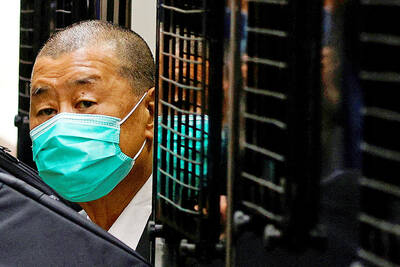
Jailed media entrepreneur Jimmy Lai (黎智英) has been awarded Deutsche Welle’s (DW) freedom of speech award for his contribution to Hong Kong’s pro-democracy movement. The German public broadcaster on Thursday said Lai would be presented in absentia with the 12th iteration of the award on June 23 at the DW Global Media Forum in Bonn. Deutsche Welle director-general Barbara Massing praised the 78-year-old founder of the now-shuttered news outlet Apple Daily for standing “unwaveringly for press freedom in Hong Kong at great personal risk.” “With Apple Daily, he gave journalists a platform for free reporting and a voice to the democracy movement in
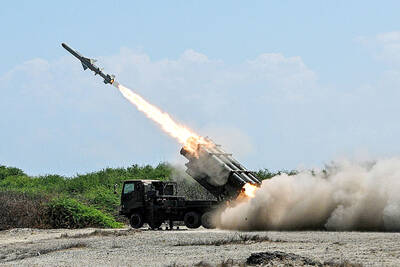
A MESSAGE: Japan’s participation in the Balikatan drills is a clear deterrence signal to China not to attack Taiwan while the US is busy in the Middle East, an analyst said The Japan Self-Defense Forces yesterday fired a Type 88 anti-ship missile during a joint maritime exercise with US, Australian and Philippine forces, hitting a decommissioned Philippine Navy ship in waters facing the disputed South China Sea, in drills that underscore Tokyo’s rising willingness to project military power on China’s doorstep. The drill took place as Manila and Tokyo began talks on a potential defense equipment transfer, made possible by Japan’s decision to scrap restrictions on military exports. The discussions include the possible early transfer of Abukuma-class destroyers and TC-90 aircraft to the Philippines, Japanese Minister of Defense Shinjiro Koizumi said. Philippine Secretary of


 RSS
RSS