


The US lifted an arms embargo against Indonesia, ending a six-year ban on military contacts with the world's most populous Muslim nation because of human-rights concerns, the US State Department said.
The administration of US President George W. Bush has argued that isolating Indonesia, which has been hit by several bombings by al-Qaeda-linked terrorists in recent years, was not in Washington's strategic interests.
The move, announced on Tuesday in Washington, drew immediate criticism from rights groups.
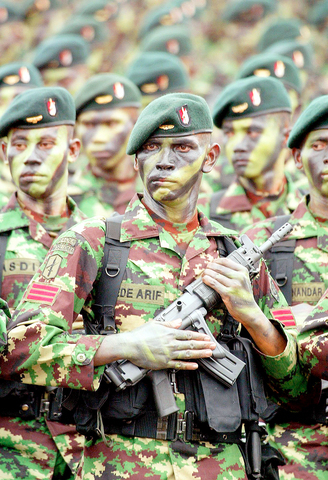
PHOTO: AP
"With the stroke of a pen, ... President Bush betrayed the untold tens of thousands of victims of the Indonesian military's brutality in Indonesia and East Timor,'' said John Miller, from the East Timor and Indonesia Action Network.
But Indonesian President Susilo Bambang Yudhoyono yesterday hailed Washington's decision to resume some military aid as marking a new chapter in relations, but other officials and politicians were more cautious.
"This is a new page, a new chapter in the strategic relations between Indonesia and the United States which have since 1999 gone through substantial ups and downs in relation to its defense cooperation," Yudhoyono said.
"The essence is that the sanction, or embargo imposed by the United States, has been lifted," the president told ElShinta radio in New Delhi, where he is on an official visit.
Yudhoyono said the US International Military Education and Training (IMET), Foreign Military Sales (FMS) and Foreign Military Financing (FMF) programs were now "back to normal."
US Congress cut ties with Indonesia's military in 1999 after it was accused of taking part in violence in East Timor during that territory's break from Jakarta rule in a UN-sponsored referendum.
Limited ties had been restored under the Bush administration -- chiefly a small officer-training program -- but Indonesia has been lobbying Washington to remove all restrictions.
The State Department used a national security waiver to drop the embargo, State Department spokesman Sean McCormack said in a statement.
He said that the administration planned to help modernize the Indonesian military and support US and Indonesian security objectives, including counterterrorism, but that Washington "remained committed to pressing for accountability for past human rights abuses."
Moves to restore ties received a boost after the tsunami last year, which killed 130,000 people on Indonesia's Sumatra Island. The US and Indonesian militaries worked together to deliver aid to victims.
Indonesia President Susilo Bambang Yudhoyono, a US-educated general elected a year ago in the country's first ever direct elections for head of state, is popular in Washington because of his moves to crack down on Islamic militants.
The Bush administration has argued that the ban on contacts should be lifted to help build Indonesia into a bulwark against al-Qaeda infiltration in Southeast Asia, where the Jemaah Islamiyah terror group has launched several terror attacks in the region.
Miller said that the Indonesian police -- not the military -- should be responsible for fighting terror, and that by removing the embargo Washington had lost its leverage with Indonesia.
"It gives the military the seal of approval," he said. "The military is not an institution promoting stability in Indonesia and the region. The way to encourage democracy [in Indonesia] is not to give it more guns."
The underfunded military has long been accused of human-rights violations in the course of putting down separatist insurgencies in far-flung regions of the sprawling and at times mostly inaccessible archipelago.
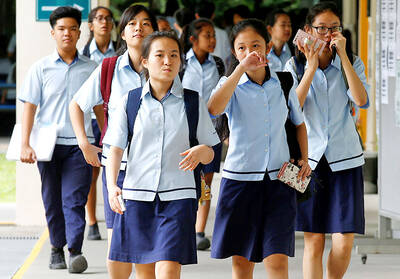
School bullies in Singapore are to face caning under new guidelines, but the education minister on Tuesday said it would be meted out only as a last resort with strict safeguards. Human rights groups regularly criticize Singapore for the use of corporal punishment, which remains part of the school and criminal justice systems, but authorities have defended it as a deterrent to crime and serious misconduct. Caning was discussed in the parliament after legislators asked how it would be used in relation to bullying in schools. The debate followed stricter guidelines on serious student misconduct, including bullying, unveiled by the Singaporean Ministry of

As evening falls in Fiji’s capital, a steady stream of people approaches a makeshift clinic that is a first line of defense against one of the world’s fastest-growing HIV epidemics. In the South Pacific nation — a popular tourist destination of just under a million people — more than 2,000 new HIV cases were recorded last year, a 26 percent increase from 2024. The government has declared an HIV outbreak and described it as a national crisis. “It’s spreading like wildfire,” said Siteri Dinawai, 46, who came to be tested. The Moonlight Clinic, a converted minibus parked in a suburban cul-de-sac in Suva, is
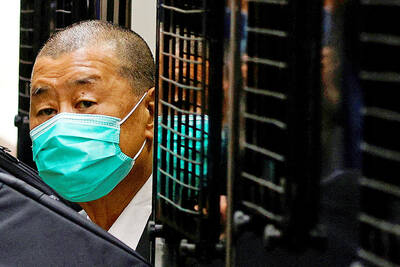
Jailed media entrepreneur Jimmy Lai (黎智英) has been awarded Deutsche Welle’s (DW) freedom of speech award for his contribution to Hong Kong’s pro-democracy movement. The German public broadcaster on Thursday said Lai would be presented in absentia with the 12th iteration of the award on June 23 at the DW Global Media Forum in Bonn. Deutsche Welle director-general Barbara Massing praised the 78-year-old founder of the now-shuttered news outlet Apple Daily for standing “unwaveringly for press freedom in Hong Kong at great personal risk.” “With Apple Daily, he gave journalists a platform for free reporting and a voice to the democracy movement in
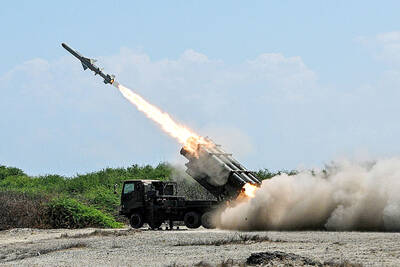
A MESSAGE: Japan’s participation in the Balikatan drills is a clear deterrence signal to China not to attack Taiwan while the US is busy in the Middle East, an analyst said The Japan Self-Defense Forces yesterday fired a Type 88 anti-ship missile during a joint maritime exercise with US, Australian and Philippine forces, hitting a decommissioned Philippine Navy ship in waters facing the disputed South China Sea, in drills that underscore Tokyo’s rising willingness to project military power on China’s doorstep. The drill took place as Manila and Tokyo began talks on a potential defense equipment transfer, made possible by Japan’s decision to scrap restrictions on military exports. The discussions include the possible early transfer of Abukuma-class destroyers and TC-90 aircraft to the Philippines, Japanese Minister of Defense Shinjiro Koizumi said. Philippine Secretary of


 RSS
RSS