


A French officer serving with the UN was killed and a Swedish officer and a Lebanese man were wounded by Israeli shelling Sunday shortly after a Hezbollah bomb attack killed an Israeli soldier near the border in southern Lebanon, Lebanese and UN officials said.
Hezbollah also said one of its guerrillas was killed in fighting with Israeli troops.
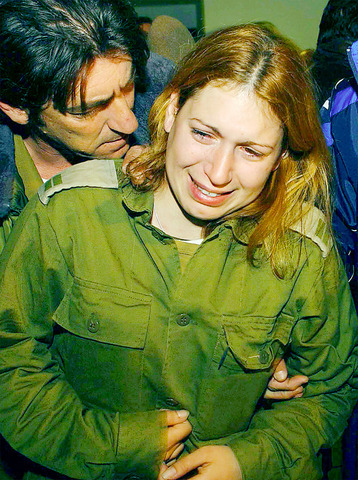
PHOTO: AFP
Milos Struger, spokesman for the UN peacekeeping force in southern Lebanon known as UNIFIL, said a French officer was "killed by shelling from the Israeli side of the Blue Line," the border line drawn by UN troops following Israel's withdrawal from a border zone in south Lebanon in 2000.
A Swedish officer was also wounded by the Israeli shelling, Struger said in a statement issued at the UNIFIL headquarters in the Lebanese border town of Naqoura.
"UNIFIL has opened an investigation into the tragic incident," he said.
A senior Israeli military official who investigated the incident said the death of the peacekeeper "apparently is the result of our tank fire."
"My impression is that there was no way of knowing that these were UN soldiers," he told reporters in Jerusalem. "They were in uniform but had no identifying signs to show that they were from the UN and were very close to the area where the incident occurred."
But Struger said the UN soldiers were "on duty, on patrol in a clearly marked vehicle" when the incident began.
UN officers travel in white vehicles, with the UN initials in black text on the sides. Struger would not speculate on the circumstances that led to the death of the officer pending the conclusion of the official investigation.
Struger said the officers worked for the UN Observer Group Lebanon, a UN agency that monitors the 1948 Armistice Agreement between Lebanon and Israel.
There are some 200 French soldiers serving with the 2,000-strong UN peacekeeping force, which has been working to maintain peace along the UN-drawn boundary between Israel and Lebanon since Israel's withdrawal from southern Lebanon.
The violence began when Hezbollah guerrillas detonated a roadside bomb that destroyed an Israeli military vehicle near the border in southern Lebanon, killing an Israeli soldier and wounding three others, Lebanese security officials said.
In Jerusalem, the Israeli military confirmed an officer was killed in the bombing. It did not give his name or rank.
Sheik Nabil Kaouk, Hezbollah commander in southern Lebanon, said in an interview with the Qatar-based al-Jazeera satellite channel that the Israeli officer was a commander of the military post targeted by Hezbollah guerrillas inside the disputed Chebaa Farms.
Hezbollah said in a statement broadcast by its Al Manar television late Sunday that one of its guerrillas, Ahmed Ibrahim Salameh, 30, was killed in fighting with Israeli troops.
In an earlier statement, Hezbollah said the 11:50am bomb attack targeted an Israeli patrol on the road to the Zebddine post. It said the attack was "within the framework of [Hezbollah's] struggle to liberate the remainder of Lebanese lands under [Israeli] occupation in the Chebaa Farms area."
An Israeli military spokeswoman said Israel responded with an air force strike on three unidentified Hezbollah targets in Lebanon.
Lebanese officials said Israeli warplanes fired missiles twice at Hezbollah's Tal el-Hamamseh observation post near the Israeli town of Metullah, 11km west of the attack area, and shelled another position at Rweisat.
Israeli planes also fired two missiles on a suspected guerrilla hideout east of the village of Kfar Chouba near the Chebaa Farms, the officials in south Lebanon said, speaking on condition of anonymity. Some 15 Israeli shells reportedly fell near Kfar Chouba, lightly wounding Nabegh Kaderi, a 25-year-old Lebanese farmer, witnesses and the officials said.
The violence came as the Lebanese are deeply split over UN Resolution 1559, which was passed last September and calls for the dismantling of Hezbollah and armed Palestinian groups and a withdrawal of Syrian troops from Lebanon.
It also happened the same day that Palestinians went to the polls to choose a successor to the late Yasser Arafat. Israeli Defense Minister Shaul Mofaz linked the attack to the elections.
"It is intended to create a reality of terror on the day of the Palestinian elections," Mofaz said.
But Hezbollah denied that accusation.
"The attack has nothing to do with the Palestinian elections or UN Resolution 1559. It is a natural operation as part of the resistance's struggle to liberate the Chebaa Farms," Sheik Hassan Ezzeddine, Hezbollah's senior political officer in south Lebanon, told reporters late Sunday. "Hezbollah upholds the resistance choice to confront threats posed by the [Israeli] enemy to Lebanon."
The Lebanon-Israel border has been largely quiet since Israel withdrew its forces from southern Lebanon in May 2000 after an 18-year occupation. However, Hezbollah guerrillas have occasionally attacked Israeli troops in the disputed Chebaa Farms area where the borders of Lebanon, Syria and Israel meet.

Kouri Richins, a Utah mother who published a children’s book about grief after the death of her husband is to serve a life sentence for his murder without the possibility of parole, a judge ruled on Wednesday. Richins was convicted in March of aggravated murder for lacing a cocktail given to her husband, Eric Richins, with five times the lethal dose of fentanyl at their home near Park City in 2022. A jury also found her guilty of four other felonies, including insurance fraud, forgery and attempted murder for trying to poison her husband weeks earlier on Feb. 14, 2022, with a

DELA ROSA CASE: The whereabouts of the senator, who is wanted by the ICC, was unclear, while President Marcos faces a political test over the senate situation Philippine authorities yesterday were seeking confirmation of reports that a top politician wanted by the International Criminal Court (ICC) had fled, a day after gunfire rang out at the Philippine Senate where he had taken refuge fearing his arrest. Senator Ronald “Bato” dela Rosa, the former national police chief and top enforcer of former Philippine president Rodrigo Duterte’s “war on drugs,” has been under Senate protection and is wanted for crimes against humanity, the same charges Duterte is accused of. “Several sources confirmed that the senator, Senator Bato, is no longer in the Senate premises, but we are still getting confirmation,” Presidential

HELP DENIED? The US Department of State said that the Cuban leadership refuses to allow the US to provide aid to Cubans, ‘who are in desperate need of assistance’ US Secretary of State Marco Rubio on Wednesday said that Cuba’s leadership must change, as Washington renewed an offer of US$100 million in aid if the communist nation agrees to cooperate. Cuba has been suffering severe economic tumult led by an energy shortage that plunged 65 percent of the country into darkness on Tuesday. Cuba’s leaders have blamed US sanctions, but Rubio, a Cuban American and critic of the government established by Fidel Castro, said the system was to blame, including corruption by the military. “It’s a broken, nonfunctional economy, and it’s impossible to change it. I wish it were different,” he told
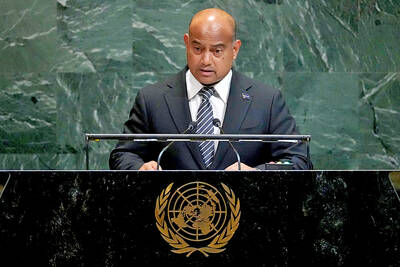
Nauru said it would hold a referendum to change its official name, described as a colonial relic from a time when “foreign tongues” mangled the native language. Nauru would change its name to Naoero to “more faithfully honor our nation’s heritage, our language and our identity,” Nauruan President David Adeang said in a statement on Tuesday. The Pacific island nation’s native language is Dorerin Naoero, which is spoken by the vast majority of its approximately 10,000 inhabitants. “Nauru emerged because Naoero could not be properly pronounced by foreign tongues, and was changed not by our choice, but for convenience,” the government said in


 RSS
RSS