


In China's Communist heyday, when Chairman Mao (
But Maoism has since been supplanted by an unswerving faith in market economics, and drab Mao suits by haute couture, and the country is now nuts for supermodels and beauty queens.
Next month, China hosts the 2003 Miss World competition, putting the world's most populous country officially on the beauty pageant map.
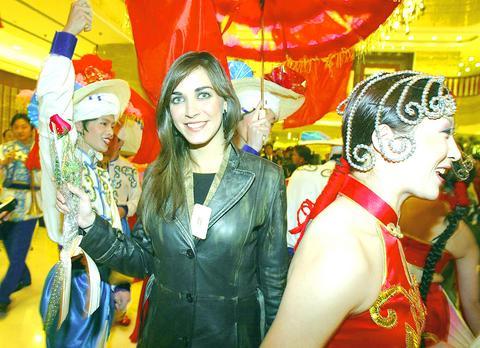
PHOTO: AP
The 110 beauties vying for the Miss World tiara flew in to Beijing on Tuesday for a few days of photo ops on the Great Wall and in the Forbidden City ahead of the Dec. 6 contest in Sanya, a resort on the semi-tropical island of Hainan.
"Miss World in China. Why not?" a Chinese commentator under the pseudonym "100 percent Cantonese" said on an online message board.
"I am going to beautiful tropical Hainan island for that event, I hope to meet one of those queens on the beach and invite her to a Cantonese dinner," the person wrote.
Until recently, beauty pageants were banned in China as heretical expressions of bourgeois decadence.
During the 1966-1976 Cultural Revolution, women who used make-up could be branded counter-revolutionaries. Now, body image is a preoccupation of choice among urban youth.
Fashion-show catwalks have popped up in malls and in front of department stores nationwide. Billboards advertising beauty products and name-brand fashions are everywhere.
Calling this year "the first pageant year in China," the Web site of the Communist Party's sober-minded mouthpiece, the People's Daily, said the Miss International competition would be held in China next year.
"The craze in pageants is, on one hand, due to people's nature to pursue beauty, and social and economic development makes it possible for this pursuit and enriches its contents," the Web site said. "On the other hand, under the market economy, pageants become a medium, and the beauty economy is prospering."
It said 75 percent of online respondents to a questionnaire by popular Web sites Sina.com and Sohu.com supported China's participation in international pageants. Twenty-seven percent saw them as "a demand for the development of the market economy."
The People's Daily Web site, www.people.com.cn, even said pageants were part of China's history, but stopped short of saying it invented them -- like gunpowder, compasses and noodles.
"Beauty contests among common Chinese people originated from the prostitution circle. There was `flower board' evaluating prostitutes dating back to the Xining period (1068-1077) of North Song Dynasty (960-1127)," it said.
But after the Communists took power in 1949, pageants were banned and China did not enter the Miss World competition, which started two years later, until 2001.
Even with official sanction, the transition to a beauty-contest-friendly China has not been all smooth.
Last year, police in southern China raided an auditorium during the Miss China contest saying the organizers did not have a permit.
The pageant was quietly allowed to continue and the winner, Zhuo Ling, went on to become second runner-up at the Miss Universe finals in Puerto Rico.
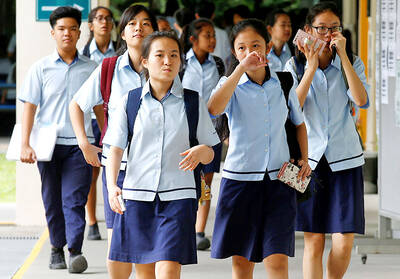
School bullies in Singapore are to face caning under new guidelines, but the education minister on Tuesday said it would be meted out only as a last resort with strict safeguards. Human rights groups regularly criticize Singapore for the use of corporal punishment, which remains part of the school and criminal justice systems, but authorities have defended it as a deterrent to crime and serious misconduct. Caning was discussed in the parliament after legislators asked how it would be used in relation to bullying in schools. The debate followed stricter guidelines on serious student misconduct, including bullying, unveiled by the Singaporean Ministry of
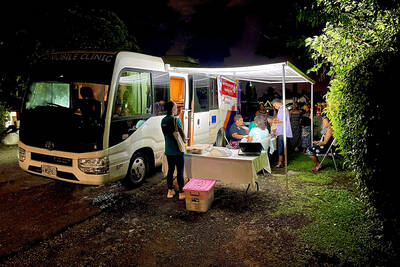
As evening falls in Fiji’s capital, a steady stream of people approaches a makeshift clinic that is a first line of defense against one of the world’s fastest-growing HIV epidemics. In the South Pacific nation — a popular tourist destination of just under a million people — more than 2,000 new HIV cases were recorded last year, a 26 percent increase from 2024. The government has declared an HIV outbreak and described it as a national crisis. “It’s spreading like wildfire,” said Siteri Dinawai, 46, who came to be tested. The Moonlight Clinic, a converted minibus parked in a suburban cul-de-sac in Suva, is
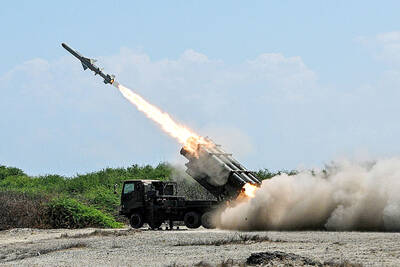
A MESSAGE: Japan’s participation in the Balikatan drills is a clear deterrence signal to China not to attack Taiwan while the US is busy in the Middle East, an analyst said The Japan Self-Defense Forces yesterday fired a Type 88 anti-ship missile during a joint maritime exercise with US, Australian and Philippine forces, hitting a decommissioned Philippine Navy ship in waters facing the disputed South China Sea, in drills that underscore Tokyo’s rising willingness to project military power on China’s doorstep. The drill took place as Manila and Tokyo began talks on a potential defense equipment transfer, made possible by Japan’s decision to scrap restrictions on military exports. The discussions include the possible early transfer of Abukuma-class destroyers and TC-90 aircraft to the Philippines, Japanese Minister of Defense Shinjiro Koizumi said. Philippine Secretary of
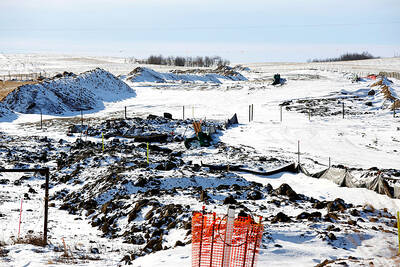
Separatists in Alberta are preparing to submit a petition tomorrow that they said has enough signatures to force a referendum on independence for the oil-rich Canadian province. Polls indicate the pro-independence camp remains a minority among Alberta’s 5 million people, but has hit a historic high of roughly 30 percent. Alberta separatists are also closer than ever to forcing a referendum, riding momentum fueled by intensifying grievances over Ottawa’s control of the provincial oil industry. They have also undeniably gotten a boost from the return to power of US President Donald Trump. After launching a petition in January, Stay Free Alberta, the group


 RSS
RSS