


Through analyzing fossil evidence, a research team at National Taiwan University (NTU) discovered the largest endemic bird to have lived in Taiwan, naming it Pavo miejue, or extinct peafowl (滅絕孔雀).
The Mikado pheasant, which is printed on the back of the NT$1,000 bank note, was previously believed to be the biggest endemic bird to Taiwan.
The research team’s findings suggest that Pavo miejue lived during the Pleistocene epoch tens of thousands of years ago.
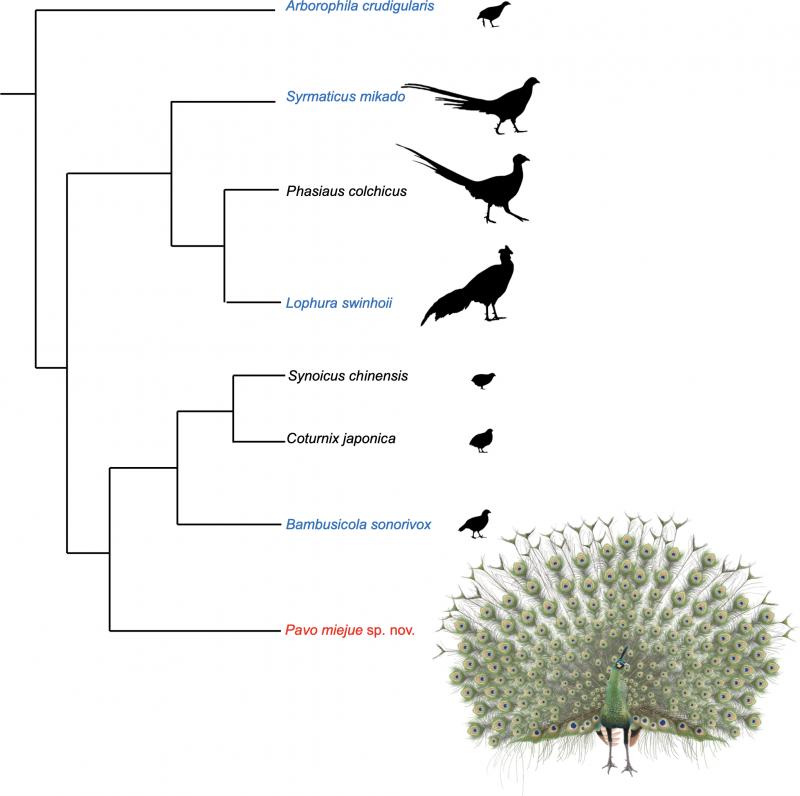
Photo courtesy of Sun Cheng-han
It is the first endemic extinct bird species discovered and formally named in Taiwan.
The study was coauthored by NTU Institute of Ecology and Evolutionary Biology professor Tsai Cheng-hsiu (蔡政修), NTU life sciences student Lan Yong-jie (藍詠傑) and Senckenberg Natural History Museum academic Gerald Mayr.
It was published in the British journal Royal Society Open Science on May 20.
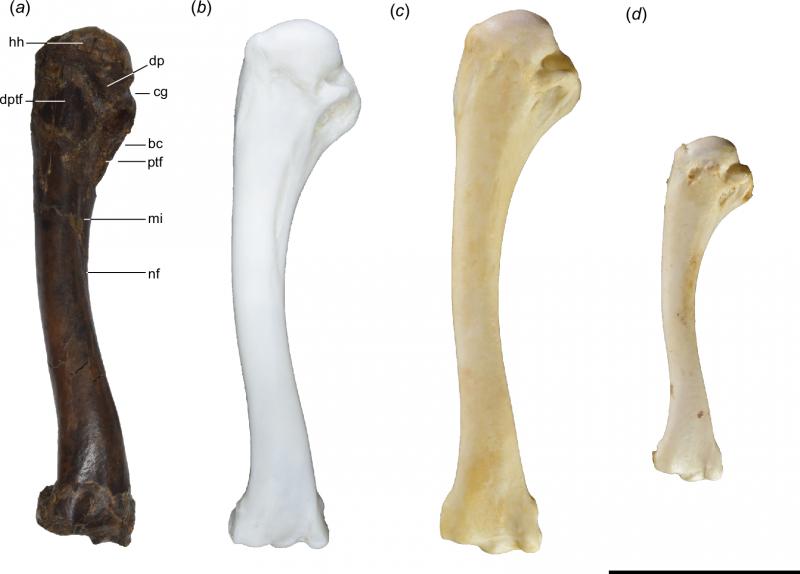
Photo courtesy of National Taiwan University
Taiwan “harbors a high avian diversity with nearly 700 recorded species, including 32 endemic ones,” the study said.
However, compared with mammals and reptiles, the fossil record of birds in Taiwan is limited, leaving gaps in understanding their evolutionary history, it said.
Tsai and Mayr published the first study on bird fossils in Taiwan in 2021, it said, adding that this discovery sheds further light on the ancient world of birds in Taiwan.
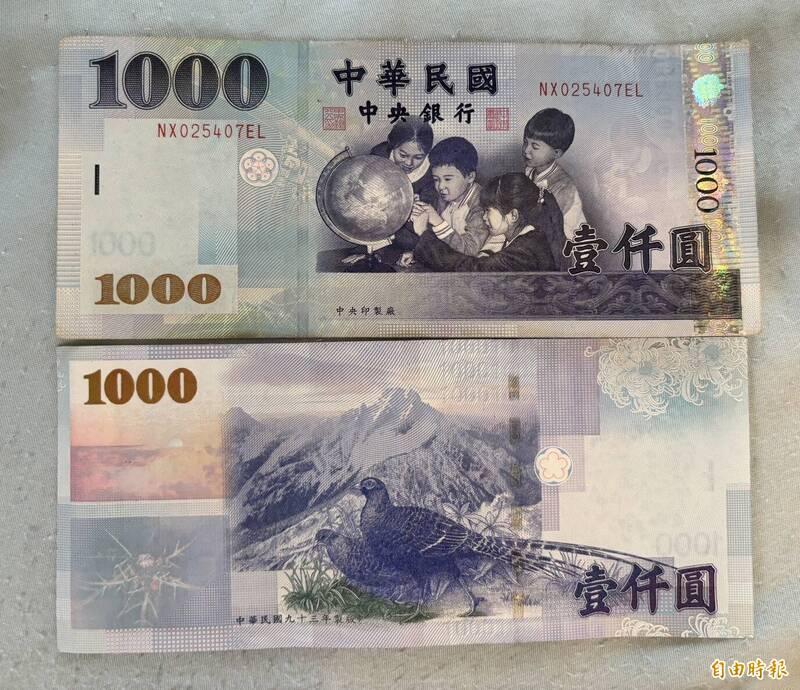
Photo: Rachel Lin, Taipei Times
The key clue came from a humerus fossil donated by retired professor Hou Li-ren (侯立仁) from Tainan, the researchers said.
Through detailed morphological comparisons with living peafowl and other birds in the pheasant family, they confirmed that the fossil belonged to a large, extinct species of peafowl.
As it did not match any known species, they established it as a new species and named it Pavo miejue, with Pavo referring to the peafowl genus and miejue derived from the Chinese word for extinct (滅絕).
The name is intended to raise public awareness of extinction and highlight the ecological changes that have occurred in Taiwan over time, the team said.
This discovery shows that Taiwan’s past ecosystems were far richer than what can be seen today, Tsai said.
While people are familiar with Taiwan’s existing endemic birds, this fossil evidence indicates that the nation was once home to even larger endemic birds, he said, adding that if only living species are considered, it would not be possible to fully understand the evolutionary history of Taiwan’s biodiversity.
Fossils are not only clues to ancient life, but also help scientists understand how species evolve, migrate and go extinct, the researchers said.
By studying past extinction events, researchers can gain a long-term perspective and better understand how ecosystems respond to environmental change, they added.
The discovery of Pavo miejue shows that Taiwan still holds many paleontological mysteries, they said, adding that more fossil research is needed to piece together a complete picture of Taiwan’s ancient ecosystems.

In a historic first, Taiwanese officials participated in this year’s Riga Strategic Communications Dialogue in Latvia from Wednesday to Friday last week, which debuted a breakout session focused on Taiwan The event organizer, the NATO Strategic Communications Center of Excellence, displayed Taiwan’s national flag and the officials’ formal titles on their Web site. Taiwanese attendees included National Security Council (NSC) Deputy Secretary-General Lin Fei-fan (林飛帆) and deputy head of the Taipei Representative Office in the UK, Chiang Ya-chi (江雅綺). In addition to the session discussing Taiwan titled “Taiwan: Navigating Strategic Communication in a Tense Environment,” the dialogue also included sessions
Taiwan Taoyuan International Airport is to suspend its automated Skytrain service connecting Terminal 1 and Terminal 2 starting on July 1 to facilitate connection works for the upcoming Terminal 3, the airport operator said today. Passengers and staff who need to travel between the two terminals after the suspension can instead use the Taoyuan MRT or the airport's 24-hour shuttle bus service, Taoyuan International Airport Corp said. The Taoyuan MRT Airport Line directly links the two terminals, while the shuttle buses are to operate around the clock, the company added. The Skytrain provides free transportation between the airport’s two terminals for travelers and
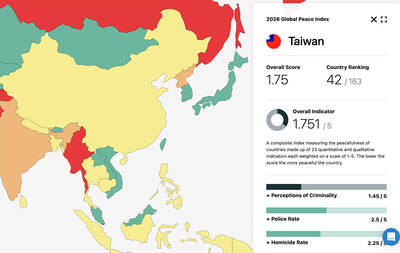
Taiwan ranked 42nd in terms of peacefulness among 163 countries, down five places from last year, according to this year’s Global Peace Index. With an overall score of 1.751, Taiwan dropped from 37th last year, the report published by the global Institute for Economics and Peace showed. The overall score measures a country’s level of peacefulness using 23 quantitative and qualitative indicators across three domains — ongoing domestic and international conflict, societal safety and security, and militarization. While Taiwan ranked 42nd worldwide, it was listed in ninth place among the 19 Asian-Pacific countries in the report, after New Zealand, Singapore, Japan, Malaysia,
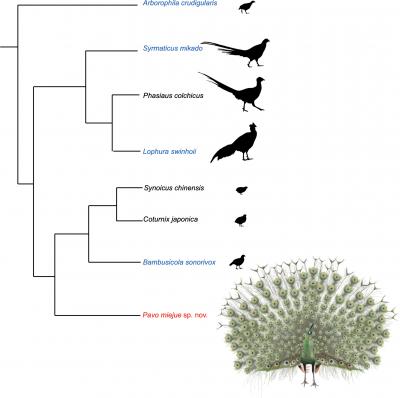
Through analyzing fossil evidence, a research team at National Taiwan University (NTU) discovered the largest endemic bird to have lived in Taiwan, naming it Pavo miejue, or extinct peafowl (滅絕孔雀). The Mikado pheasant, which is printed on the back of the NT$1,000 bank note, was previously believed to be the biggest endemic bird to Taiwan. The research team’s findings suggest that Pavo miejue lived during the Pleistocene epoch tens of thousands of years ago. It is the first endemic extinct bird species discovered and formally named in Taiwan. The study was coauthored by NTU Institute of Ecology and Evolutionary Biology professor Tsai Cheng-hsiu (蔡政修),


 RSS
RSS