


In a historic first, Taiwanese officials participated in this year’s Riga Strategic Communications Dialogue in Latvia from Wednesday to Friday last week, which debuted a breakout session focused on Taiwan
The event organizer, the NATO Strategic Communications Center of Excellence, displayed Taiwan’s national flag and the officials’ formal titles on their Web site.
Taiwanese attendees included National Security Council (NSC) Deputy Secretary-General Lin Fei-fan (林飛帆) and deputy head of the Taipei Representative Office in the UK, Chiang Ya-chi (江雅綺).
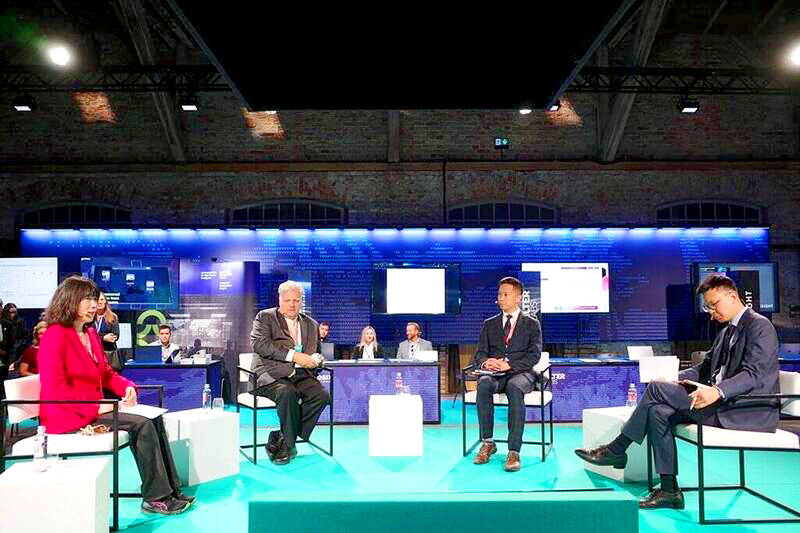
Photo courtesy of the Taipei Representative Office in the UK
In addition to the session discussing Taiwan titled “Taiwan: Navigating Strategic Communication in a Tense Environment,” the dialogue also included sessions discussing Japan and the Indo-Pacific region, reflecting NATO’s growing attention to the region in the past few years, the NSC said.
During the session, Lin said China’s strategic communication objectives are to undermine solidarity among democratic allies by amplifying division, while also using economic and diplomatic intimidation to create an international environment that discourages engagement with Taiwan.
The goals of China’s cognitive warfare against Taiwan is to erode Taiwanese confidence in democracy and the government, weaken trust in international partners, such as the US, and isolate Taiwan, Lin said.
He emphasized that China is disrupting the “status quo” and that its ambitions go beyond annexing Taiwan to breaking through the First Island Chain and becoming the dominant power.
Taiwan would continue to work with like-minded countries and seek fair opportunities to participate in international forums so that Taiwan’s voice can be heard, he said, urging the international community to not be constrained by Beijing’s narratives and forgo engaging with Taiwan.
Chiang gave three examples illustrating that unity promotes shared prosperity, including Taiwan’s daily COVID-19 briefings, which built public trust and improved compliance by providing transparent information.
Taiwan Semiconductor Manufacturing Corp’s (TSMC, 台積電) early decision to focus on semiconductor foundry services despite limited resources and uncertainty also showed how clear conviction can shape action and long-term direction, Chiang said.
Lastly, while emphasizing the importance of cultural communication, she said the International Booker Prize-winning novel Taiwan Travelogue showed that while literature might seem fragile in the face of military force, it will always be able to communicate ideas and values.
Taiwan’s integrated diplomacy combines strengths across all sectors of society and emphasizes mutually beneficial relationships to bring prosperity, Chiang said.
Maintaining peace and stability in the Taiwan Strait serves everyone’s interests, and Taiwan is not seeking to change the “status quo,” but working to be a trusted partner in the international community, she added.
Chiang closed by echoing Latvian Minister of Foreign Affairs Baiba Braze’s words that the freedom and rights we cherish are worth fighting for.


UPGRADE: The Kang Ding-class frigate is replacing its Chaparall missiles with Tien Chien II and Hua Yang VLS, which would provide it with long-range, 360° air defense Taiwan plans to produce 1,200 to 1,376 Hai Chien II missiles (海劍二, Sea Sword II) — also known as TC-2N — to serve as the standard air defense system of the navy’s surface combatant fleet, a source said yesterday. Last week, the Hai Chien II, the naval version of the Tien Kung II missile (天劍二, Sky Sword II), completed a live-fire test in waters off the National Chungshan Institute of Science and Technology’s Jiupeng facility (九鵬) in Pingtung County’s Manjhou Township (滿州). The MIM72 Chaparral and other dated air defense missiles that currently arm Taiwanese ships have inadequate range to combat Chinese

REASONS FOR TRAVEL: An assistant professor said that proposed amendments to penalize drivers if they used drugs overseas would not deter people from traveling People who operate a motor vehicle under the influence of marijuana would have their driver’s license revoked, even if they used the substance while overseas, the Ministry of Transportation and Communications said yesterday, citing proposed amendments to the Road Traffic Management and Penalty Act (道路交通管理處罰條例). The amendments would also authorize the government to revoke the licenses of people determined to have used Category 1 or Category 2 narcotics, even if they were not operating a vehicle while under the influence of drugs, as well as ban them from taking the license test for three years, the ministry said. People aged 18 or
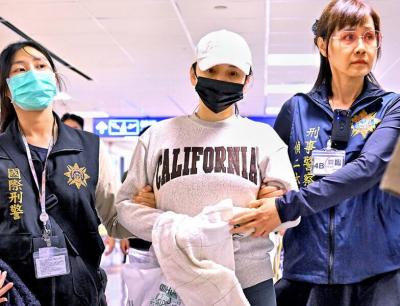
Johanne Liou (劉喬安), a Taiwanese woman who shot to unwanted fame during the Sunflower movement protests in 2014, returned to Taiwan last night after being deported from the US. She is to stand trial in Taiwan for charges involving embezzlement, fraud and drug crimes. The Criminal Investigation Bureau (CIB) said it took her into custody at Taiwan Taoyuan International Airport and would first question her before transferring her to the New Taipei District Prosecutors’ Office. She was arrested upon disembarking a flight from San Francisco that landed shortly before 7pm. Liou absconded to the US in 2019 after jumping bail
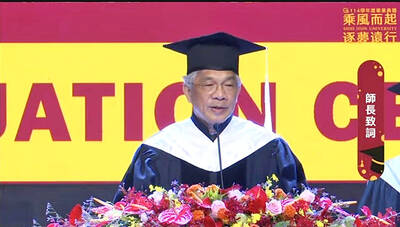
Shih Hsin University President Chen Ching-he (陳清河) yesterday issued a public apology for comments made in his commencement speech last week, stating that he has asked the school to suspend his duties and halt his wages for two months as a show of contrition. At the commencement ceremony on May 30, Chen said, “If you don’t manage your time well, or your own emotions, or your health, then I am telling every one of you — put a quick end to ‘you,’ because the world has no need for ‘you.’” The comments have sparked significant controversy online, and Chen through an open


 RSS
RSS