


When Jiang Qisheng (江棋生) looks back on the Cultural Revolution, he sees more than a decade of political chaos that upended China and derailed his own generation.
For the former Red Guard turned dissident, the deeper lesson of that era is that any meaningful rejection of the Cultural Revolution must also be a rejection of the trampling of human rights.
“There will only be hope if rejecting the Cultural Revolution leads to rejecting privilege and putting human rights first,” Jiang told the Central News Agency in a telephone interview on the 60th anniversary of the start of the decade-long political campaign.
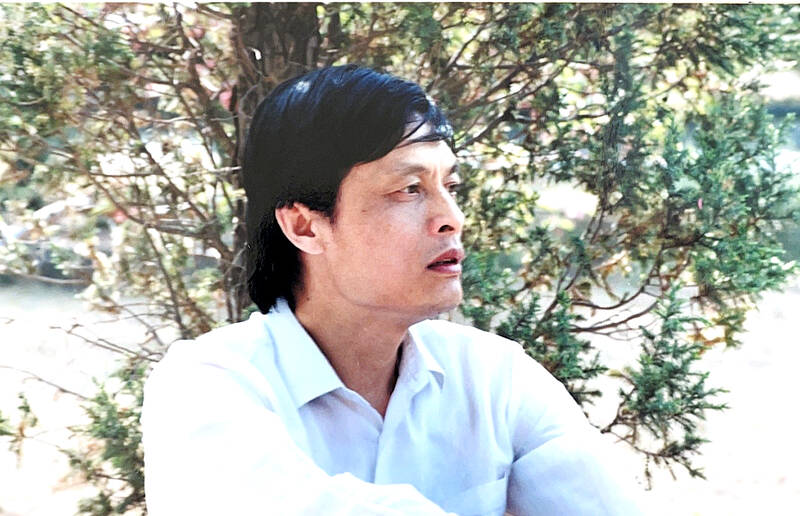
Photo courtesy of a friend of Jiang Qisheng via CNA
Born in 1948, Jiang was among a generation of students whose education was disrupted by the Cultural Revolution, launched by Mao Zedong (毛澤東) on May 16, 1966.
At the time, Jiang was a high-school student in China’s Jiangsu Province and chairman of his school’s student association.
Mao framed the Cultural Revolution as a revolutionary campaign to attack the “Four Olds” — old ideas, old culture, old customs and old habits — and purge bourgeois influences and perceived counterrevolutionaries through struggle sessions and house searches.
Historians have offered different explanations for why Mao launched the Cultural Revolution, including his stated goal of preventing China from taking a “revisionist” path, as well as what some academics describe as an effort to mobilize the masses against political rivals and reassert his authority within the party.
Like many who believed in Mao’s mission, Jiang joined struggle sessions against teachers, traveled to other cities to read “big-character posters” denouncing perceived enemies, and took part in the nationwide “link-up” movement that brought students from across China to Beijing.
Such activities were typical of the Red Guards, the student-led groups that became one of the most visible forces of the early Cultural Revolution.
As the Cultural Revolution spread from schools into broader society in 1967, political struggle escalated into armed clashes between different factions.
By 1968, with universities still closed, many urban high-school graduates were sent to the countryside as “educated youth.”
Jiang spent 1968 to 1972 farming in rural Jiangsu, later worked as a film projectionist from 1973 to 1976, and later took a propaganda job at a meat processing plant.
By then, his view of Mao and the Cultural Revolution had already begun to shift.
A key turning point, Jiang said, was the 1971 Lin Biao (林彪) incident, when Lin, Mao’s designated successor, died in a plane crash in Mongolia while allegedly fleeing after plotting against Mao.
Jiang’s years in the countryside also forced him to confront the hardship and absurdity experienced by a generation of young people whose lives had been derailed by politics.
He also recalled being deeply affected by the April 5 Tiananmen incident in 1976, when mass mourning for former Chinese premier Zhou Enlai (周恩來) at Tiananmen Square turned into a protest against the Gang of Four, a radical political faction led by Mao’s wife Jiang Qing (江青).
Jiang Qisheng said he firmly sided with the demonstrators at the time, as the country was economically poor, cultural life was barren, and “there was no freedom of any kind.”
“How were people supposed to live like that?” he added.
After China restored the national university entrance examination in 1977, he took the exam and in March 1978 was admitted to Beihang University, where he studied an engineering-related field.
At university, he said he gained access to information that had previously been unavailable to him, including accounts of the Chinese Nationalist Party’s (KMT) role in the war against Japan, and Western political thought.
That process of intellectual liberation would lead him to become involved in another movement centered on Tiananmen Square in 1989.
Then a doctoral student at Renmin University of China, Jiang Qisheng served as one of the student representatives during the 1989 Tiananmen Square movement.
Following the crackdown in Beijing on June 4, 1989, he was arrested and detained. He was released in 1991 after prosecutors did not indict him, but was expelled from the university later that year.
Over the following years, he was detained or imprisoned two more times for his activism.
He also became one of the signatories of Charter 08 (零八憲章), a 2008 manifesto calling for constitutional government, human rights and political reform in China.
Having experienced the Cultural Revolution and the Tiananmen crackdown, Jiang Qisheng said that as a Chinese, he hopes his country and its people can live with more dignity and freedom.
“To move China from its current system toward a constitutional democracy is my wish and my aspiration, but it is extremely difficult,” he said, adding that Taiwan nevertheless offers an example.
“Chinese people in Taiwan have already successfully moved toward a constitutional democratic system,” he said. “This is a remarkable achievement in the 5,000-year history of the Chinese nation.”
He said he believes that “one day, we will also build such a good system on the Chinese mainland.”
Taiwan’s way of life and the freedoms its people enjoy are not hard for Chinese to understand, he said.
“Any Chinese person who is willing to understand it can understand it,” he said. “People are not stupid.”
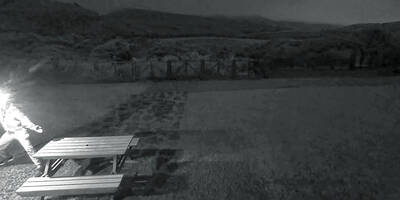
Yangmingshan National Park authorities yesterday urged visitors to respect public spaces and obey the law after a couple was caught on a camera livestream having sex at the park’s Qingtiangang (擎天崗) earlier in the day. The Shilin Police Precinct in Taipei said it has identified a suspect and his vehicle registration number, and would summon him for questioning. The case would be handled in accordance with public indecency charges, it added. The couple entered the park at about 11pm on Thursday and began fooling around by 1am yesterday, the police said, adding that the two were unaware of the park’s all-day live
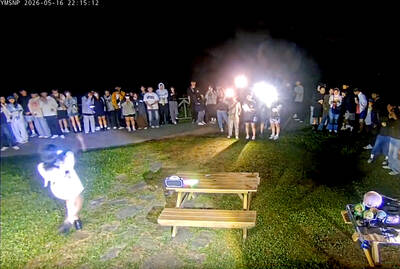
Yangmingshan National Park’s Qingtiangang (擎天崗) nature area has gone viral after a park livestream camera observed a couple in the throes of intimate congress, which was broadcast live on YouTube, drawing large late-night crowds and sparking a backlash over noise, bright lights and disruption to wildlife habitat. The area’s livestream footage appeared to show a couple engaging in sexual activity on a picnic table in the park on Friday last week, with the uncensored footage streamed publicly online. The footage quickly spread across social media, prompting a tide of visitors to travel to the site to “check in” and recreate the

Minister of Digital Affairs Lin Yi-ching (林宜敬) yesterday cited regulatory issues and national security concerns as an expert said that Taiwan is among the few Asian regions without Starlink. Lin made the remarks on Facebook after funP Innovation Group chief executive officer Nathan Chiu (邱繼弘) on Friday said Taiwan and four other countries in Asia — China, North Korea, Afghanistan and Syria — have no access to Starlink. Starlink has become available in 166 countries worldwide, including Ukraine, Malaysia, the Philippines and Vietnam, in the six years since it became commercial, he said. While China and North Korea block Starlink, Syria is not
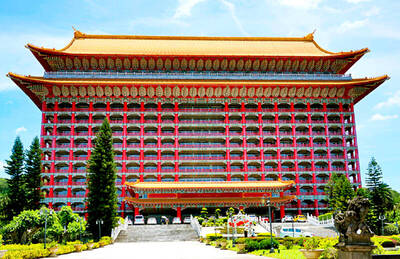
The Grand Hotel Taipei has rejected media reports claiming that the hotel had prevented CBS from broadcasting coverage of the Beijing summit between U.S. President Donald Trump and Chinese President Xi Jinping (習近平) on its premises. Media reports alleging that the hotel owner, dissatisfied with CBS’s coverage, prohibited the network from broadcasting political content on the hotel premises, are not true, the hotel said in a statement issued last night. The reports were “inconsistent with how the hotel actually handled the matter,” it said. The hotel said it received a refund request from a


 RSS
RSS