


Taiwan has been invited for the first time to submit suggestions on solutions for NASA’s lunar exploration program, which the head of Taiwan Space Agency (TASA) hopes would help the country gain a foothold in the emerging global “lunar economy.”
Securing the invitation would enable Taiwanese companies to bypass third-party system contractors and work directly with the end-user, in this case NASA, TASA Director-General Wu Jong-shinn (吳宗信) said in an interview late last month.
Formally known as a “request for information” (RFI), the invitation was issued by NASA to get input on 32 technical gaps in its Artemis lunar exploration program.
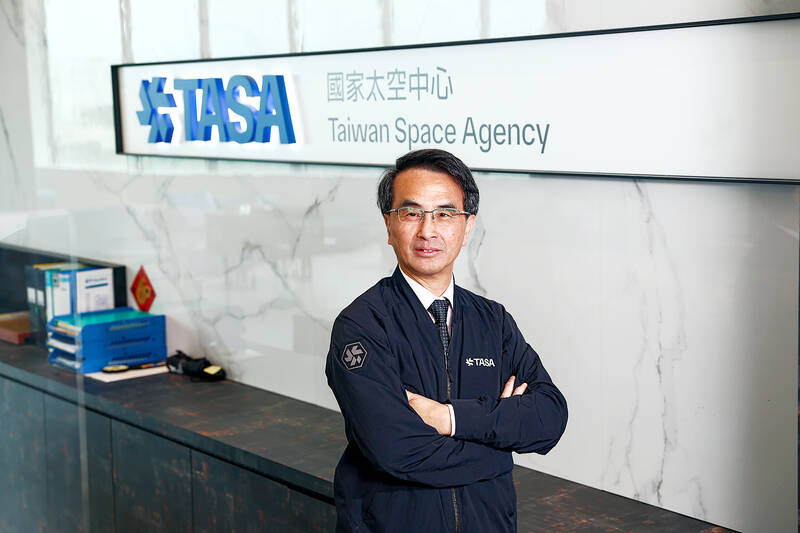
Photo: CNA
The Artemis program, led by NASA in collaboration with international and commercial partners, aims to land humans on the moon by 2028 and establish a long-term lunar base by 2030.
RFIs are generally issued during the planning stages of projects to learn what solutions are available and better understand potential vendors.
An RFI is not a contract opportunity, but it would give Taiwan a chance to introduce its space capabilities, and NASA would use the information it gets to inform future acquisitions.
Taiwan’s space development has progressed steadily over the past two decades, evolving from a user of foreign technologies into a provider of technology and data, and, increasingly, an international partner, Wu said.
Taiwan’s space industry generates about NT$300 billion (US$9.51 billion) in annual output value, Wu said, adding that the rise of the lunar economy could create new momentum for growth.
Specializing in contract manufacturing, Taiwanese companies have historically been excluded from higher-value design contracts, because they lacked access to final operational scenarios, he said, adding that he hoped the NASA RFI could change the trend.
Wu said he believed that Taiwan’s semiconductors and precision machinery sector would give it an indispensable role in space technologies, especially as a permanent lunar base would need extensive automation, which depends on semiconductors.
However, Taiwan’s participation in the space economy needed to move toward system integration capabilities, he added.
The RFI included requests for information on infrastructure capable of withstanding the moon’s extreme environment — near-vacuum conditions, high radiation and gravity about one-sixth that of Earth — as well as advanced computing technologies for space operations.
Those requests went beyond simple solutions, and to strengthen Taiwan’s response, TASA plans to integrate resources from the private and public sectors, and academia to form a “national team” capable of addressing NASA’s technology needs, Wu said.
The agency would also assess Taiwanese companies with the necessary capabilities, and focus on key technologies with broad applications and long-term industrial value, he said.
Aside from the NASA RFI opportunity, a proposed Taiwan-America Space Assistance Act, which recently cleared committee review in both chambers of the US Congress and now awaits consideration by the full House of Representatives and Senate, could also provide commercial openings for Taiwan, he added.
The bill would authorize direct cooperation between TASA, NASA and the US National Oceanic and Atmospheric Administration on satellite programs, space exploration and atmospheric research.

Yangmingshan National Park authorities yesterday urged visitors to respect public spaces and obey the law after a couple was caught on a camera livestream having sex at the park’s Qingtiangang (擎天崗) earlier in the day. The Shilin Police Precinct in Taipei said it has identified a suspect and his vehicle registration number, and would summon him for questioning. The case would be handled in accordance with public indecency charges, it added. The couple entered the park at about 11pm on Thursday and began fooling around by 1am yesterday, the police said, adding that the two were unaware of the park’s all-day live

A former soldier and an active-duty army officer were yesterday indicted for allegedly selling classified military training materials to a Chinese intelligence operative for a total of NT$79,440. The Taipei District Prosecutors’ Office indicted Chen Tai-yin (陳泰尹) and Lee Chun-ta (李俊達) for contravening the National Security Act (國家安全法) and the Anti-Corruption Act (貪污治罪條例). Chen left the military in September 2013 after serving alongside then-staff sergeant Lee, now an army lieutenant, at the 21st Artillery Command of the army’s Sixth Corps from 2011 to 2013, according to the indictment. Chen met a Chinese intelligence operative identified as “Wang” (王) through a friend in November

Minister of Digital Affairs Lin Yi-ching (林宜敬) yesterday cited regulatory issues and national security concerns as an expert said that Taiwan is among the few Asian regions without Starlink. Lin made the remarks on Facebook after funP Innovation Group chief executive officer Nathan Chiu (邱繼弘) on Friday said Taiwan and four other countries in Asia — China, North Korea, Afghanistan and Syria — have no access to Starlink. Starlink has become available in 166 countries worldwide, including Ukraine, Malaysia, the Philippines and Vietnam, in the six years since it became commercial, he said. While China and North Korea block Starlink, Syria is not
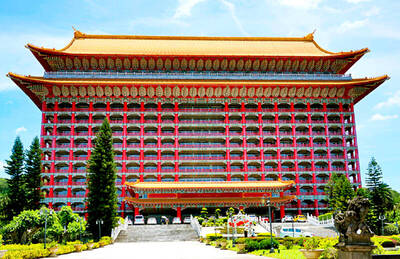
The Grand Hotel Taipei has rejected media reports claiming that the hotel had prevented CBS from broadcasting coverage of the Beijing summit between U.S. President Donald Trump and Chinese President Xi Jinping (習近平) on its premises. Media reports alleging that the hotel owner, dissatisfied with CBS’s coverage, prohibited the network from broadcasting political content on the hotel premises, are not true, the hotel said in a statement issued last night. The reports were “inconsistent with how the hotel actually handled the matter,” it said. The hotel said it received a refund request from a


 RSS
RSS