


A 23-year-old college student was released on NT$100,000 bail on Wednesday night, as investigators probe allegations that he gained unauthorized access to Taiwan High Speed Rail Corp’s (THSRC) radio communication network, disrupting railway services.
The incident occurred at 11:23pm on April 5, when the high-speed rail’s operations control center received an alarm from a handheld radio belonging to its maintenance department, causing three operating trains to halt for emergency stops, THSRC said in a statement.
Normal train services resumed at 11:43pm, after inspections were completed, the company said.

Photo courtesy of the Taoyuan District Prosecutors’ Office via CNA
The operations control center later tried to contact the person who sent the alert message, who gave contradictory statements and avoided further discussions by terminating radio communication, it said.
After ascertaining that all of its handheld radio devices were in place and functioning normally, the company reported the case to the police on April 6, and sought assistance from the Railway Police Bureau and the Criminal Investigation Bureau’s Electronic Investigation Brigade.
The Taoyuan District Prosecutors’ Office yesterday said that police identified a suspect, a male college student surnamed Lin (林). He was taken into custody on Wednesday afternoon.
Police secured warrants to search his residence and workplaces, and confiscated radio communication and electronic devices, the prosecutors’ office said.
Lin, a radio enthusiast, reportedly studies at a university in central Taiwan. He is suspected of using his radio equipment to impersonate high-speed rail radio parameters.
Lin is suspected of contravening the Railway Act (鐵路法) for unlawfully exploiting computer system’s vulnerabilities to intrude into the core information and communication systems of important railway institutions, facilities or equipment, and by unlawfully using other electromagnetic methods to interfere with railway-related equipment and impair its normal operations, prosecutors said.
He is also suspected of breaching the Criminal Code for endangering public transportation.

The military has spotted two Chinese warships operating in waters near Penghu County in the Taiwan Strait and sent its own naval and air forces to monitor the vessels, the Ministry of National Defense (MND) said. Beijing sends warships and warplanes into the waters and skies around Taiwan on an almost daily basis, drawing condemnation from Taipei. While the ministry offers daily updates on the locations of Chinese military aircraft, it only rarely gives details of where Chinese warships are operating, generally only when it detects aircraft carriers, as happened last week. A Chinese destroyer and a frigate entered waters to the southwest

Japanese Prime Minister Sanae Takaichi’s comment last year on Tokyo’s potential reaction to a Taiwan-China conflict has forced Beijing to rewrite its invasion plans, a retired Japanese general said. Takaichi told the Diet on Nov. 7 last year that a Chinese naval blockade or military attack on Taiwan could constitute a “survival-threatening situation” for Japan, potentially allowing Tokyo to exercise its right to collective self-defense. Former Japan Ground Self-Defense Force general Kiyofumi Ogawa said in a recent speech that the remark has been interpreted as meaning Japan could intervene in the early stages of a Taiwan Strait conflict, undermining China’s previous assumptions
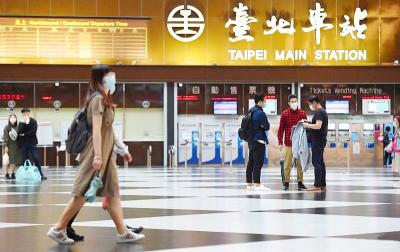
Taiwan Railways Corp (TRC) today announced that Shin Kong Mitsukoshi has been selected as the preferred bidder to operate the Taipei Railway Station shopping mall, replacing the current operator, Breeze Development Co Ltd. Among eight qualified firms that delivered presentations and were evaluated by a review committee, Shin Kong Mitsukoshi was ranked first, while Breeze was named the runner-up, the rail company said in a statement. Contract negotiations are to proceed in accordance with regulations, it said, adding that if negotiations with the top bidder fail, it could invite the second-ranked applicant to enter talks. Breeze in a statement today expressed doubts over

UNFOUNDED CONCERNS: Public concerns that allowing Indian workers to come and work in Taiwan would lead to increased sex crimes are baseless, the labor ministry said Amid public concern over the government’s plan to bring Indian workers to Taiwan, the Ministry of Labor (MOL) pointed to past intake and said that public safety remained stable. Minister of Labor Hung Sun-han (洪申翰) on April 9 told the legislature that the first group of Indian workers could arrive as early as the end of this year. Taiwan and India signed a memorandum of understanding (MOU) in February 2024 to address Taiwan’s labor shortage. The MOU was sent to the Legislative Yuan for review in mid-2024 and received cross-party backing, prompting the MOL to begin follow-up negotiations with India, Hung said. Public


 RSS
RSS