


Yun Yun AI Baby Camera Co (雲云科技) CEO Thomas Tseng (曾志新) was today sentenced to life in prison for stabbing and killing the company’s chief technology officer (CTO), surnamed Liang (梁), in March last year.
A citizen judge panel at the Taipei District Court today convicted Tseng of murder, depriving him of his civil rights for life, though the verdict can be appealed.
Tseng had previously told the court that the killing was “the greatest mistake” of his life and apologized profusely.
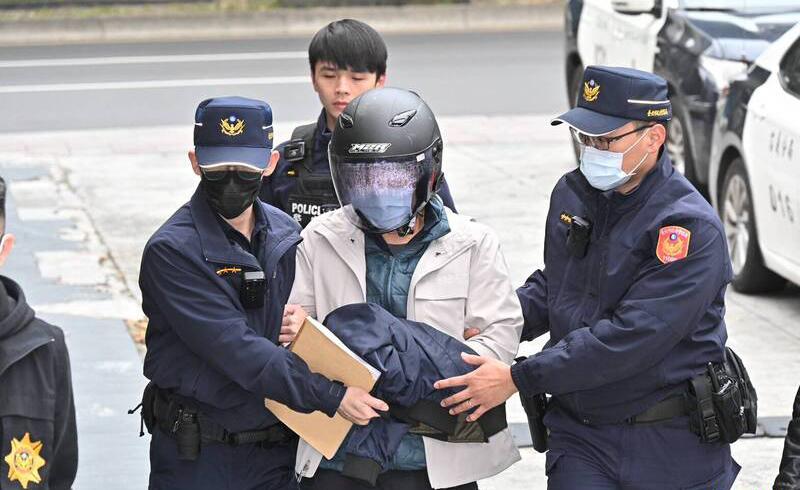
Photo: Tu Chien-jung, Taipei Times
The attack occurred in the Xinyi District (信義) office of Yun Yun AI Baby Camera Co, the Taipei District Prosecutors’ Office said.
Tseng and Liang had repeatedly clashed in the workplace, leading Tseng to purchase a 19cm-long chef’s knife on Feb. 26 last year, which he kept in an office cabinet, the investigation found.
Chinese-language media reported that Liang’s resignation letter surfaced after the incident, saying he felt “publicly humiliated” and defamed by Tseng, and detailing incidents of workplace bullying that left him “utterly hopeless.”
On March 6, Tseng became aware that Liang was planning to resign via a farewell post on a company group chat and scheduled a group meeting the following afternoon with a human resources director to handle Liang’s resignation, the investigation found.
Before the meeting, Tseng hid the knife in his chest pocket, and after a tense discussion, Tseng approached Liang from behind and stabbed him at least nine times in the head, back and neck, prosecutors said.
Liang was rushed to hospital but succumbed to his injuries later that day, due to a puncture in his left lung and multiple muscle injuries, which led to severe blood loss, they added.
Tseng sustained serious injuries after trying to take his own life, prosecutors said.
He was indicted in June and the case was transferred to a citizen judge panel at the Taipei District Court. The trial began on Monday last week.
The court has yet to release the reasoning behind today’s verdict.
Additional reporting by Weng Ching-yu

Yangmingshan National Park authorities yesterday urged visitors to respect public spaces and obey the law after a couple was caught on a camera livestream having sex at the park’s Qingtiangang (擎天崗) earlier in the day. The Shilin Police Precinct in Taipei said it has identified a suspect and his vehicle registration number, and would summon him for questioning. The case would be handled in accordance with public indecency charges, it added. The couple entered the park at about 11pm on Thursday and began fooling around by 1am yesterday, the police said, adding that the two were unaware of the park’s all-day live
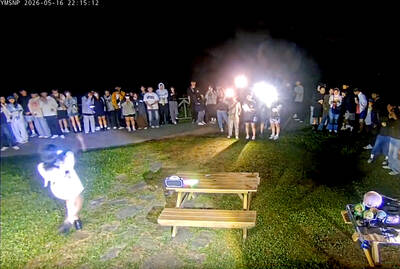
Yangmingshan National Park’s Qingtiangang (擎天崗) nature area has gone viral after a park livestream camera observed a couple in the throes of intimate congress, which was broadcast live on YouTube, drawing large late-night crowds and sparking a backlash over noise, bright lights and disruption to wildlife habitat. The area’s livestream footage appeared to show a couple engaging in sexual activity on a picnic table in the park on Friday last week, with the uncensored footage streamed publicly online. The footage quickly spread across social media, prompting a tide of visitors to travel to the site to “check in” and recreate the

Fast food chain McDonald's is to raise prices by up to NT$5 on some products at its restaurants across Taiwan, starting on Wednesday next week, the company announced today. The prices of all extra value meals and sharing boxes are to increase by NT$5, while breakfast combos and creamy corn soup would go up by NT$3, the company said in a statement. The price of the main items of those meals, if ordered individually, would remain the same. Meanwhile, the price of a medium-sized lemon iced tea and hot cappuccino would rise by NT$3, extra dipping sauces for chicken nuggets would go up

Minister of Digital Affairs Lin Yi-ching (林宜敬) yesterday cited regulatory issues and national security concerns as an expert said that Taiwan is among the few Asian regions without Starlink. Lin made the remarks on Facebook after funP Innovation Group chief executive officer Nathan Chiu (邱繼弘) on Friday said Taiwan and four other countries in Asia — China, North Korea, Afghanistan and Syria — have no access to Starlink. Starlink has become available in 166 countries worldwide, including Ukraine, Malaysia, the Philippines and Vietnam, in the six years since it became commercial, he said. While China and North Korea block Starlink, Syria is not


 RSS
RSS