


Chinese Nationalist Party (KMT) heavyweight and former Broadcasting Corp of China chairman Jaw Shaw-kong (趙少康) yesterday said he supports an NT$810 billion (US$25.64 billion) special defense budget, but proposed first approving NT$350 billion tied to existing US arms sale offers and freezing the remaining NT$460 billion until new US offers are issued.
The KMT presented the “NT$380+N billion” bill, which is far lower than the Executive Yuan’s proposed NT$1.25 trillion.
Politics is an art, not a matter of shouting in confrontation, recklessly charging ahead or winning through brute force, Jaw said.
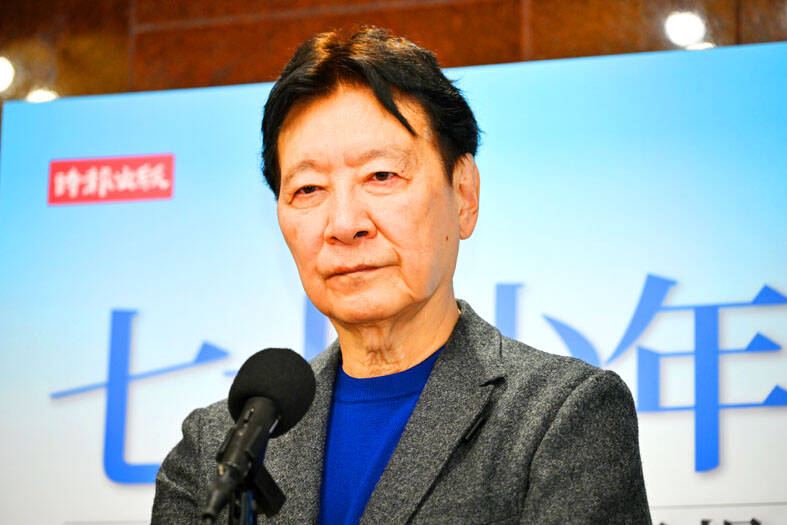
Photo: Chen Yi-kuan, Taipei Times
True “win-win” outcomes come from upholding one’s principles, while skillfully handling matters in a way that makes it difficult for the other side to criticize, he said.
“My arms procurement plan is the best one,” Jaw said, adding that the NT$810 figure is based on what is left over after subtracting domestic procurements from the Cabinet’s proposal.
NT$350 billion tied to US Letters of Acceptance (LOA) should be approved first, while the remaining NT$460 should be frozen until the US issues new LOAs, he said.
That would meet US expectations for procurement and fulfill legislators’ responsibility to carefully review the budget, he said.
Allocating more than NT$800 billion for US arms purchases should reassure Washington, Jaw said, adding that it would be unreasonable for the US to oppose the plan as it has not issued additional LOAs.
The proposal would alleviate US concerns while maintaining the KMT’s position and safeguarding Taiwan’s interests, he said.
Democratic Progressive Party Legislator Chen Kuan-ting (陳冠廷) called Jaw’s proposal, as well as KMT Legislator Hsu Chia-hsin’s (徐巧芯) previous proposal of a more than NT$900 billion defense budget, constructive.
As long as talks move forward, it benefits future communication on the defense budget, he said.
Former KMT legislator Jason Hsu (許毓仁) said that the KMT can exercise strong oversight, demand transparency and guard against corruption, without paralyzing the government, and the party should not let disputes jeopardize national security.
If the defense budget is not finalized before Chinese President Xi Jinping’s (習近平) planned meeting with US President Donald Trump, Taiwan would be creating strategic vulnerabilities before a potential shift in the international situation, he said.
The KMT’s proposed “NT$380+N billion” special budget would be difficult to implement and explain to the US, he said.
While the “+N” means waiting until the US issues more LOAs to draw up the specific budget, Taiwan is already facing more frequent threats and “gray zone” incursions from China, he added.
If defense planning is not done comprehensively across the armed forces and budgets are only set after the US agrees to sell specific equipment, Taiwan could end up with gaps in its military readiness and capability, Jason Hsu said.
If the Legislative Yuan passed a vague, incomplete special defense budget that is difficult to implement, the US would doubt Taiwan’s determination and capability to defend itself, he said.
The Ministry of National Defense is slated to brief the legislature on the defense budget again today, and cross-party negotiations are expected to be held on Wednesday.
Additional reporting by Lin Che-yuan

SPACE VETERAN: Kjell N. Lindgren, who helps lead NASA’s human spaceflight missions, has been on two expeditions on the ISS and has spent 311 days in space Taiwan-born US astronaut Kjell N. Lindgren is to visit Taiwan to promote technological partnerships through one of the programs organized by the US for its 250th national anniversary. Lindgren would be in Taiwan from Tuesday to Saturday next week as part of the US Bureau of Educational and Cultural Affairs’ US Speaker Program, organized to celebrate the 250th anniversary of the signing of the Declaration of Independence, the American Institute in Taiwan (AIT) said in a statement yesterday. Lindgren plans to engage with key leaders across the nation “to advance cutting-edge technological partnerships and inspire the next generation of scientists and engineers,”
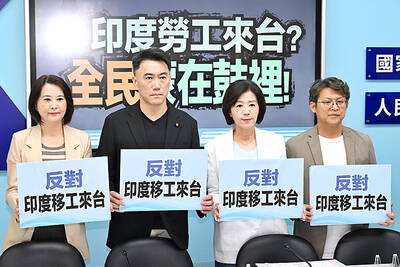
The Chinese Nationalist Party (KMT) caucus yesterday said it opposes the introduction of migrant workers from India until a mechanism is in place to prevent workers from absconding. Minister of Labor Hung Sun-han (洪申翰) on Thursday told the Legislative Yuan that the first group of migrant workers from India could be introduced as early as this year, as part of a government program. The caucus’ opposition to the policy is based on the assessment that “the risk is too high,” KMT caucus secretary-general Lin Pei-hsiang (林沛祥) said. Taiwan has a serious and long-standing problem of migrant workers absconding from their contracts, indicating that

UNREASONABLE SURVEILLANCE: A camera targeted on an road by a neighbor captured a man’s habitual unsignaled turn into home, netting him dozens of tickets The Taichung High Administrative Court has canceled all 45 tickets given to a man for failing to use a turn signal while driving, as it considered long-term surveillance of his privacy more problematic than the traffic violations. The man, surnamed Tseng (曾), lives in Changhua County and was reported 45 times within a month for failing to signal while driving when he turned into the alley where his residence is. The reports were filed by his neighbor, who set up security cameras that constantly monitored not only the alley but also the door and yard of Tseng’s house. The surveillance occurred from July
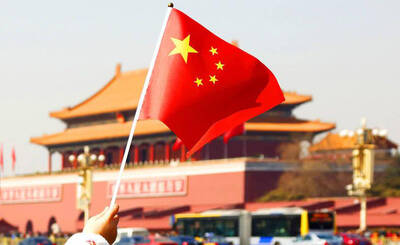
TRADE-OFF: Beijing seeks to trade a bowl of tempura for a Chinese delicacy, an official said, while another said its promises were attempts to interfere in the polls The government must carefully consider the national security implications of building a bridge connecting Kinmen County and Xiamen, China, the Public Construction Commission (PCC) said yesterday. PCC Commissioner Derek Chen (陳金德), who is also a minister without portfolio, made the remarks in a meeting of the legislature’s Transportation Committee, after Democratic Progressive Party Legislator Hsu Fu-kuei (徐富癸) asked about China’s proposal of new infrastructure projects to further connect Kinmen and Lienchiang (Matsu) counties with Xiamen. China unveiled the bridge plan, along with nine other policies for Taiwan, on Sunday, the last day of Chinese Nationalist Party (KMT) Chairwoman Cheng Li-wun’s (鄭麗文) visit


 RSS
RSS