


At least 12 of 140 people who fell ill after eating a Kaohsiung food stall's spring rolls have tested positive for salmonella, the Kaohsiung Department of Health said in a statement yesterday.
In a suspected food poisoning case that has already led to the food vendor being fined NT$1.44 million (US$45,051), the department said Kaohsiung Chang Gung Memorial Hospital reported admitting multiple patients on Saturday and Sunday, and as of yesterday, 12 of them had tested positive for salmonella.
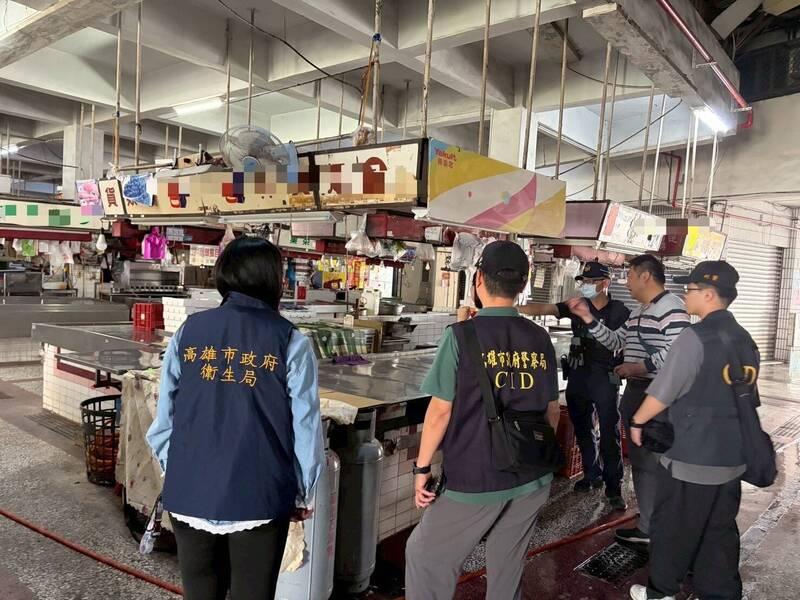
Photo courtesy of the Kaohsiung Department of Health
As of 4pm yesterday, 140 people had sought treatment at 10 hospitals and clinics around the city after eating the spring rolls of the Zhengyi Market (正義市場) stall in Lingya District (苓雅).
Thirty-one were still hospitalized, 18 were in emergency rooms (with 10 waiting to be admitted and eight under observation) and 91 had been treated and sent home, the department said.
No information was available on how many patients were treated at Kaohsiung Chang Gung Memorial Hospital, leaving it unclear what percentage tested positive for salmonella.
The department said it had taken samples of ingredients from the stall to see if any were contaminated but had yet to receive the test results back.
The department fined the vendor an additional NT$1.08 million after imposing an initial NT$360,000 fine, citing contraventions of the Act Governing Food Safety and Sanitation (食品安全衛生管理法).
Based on a comprehensive epidemiological assessment of patients' medical histories, food consumption records and some preliminary test results, as well as the detection of pathogenic bacteria, "the case has been determined to constitute food poisoning," it said.
The vendor was also ordered on Sunday to suspend operations for seven days as it posed a significant food safety risk, and local prosecutors have begun to investigate the case for possible criminal offenses.
The problem first came to light on Saturday, after a customer posted on social media that six family members had begun to experience stomach pain, diarrhea and other gastrointestinal symptoms within four hours of eating spring rolls from a stall in Zhengyi Market.
Salmonella is a bacterium that causes gastrointestinal illness and fever.

Yangmingshan National Park authorities yesterday urged visitors to respect public spaces and obey the law after a couple was caught on a camera livestream having sex at the park’s Qingtiangang (擎天崗) earlier in the day. The Shilin Police Precinct in Taipei said it has identified a suspect and his vehicle registration number, and would summon him for questioning. The case would be handled in accordance with public indecency charges, it added. The couple entered the park at about 11pm on Thursday and began fooling around by 1am yesterday, the police said, adding that the two were unaware of the park’s all-day live

Yangmingshan National Park’s Qingtiangang (擎天崗) nature area has gone viral after a park livestream camera observed a couple in the throes of intimate congress, which was broadcast live on YouTube, drawing large late-night crowds and sparking a backlash over noise, bright lights and disruption to wildlife habitat. The area’s livestream footage appeared to show a couple engaging in sexual activity on a picnic table in the park on Friday last week, with the uncensored footage streamed publicly online. The footage quickly spread across social media, prompting a tide of visitors to travel to the site to “check in” and recreate the
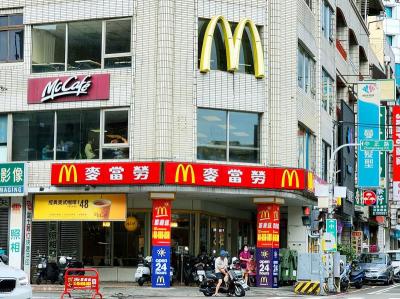
Fast food chain McDonald's is to raise prices by up to NT$5 on some products at its restaurants across Taiwan, starting on Wednesday next week, the company announced today. The prices of all extra value meals and sharing boxes are to increase by NT$5, while breakfast combos and creamy corn soup would go up by NT$3, the company said in a statement. The price of the main items of those meals, if ordered individually, would remain the same. Meanwhile, the price of a medium-sized lemon iced tea and hot cappuccino would rise by NT$3, extra dipping sauces for chicken nuggets would go up

Minister of Digital Affairs Lin Yi-ching (林宜敬) yesterday cited regulatory issues and national security concerns as an expert said that Taiwan is among the few Asian regions without Starlink. Lin made the remarks on Facebook after funP Innovation Group chief executive officer Nathan Chiu (邱繼弘) on Friday said Taiwan and four other countries in Asia — China, North Korea, Afghanistan and Syria — have no access to Starlink. Starlink has become available in 166 countries worldwide, including Ukraine, Malaysia, the Philippines and Vietnam, in the six years since it became commercial, he said. While China and North Korea block Starlink, Syria is not


 RSS
RSS