


President William Lai (賴清德) yesterday nominated Hsu Hsi-hsiang (徐錫祥), a head prosecutor at the Supreme Prosecutors Office, to serve as the next prosecutor-general and asked the Legislative Yuan to confirm the nomination in a document delivered to the Legislative Yuan earlier in the day.
The nomination was made ahead of the departure of incumbent prosecutor-general Hsing Tai-chao (邢泰釗), who will complete his four-year term on May 7, Presidential Office spokesperson Karen Kuo (郭雅慧) said in statement.
Hsu has more than 30 years of prosecutorial experience and has handled cases involving drug trafficking, economic crimes, violent crime, intellectual property, environmental protection, corruption and election-related investigations, as well as cases involving the protection of women and children, according to Kuo.

Photo: Taipei Times
Throughout his career, Hsu has upheld the rule of law and carried out his duties with fairness, prudence and professionalism, making him a strong candidate for the post, Kuo added.
Hsu, 63, holds a master's degree in law from National Chung Hsing University.
During his career, he has served as head prosecutor at district prosecutors offices in Kinmen, Hsinchu, Changhua and New Taipei. He has also served as head prosecutor of the Taichung branch of the Taiwan High Prosecutors Office and as deputy minister of justice.
Hsu previously served as head of the Ethics Office at the Coast Guard Administration and as deputy sanector-general of the National Security Bureau.
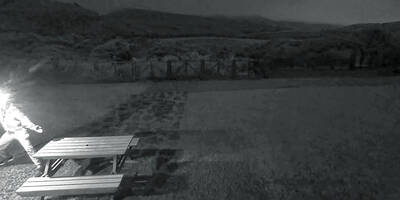
Yangmingshan National Park authorities yesterday urged visitors to respect public spaces and obey the law after a couple was caught on a camera livestream having sex at the park’s Qingtiangang (擎天崗) earlier in the day. The Shilin Police Precinct in Taipei said it has identified a suspect and his vehicle registration number, and would summon him for questioning. The case would be handled in accordance with public indecency charges, it added. The couple entered the park at about 11pm on Thursday and began fooling around by 1am yesterday, the police said, adding that the two were unaware of the park’s all-day live

A former soldier and an active-duty army officer were yesterday indicted for allegedly selling classified military training materials to a Chinese intelligence operative for a total of NT$79,440. The Taipei District Prosecutors’ Office indicted Chen Tai-yin (陳泰尹) and Lee Chun-ta (李俊達) for contravening the National Security Act (國家安全法) and the Anti-Corruption Act (貪污治罪條例). Chen left the military in September 2013 after serving alongside then-staff sergeant Lee, now an army lieutenant, at the 21st Artillery Command of the army’s Sixth Corps from 2011 to 2013, according to the indictment. Chen met a Chinese intelligence operative identified as “Wang” (王) through a friend in November

Minister of Digital Affairs Lin Yi-ching (林宜敬) yesterday cited regulatory issues and national security concerns as an expert said that Taiwan is among the few Asian regions without Starlink. Lin made the remarks on Facebook after funP Innovation Group chief executive officer Nathan Chiu (邱繼弘) on Friday said Taiwan and four other countries in Asia — China, North Korea, Afghanistan and Syria — have no access to Starlink. Starlink has become available in 166 countries worldwide, including Ukraine, Malaysia, the Philippines and Vietnam, in the six years since it became commercial, he said. While China and North Korea block Starlink, Syria is not
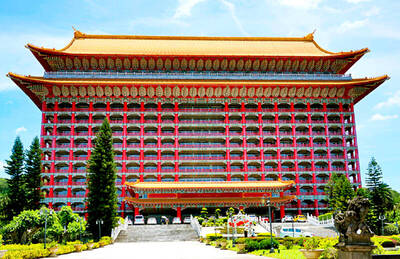
The Grand Hotel Taipei has rejected media reports claiming that the hotel had prevented CBS from broadcasting coverage of the Beijing summit between U.S. President Donald Trump and Chinese President Xi Jinping (習近平) on its premises. Media reports alleging that the hotel owner, dissatisfied with CBS’s coverage, prohibited the network from broadcasting political content on the hotel premises, are not true, the hotel said in a statement issued last night. The reports were “inconsistent with how the hotel actually handled the matter,” it said. The hotel said it received a refund request from a


 RSS
RSS