


The legislature has passed amendments that abolish provisions allowing Public Television Service (PTS) board members to remain in office after their terms expire.
The amendments cleared the Legislative Yuan yesterday in a 59-49 vote, with lawmakers from the Chinese Nationalist Party (KMT) and the Taiwan People’s Party (TPP) using their numerical advantage to delete the so-called “indefinite extension” clause from the Public Television Act (公共電視法).
Under the previous law, board members whose terms had ended could continue serving until new appointees formally took office, a mechanism critics said enabled prolonged extensions and weakened governance.
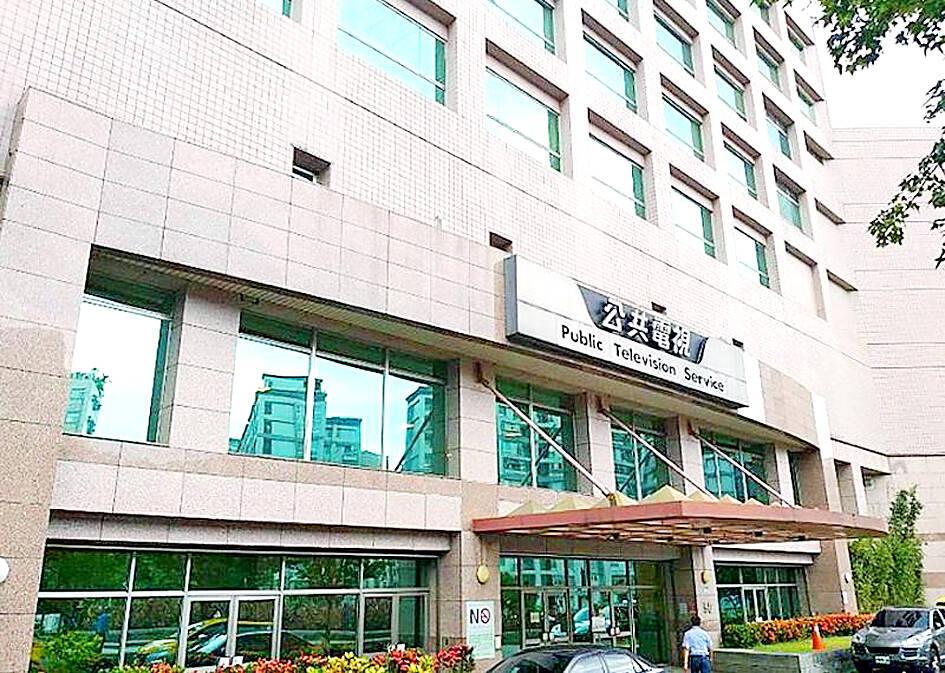
Photo: Chung Chih-kai, Taipei Times
The current PTS board’s term expired in May last year, but a new board has yet to be fully reconstituted, as nominations have not completed the statutory review process.
KMT Legislator Lo Chih-chiang (羅智強) and the TPP caucus proposed the amendments, arguing that the extension clause distorted governance and undermined the network’s professionalism and independence.
Although cross-party negotiations on the bill concluded on Tuesday, the dispute over the extension clause was left unresolved and sent to the full chamber for a vote.
During the floor debate, TPP Legislator Liu Shu-bin (劉書彬) said abolishing the rule would prevent “perpetual board members” and help safeguard the broadcaster’s independence.
Democratic Progressive Party Legislator Fan Yun (范雲) criticized the move, saying that the amendments could paralyze board operations by deterring qualified candidates because they might not want to go through the partisan wrangling that would inevitably result to fill the PTS board.
Under the law, the PTS board consists of 11 to 15 directors and three to five supervisors, all of whom must be approved by a review committee composed proportionally of party representatives, with a two-thirds majority required.
The Ministry of Culture announced 14 director and five supervisor nominees on Dec. 17 last year, but only four director candidates were approved at the first review meeting on Dec. 31.
Minister of Culture Li Yuan (李遠) said the stalemate amounts to political interference in the media, which he described as regrettable.
Li said he would study whether any remedial measures are available or seek an interpretation from the Ministry of Justice.
PTS is Taiwan’s sole publicly funded broadcaster, and is required by law to operate independently of political parties and government control while serving the public interest.
The prolonged stalemate over board appointments has raised concerns about governance stability and editorial independence amid Taiwan’s highly polarized political environment, as the board plays a central role in overseeing management, budgets and editorial direction.

SECURITY: Starlink owner Elon Musk has taken pro-Beijing positions, and allowing pro-China companies to control Taiwan’s critical infrastructure is risky, a legislator said Starlink was reluctant to offer services in Taiwan because of the nation’s extremely high penetration rates in 4G and 5G services, the Ministry of Digital Affairs said yesterday. The ministry made the comments at a meeting of the legislature’s Transportation Committee, which reviewed amendments to Article 36 of the Telecommunications Management Act (電信管理法). Article 36 bans foreigners from holding more than 49 percent of shares in public telecommunications networks, while shares foreigners directly and indirectly hold are also capped at 60 percent of the total, unless specified otherwise by law. The amendments, sponsored by Chinese Nationalist Party (KMT) Legislator Ko
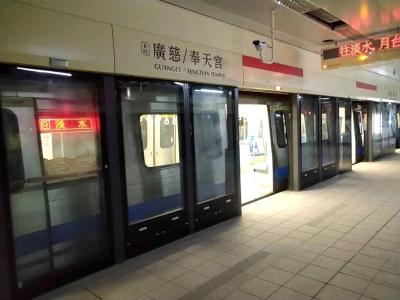
The eastern extension of the Taipei MRT Red Line could begin operations as early as late June, the Taipei Department of Rapid Transit Systems said yesterday. Taipei Rapid Transit Corp said it is considering offering one month of free rides on the new section to mark its opening. Construction progress on the 1.4km extension, which is to run from the current terminal Xiangshan Station to a new eastern terminal, Guangci/Fengtian Temple Station, was 90.6 percent complete by the end of last month, the department said in a report to the Taipei City Council's Transportation Committee. While construction began in October 2016 with an
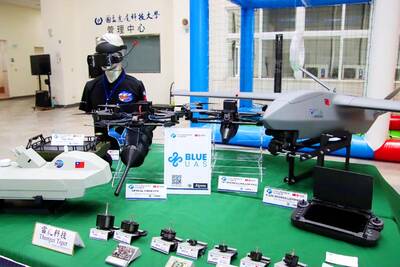
NON-RED SUPPLY: Boosting the nation’s drone industry is becoming increasingly urgent as China’s UAV dominance could become an issue in a crisis, an analyst said Taiwan’s drone exports to Europe grew 41.7-fold from 2024 to last year, with demand from Ukraine’s fight against Russian aggression the most likely driver of growth, a study showed. The Institute for Democracy, Society and Emerging Technology (DSET) in a statement on Wednesday said it found that many of Taiwan’s uncrewed aerial vehicle (UAV) sales were from Poland and the Czech Republic. These countries likely transferred the drones to Ukraine to aid it in its fight against the Russian invasion that started in 2022, it said. Despite the gains, Taiwan is not the dominant drone exporter to these markets, ranking second and fourth

Japanese Prime Minister Sanae Takaichi’s comment last year on Tokyo’s potential reaction to a Taiwan-China conflict has forced Beijing to rewrite its invasion plans, a retired Japanese general said. Takaichi told the Diet on Nov. 7 last year that a Chinese naval blockade or military attack on Taiwan could constitute a “survival-threatening situation” for Japan, potentially allowing Tokyo to exercise its right to collective self-defense. Former Japan Ground Self-Defense Force general Kiyofumi Ogawa said in a recent speech that the remark has been interpreted as meaning Japan could intervene in the early stages of a Taiwan Strait conflict, undermining China’s previous assumptions


 RSS
RSS