


The Chinese Nationalist Party (KMT) yesterday demanded that the government submit signed agreements with the US from its tariff negotiations to the legislature for review.
Taiwan and the US earlier yesterday announced an agreement to a long-sought trade pact that would lower tariffs on goods from Taiwan to 15 percent and see Taiwanese semiconductor firms increase financing for US operations by US$250 billion.
Taiwan also agreed to provide an additional US$250 billion in credit guarantees for further investment in the US semiconductor supply chain.
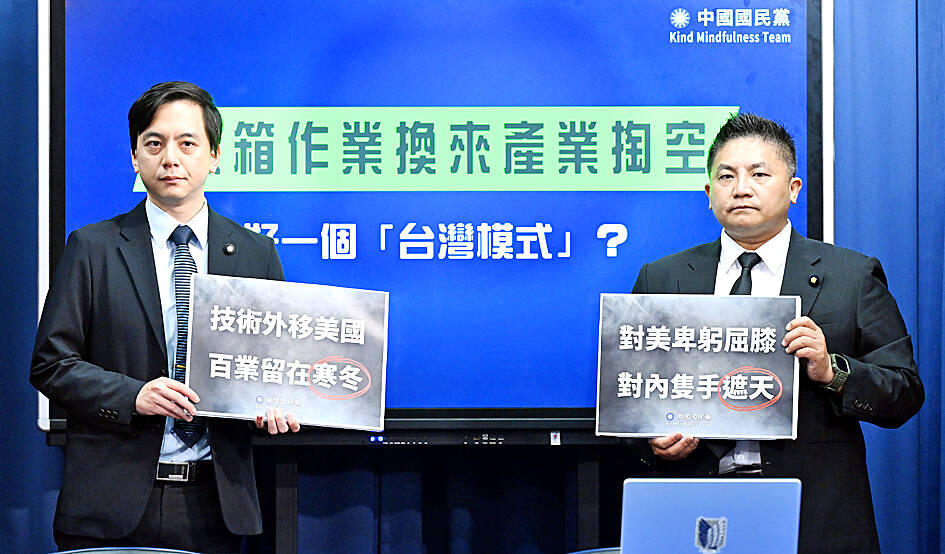
Photo: Liao Chen-huei, Taipei Times
Saying that information is severely insufficient, the KMT’s Culture and Communications Committee head Wu Tsung-hsien (吳宗憲) at a press conference yesterday said the party would continue to study Japan’s and South Korea’s negotiation approaches and their GDP proportions to make data transparent.
He asked whether the trade talks were one-sided and if the US “set Taiwan up” to see what Taiwan was willing to offer to secure a 15 percent tariff rate.
The party is demanding that the government provide more information on how the talks were conducted, he said, adding that the public must know and that information about the talks should be transparent.
Citing the Cabinet statement that “Taiwanese semiconductor, electronics manufacturing service [EMS], artificial intelligence and energy companies would invest US$250 billion in the US under their own plans,” Wu claimed that the 15 percent tariff rates were secured by agreeing to relocate many high-value-added industries to the US.
The move would fundamentally alter the industrial makeup of Taiwan and reduce the number of high-level jobs in Taiwan, he said.
KMT spokesman Niu Hsu-ting (牛煦庭) also voiced doubts about whether the negotiated tariff rates were truly beneficial for Taiwan.
In October last year, US President Donald Trump said that Taiwan should move half of its chip manufacturing industry to the US, and Vice Premier Cheng Li-chiun (鄭麗君), who headed Taiwan’s negotiation team, said that a “50-50 split” would not be agreed to, Niu said.
Such an agreement, in addition to Taiwan Semiconductor Manufacturing Co’s commitment to set up five additional wafer manufacturing plants in the US, brings total semiconductor production moved to the US close to 50 percent, Niu said.
President William Lai’s (賴清德) administration’s willingness to provide credit guarantees to related industries in Taiwan to invest in the US would only expedite the industry’s exit, if not the relocation of the entire industry’s supply chain from Taiwan, he added.
According to Niu, the potential outflow of semiconductor-related supply chains would have a heavier impact on Taiwan than US-imposed tariffs.
The haste in signing a memorandum of understanding with Washington meant that even if Trump’s tariffs are overturned by the US Supreme Court, Taiwan would still have to honor its commitment, Niu said.
Additional reporting by CNA
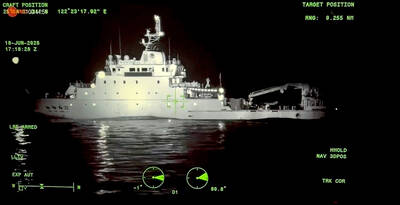
EXCUSES: Beijing is using government and research vessels as a pretext to harass the nation and enter its EEZ, and engage in ‘hegemonic expansion,’ the coast guard said The Coast Guard Administration yesterday said it drove away Chinese oceanographic research vessel Xiang Yang Hong 22 (向陽紅33) from restricted waters after warning it that it was in Taiwan’s exclusive economic zone (EEZ). The Chinese vessel entered restricted waters off the coast of Yilan County’s Suao (蘇澳) at 11:35pm on Thursday, the coast guard said, adding that it dispatched the Lanyu patrol vessel and the boat PP-10077 to shadow the Chinese ship and issue radio warnings ordering it to leave. China has no sovereignty over waters off Taiwan’s east coast, Lanyu’s crew told Xiang Yang Hong 22 over the radio, and demanded
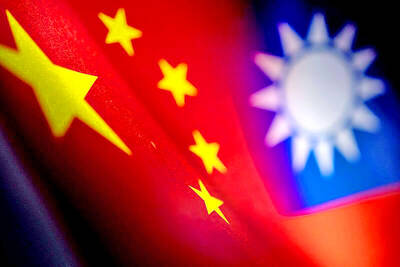
BAIT AND SWITCH: Allowing KMT-run counties to sell to China while the threat of abrupt cancelations hangs overhead is another form of coercion, officials said Beijing is using agricultural purchase offers announced during the Straits Forum to deepen Taiwan’s dependence on the Chinese market, a Taiwanese official said yesterday as they criticized the Taitung County commissioner’s participation in the initiative. During the Straits Forum held in Xiamen on Saturday, Chinese officials announced a sales and purchase agreement for agricultural products from some counties led by the Chinese Nationalist Party (KMT). Taitung County Commissioner Yao Ching-ling (饒慶鈴), who was barred from attending the event in person by the Mainland Affairs Council, participated via video. Under the agreement, China would purchase atemoyas, pomeloes, tea and grouper harvested in Taitung,
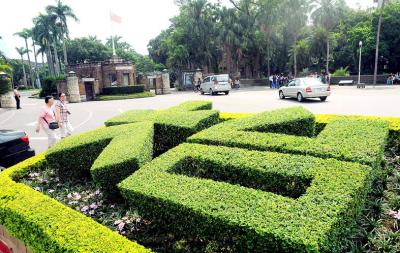
Four Taiwanese universities have been ranked among the world's top 200 institutions in the Quacquarelli Symonds (QS) World University Rankings for next year, the highest Taiwan has ever placed in the category, with National Taiwan University (NTU) achieving its best performance at 54th globally and 17th in Asia. The four Taiwanese institutions in the global top 200 are NTU (54th), National Tsing Hua University (142nd), National Yang Ming Chiao Tung University (177th) and National Cheng Kung University (191st), the rankings showed. All four universities achieved their highest-ever global rankings this year, QS data showed. National Cheng Kung University entered the top 200 for
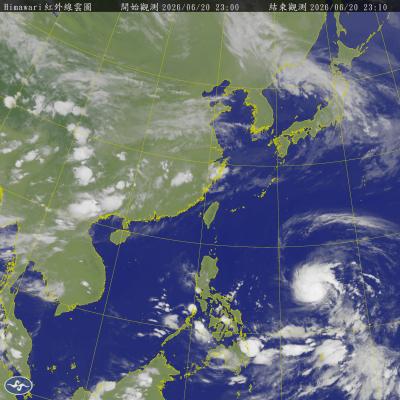
Tropical Storm Mekkhala is forecast to strengthen into a typhoon tomorrow and could come close enough to Taiwan later in the week to prompt a sea warning, the Central Weather Administration (CWA) said yesterday. As of 2 pm, the storm was located 1,870 kilometers southeast of Taiwan's southern tip and moving west- northwest at 23 km per hour. CWA forecaster Cheng Chieh-jen (鄭傑仁) said Mekkhala is expected to continue moving west-northwest through Tuesday under the influence of the Pacific high- pressure system before gradually turning north toward waters east of Taiwan or south of the Ryukyu Islands. The timing and angle of the


 RSS
RSS