


Chinese officials have been pushing “legal advice” on European countries, saying the EU’s border laws require them to ban entry to Taiwanese politicians, more than half a dozen diplomats and officials familiar with the matter said.
The officials made demarches to European embassies in Beijing, or through local embassies directly to European governments in their capital cities, warning the European countries not to “trample on China’s red lines,” the European diplomats and ministries said.
The manner of the approaches varied, some to individual countries and some as groups, some by written note verbale (a semiformal diplomatic communication) and others in person.

Photo: AP
They occurred in November and last month, and were at least partly in response to Taiwanese officials’ recent trips to Europe.
Beijing said it “respects the sovereignty of the European side in introducing and implementing visa policy,” but an “institutional loophole” had allowed frequent visits by Taiwanese politicians, according to one note verbale seen by the Guardian.
The Chinese cited multiple EU laws and regulations, including one known as the Schengen Borders Code, which says a condition for entry by non-EU nationals is that they “are not considered to be a threat to the ... international relations of any of the member states.”
The suggestion appeared to be that allowing Taiwanese officials to enter a European country would threaten that country’s international relations with China.
In some cases, they also referred to the Vienna Convention on Diplomatic Relations, or suggested the European countries follow the UN’s example and bar all Taiwanese from government buildings.
“Beijing’s application and interpretation of this regulation is bold,” National Dong Hwa University assistant professor Zsuzsa Anna Ferenczy said. “It is Beijing’s interpretation that EU-Taiwan ties threaten EU-China ties. This is not at all the perception or reality in Europe.”
The Chinese Ministry of Foreign Affairs did not respond to questions, but the note said European countries should reject any “so-called diplomatic passports” issued by Taiwan, and “prohibit Taiwanese personnel from entering Europe to seek official contact and exchanges and trample on China’s red line.”
“China hopes the EU institutions and European countries will, out of the larger interests of China-EU relations and bilateral relations, make the political decision of refusing the entry of Taiwan’s so-called president or vice president (former ones included),” it said.
The foreign ministries of Norway and Finland confirmed they were among the nations to receive the advice. They said visa regulations with Taiwan were determined by Schengen bodies.
A spokesperson for the British Foreign Office said: “Permission to enter the UK is determined solely by our own laws and immigration rules, which apply equally to those traveling from Taiwan.”
The Ministry of Foreign Affairs said officials’ visits to Europe were “entirely unrelated to China, and China has no right to interfere.”
“On the contrary, China’s use of various coercive measures against other countries, and its threats of force against Taiwan, which undermine global and Indo-Pacific peace and stability, and threaten the direct interests of the EU, is the real force damaging European international relations,” a spokesperson said.
China’s “highly specific” advice was not seen as legally sound by recipients, but the warning tone was taken particularly seriously by some smaller nations.
“I see this as another way to generate unease among member states that their relations with the [People’s Republic of China] might be at risk ... and Beijing knows well that some EU member states are very keen to attract Chinese investment at present,” Ferenczy said.
Claus Soong (宋高祖), an analyst at the Mercator Institute for China Studies specializing in China’s global strategy, said the unusual move fitted with Beijing’s long-running strategy of using all possible means to deter closer cooperation with Taiwan.
“Beijing is trying as much as they can to say that you should really think a little bit before letting Taiwanese officials in. I wouldn’t say it’s a threat, it’s more a reminder, although not necessarily gentle,” Soong said.
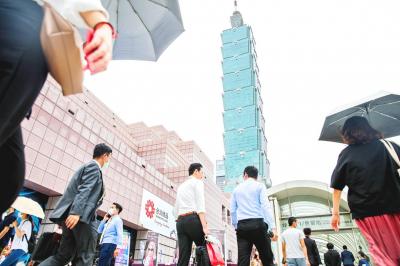
Japanese footwear brand Onitsuka Tiger today issued a public apology and said it has suspended an employee amid allegations that the staff member discriminated against a Vietnamese customer at its Taipei 101 store. Posting on the social media platform Threads yesterday, a user said that an employee at the store said that “those shoes are very expensive” when her friend, who is a migrant worker from Vietnam, asked for assistance. The employee then ignored her until she asked again, to which she replied: "We don't have a size 37." The post had amassed nearly 26,000 likes and 916 comments as of this
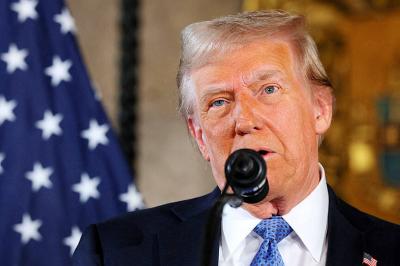
US President Donald Trump said "it’s up to" Chinese President Xi Jinping (習近平) what China does on Taiwan, but that he would be "very unhappy" with a change in the "status quo," the New York Times said in an interview published yesterday. Xi "considers it to be a part of China, and that’s up to him what he’s going to be doing," Trump told the newspaper on Wednesday. "But I’ve expressed to him that I would be very unhappy if he did that, and I don’t think he’ll do that," he added. "I hope he doesn’t do that." Trump made the comments in
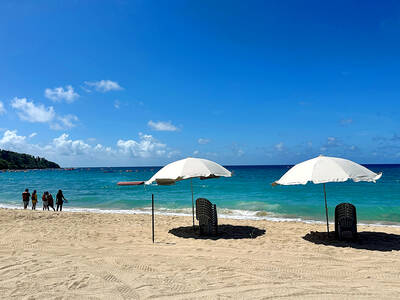
Tourism in Kenting fell to a historic low for the second consecutive year last year, impacting hotels and other local businesses that rely on a steady stream of domestic tourists, the latest data showed. A total of 2.139 million tourists visited Kenting last year, down slightly from 2.14 million in 2024, the data showed. The number of tourists who visited the national park on the Hengchun Peninsula peaked in 2015 at 8.37 million people. That number has been below 2.2 million for two years, although there was a spike in October last year due to multiple long weekends. The occupancy rate for hotels
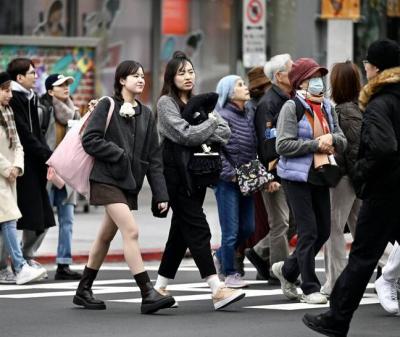
A cold surge advisory was today issued for 18 cities and counties across Taiwan, with temperatures of below 10°C forecast during the day and into tonight, the Central Weather Administration (CWA) said. New Taipei City, Taipei, Taoyuan and Hsinchu, Miaoli and Yilan counties are expected to experience sustained temperatures of 10°C or lower, the CWA said. Temperatures are likely to temporarily drop below 10°C in most other areas, except Taitung, Pingtung, Penghu and Lienchiang (Matsu) counties, CWA data showed. The cold weather is being caused by a strong continental cold air mass, combined with radiative cooling, a process in which heat escapes from


 RSS
RSS